Story ideas
How do you prepare a child for their first sleepover?
How to help a child enjoy a first sleepover by packing familiar comforts, making a plan for the missing-home feeling, and reassuring them they can always come home, with a story.
The short answer
Pack familiar comforts and a small photo of family, make a plan together for the missing-home feeling, a photo, their bedtime routine, a call if needed, and reassure your child they can always come home, with no shame in it. Keep their bedtime routine as similar as possible. A story where a character just like them has a blast, feels a pang of homesickness, uses their plan, and makes it to morning proud makes the whole night feel doable.
Key takeaways
- A first sleepover is a big leap: a whole night away from home, sleeping somewhere unfamiliar.
- It's exciting and, for many kids, genuinely nerve-wracking when the lights go out.
- Pack comforts, make a plan for missing home, and keep the exit open.
- A story where your child has a fun, brave sleepover makes it feel doable.
How do you prepare a child for their first sleepover?
Pack familiar comforts, give them a plan for the missing-home feeling, a photo, a bedtime routine, a call if needed, and reassure them they can always come home if they need to. A first sleepover is a big milestone, and helping your child feel prepared lets them enjoy the fun and feel proud of their brave night.
The fun of a sleepover is easy; the night is the hard part. A story rehearses the whole thing, including the missing-home moment and how to handle it.
Why does a story work for a first sleepover?
A story rehearses the whole night, including the homesick moment. When a child watches a hero have a blast, feel a pang of missing home, use their plan, and make it to morning proud, the sleepover becomes an adventure they feel ready for. Give the hero your child's name and face and the courage becomes theirs.
What does a good first-sleepover story look like?
The names and characters are invented for this example. In a real personalized book, the hero is your own child.
1. A hero with a big night coming
Charlie was invited to his first sleepover at a friend's house. He was thrilled about the fun, games, snacks, staying up late, but the thought of sleeping all night away from home gave him a nervous flutter.
2. A worry he can name
What if he missed his family when the lights went out? What if he wanted to come home? The daytime part sounded great, but the nighttime part felt like a big, scary unknown.
3. A hero who looks just like him
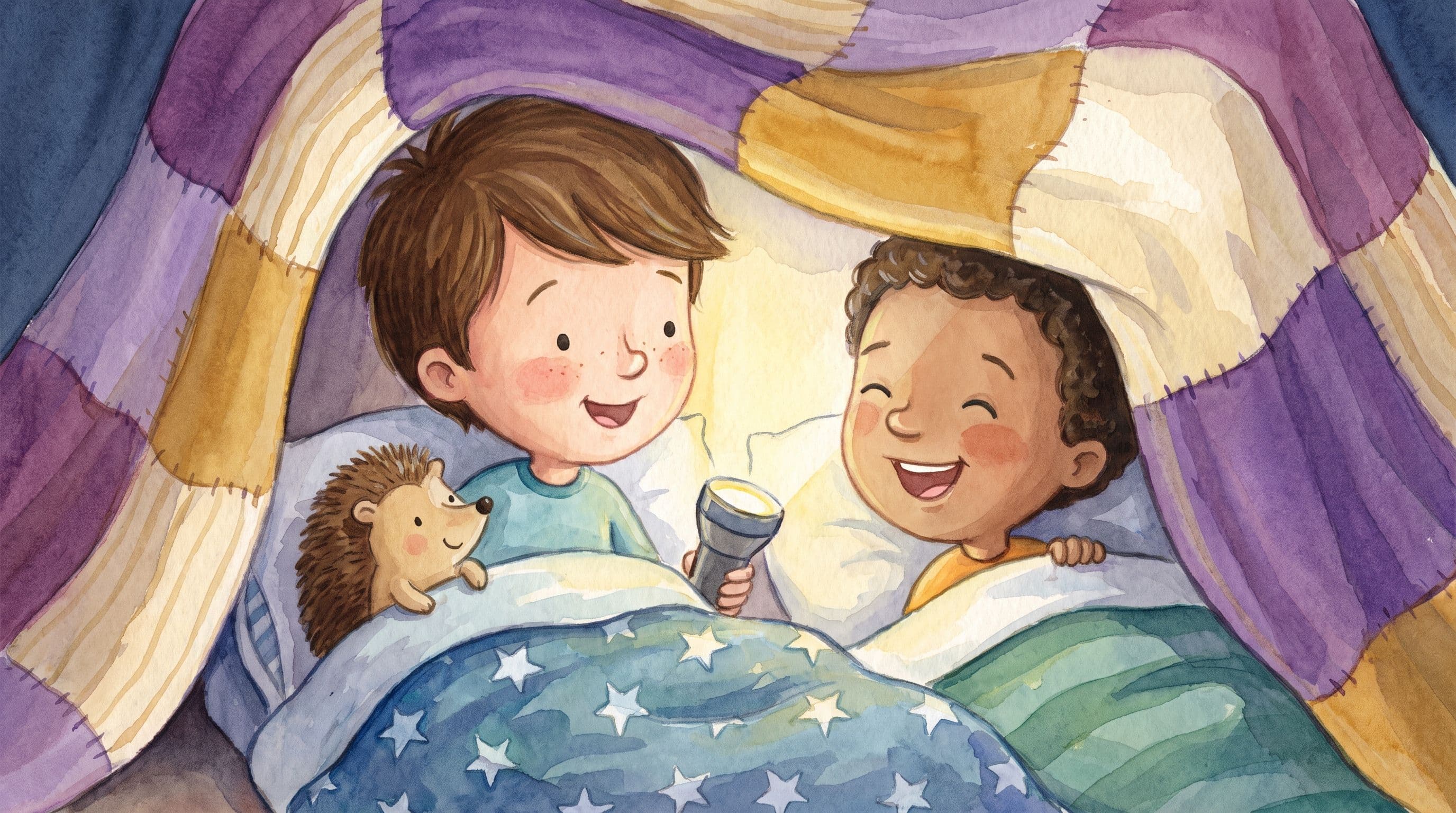
The night before, his mom read him a new book with a boy on the cover who had Charlie's brown hair, cozy in a sleeping bag with a flashlight, and Charlie's own name across the top. In the story, that Charlie was nervous about his first sleepover too, and his stuffed hedgehog Quill helped him get ready. Pack your comforts, Quill said, your pajamas, your toothbrush, a stuffed friend, and maybe a little photo of your family. If you miss home when it's dark, that's okay, everybody does sometimes. You can look at your photo, do your same bedtime routine, and remember that your grown-up is just a phone call away, and you can always come home if you really need to. Best of all, most missing-home feelings pass, and morning comes with pancakes. Story-Charlie had a blast, felt a little homesick at bedtime, used his plan, and made it to morning, proud as could be.
4. He tries, and has a brave night
Story-Charlie enjoyed his sleepover and made it through the night. Real Charlie felt ready. He packed his comforts and a photo of his family, and at the sleepover he had a blast building forts and giggling with his friend. When the lights went out and he felt a pang of missing home, he looked at his photo, did his bedtime routine with Quill, and remembered he could call or come home if he needed. The feeling passed. He fell asleep, and morning came with pancakes. "I did it! I slept over!" He was so proud.
5. He comes back to the book
Charlie asked for the book before every sleepover, and Quill's plan made each one easier. Nights away from home stopped being scary, because Charlie knew he had his comforts, a plan for missing home, and the certainty that he could always come home if he needed to.
How should you use a story like this at home?
- Pack familiar comforts and a small photo of family.
- Make a plan together for the missing-home feeling.
- Reassure them they can always call or come home, no shame in it.
- Keep their bedtime routine as similar as possible.
What if a child wants to come home in the middle of the night?
Reassuring them that coming home is always okay, with no shame, actually helps many kids feel brave enough to stay, and if they do need to come home, treat it as no big deal and try again another time. The American Academy of Pediatrics notes that a familiar comfort object and a consistent bedtime routine ease a child through nights away, and that the security of knowing a trusted grown-up is reliably there helps a child feel brave enough to separate (How to Ease Your Child's Separation Anxiety).
Keep reading: a first sleepover builds on the same courage as sleeping in your own room — see how this approach helps a child sleeping through the night in their own room.