Story ideas
How do you get a child to sleep in their own room all night?
How to help a child who won't sleep in their own room stay all night, by making the room feel safe and giving them one thing to do when they wake, with an example story.
The short answer
Make the room feel like theirs, give them one simple, repeatable thing to do when they wake up alone, and let them rehearse a full night in a story before they attempt it. Keep returns to their own bed calm and boring, and save the praise for the morning. A comfort object and a consistent bedtime routine help far more than reward charts or frustration.
Key takeaways
- The wandering is usually about comfort and safety, not broken bedtime rules.
- Make the room feel like theirs and give them one thing to do when they wake alone.
- Keep 2am returns calm and boring; save the warm praise for the morning.
- A story where your child is the hero lets them rehearse a full night first.
How do you get a child to sleep in their own room all night?
Make the room feel like theirs, give them one simple thing to do when they wake up alone, and let them rehearse a full night in a story before they have to live it. A child creeping down the hall at 2am usually isn't breaking a rule or chasing a sticker. They're solving for comfort, and the fastest comfort they know is you. To change the behavior, you change the feeling.
That's also why reward charts so often stall. A chart treats staying in bed as a task to be paid for, but the child isn't awake because they forgot the deal. They're awake because a dark, quiet room feels large and lonely. Give them a repeatable way to feel safe on their own and the pattern usually breaks.
Why does a story work when a reward chart doesn't?
A young child changes how they feel about something by living it in a story first. When the child in the story shares your child's name and face, they stop watching a lesson and start watching themselves do the brave thing. They arrive at their own hard night already knowing how it ends.
What does a good "stay in your room" story look like?
The names and characters are invented for this example. In a real personalized book, the hero is your own child.
1. A hero with something big to learn
Ava had a brand-new big-girl room, with a shelf for her rocks and a lamp shaped like a cloud. She loved it in the daytime. But every night, somewhere in the middle of it, she ended up padding down the hall into her parents' bed. Her own room, in the dark, felt very far from everyone else.
2. A worry she can name
When Ava woke alone, the house was so quiet it made her ears ring. Her room felt bigger than it did in the day, and emptier. She wasn't sure anyone would hear her if she called, so she didn't call. She just walked to the one place she knew for certain was safe.
3. A hero who looks just like her
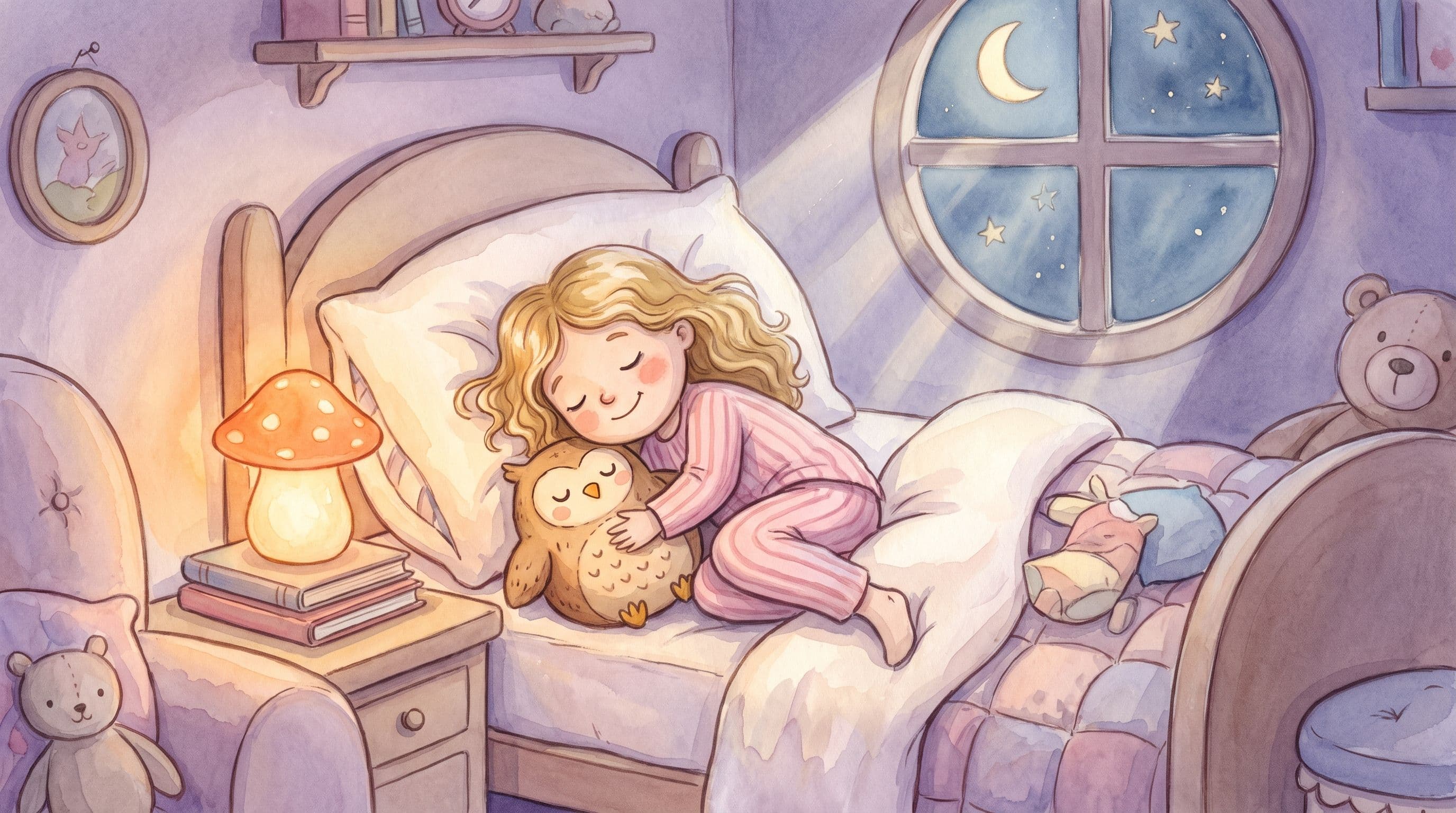
One evening, Mom brought home a new bedtime book. On the cover was a girl with Ava's wavy hair and Ava's own name across the top. In the story, that Ava also woke up alone and felt her room stretch big and empty. Story-Ava had a plush owl named Otis, and Otis had a job: owls stay awake and keep watch all night, so the people they love can rest.
4. She tries, and feels proud
Otis taught story-Ava the Three Goodnights. Before sleep she said goodnight to three things in her room, then handed Otis the watch. "You rest," Otis said. "I've got the room." Real Ava tried it that night. When she stirred in the dark, she felt his soft feathers and remembered: the room is watched, she can rest. She slept until morning in her own bed and announced it to the whole kitchen.
5. She won't stop asking for the book
The book lived on Ava's nightstand after that. She taught the Three Goodnights to her cousin and every animal on the windowsill. Some nights she still wakes, but now she knows what to do, and most mornings her parents find her right where she started.
How should you use a story like this at home?
- Read it during the calm part of the bedtime routine, several nights before you expect a full-night success.
- Give the "watcher" role to a specific stuffed animal your child already loves, so the tool has an anchor.
- When they do wake and come to you, walk them back calmly and cue the tool rather than starting a conversation that wakes everyone fully.
- Praise the morning, not the 2am moment. "You stayed in your own room," said warmly at breakfast, reinforces it better than a big nighttime scene.
Why won't my toddler sleep in their own room?
Most often it's comfort and safety rather than defiance. The American Academy of Pediatrics notes that a consistent bedtime routine helps a child know what to expect, that a comfort object like a special blanket or stuffed animal can help them settle and resettle, and that children need the chance to learn how to fall back asleep on their own when they wake in the night (Toddler Bedtime Trouble: 7 Tips for Parents). A story simply gives that self-settling skill a shape your child can picture and repeat.