Story ideas
What is the easiest way to get a toddler to give up the pacifier?
How to help a toddler give up the pacifier calmly, using a personalized story that lets them rehearse the goodbye, with a full example story and age guidance.
The short answer
The easiest way is to make the goodbye a positive event your child chooses, then give them a new comfort to reach for in its place. Keep one pacifier as a keepsake and name a specific replacement, like a stuffed animal and a calming breath. Most children are ready between ages two and four. A personalized story where a character like them says goodbye and feels proud lets them rehearse the change before it happens.
Key takeaways
- Make the goodbye a positive event your child chooses, not a surprise removal.
- Replace the comfort: a specific stuffed animal plus a simple calming move.
- Most children are ready to stop between ages two and four.
- A story where your child is the hero lets them rehearse the goodbye first.
What is the easiest way to give up the pacifier?
Make it a positive, chosen event rather than a surprise removal, keep one pacifier as a keepsake, and give your child a clear replacement comfort. Snipping the pacifier or making it vanish overnight can leave a young child feeling like something was taken from them without warning, which is what turns bedtime into a battle for a week.
A calmer approach gives the goodbye a shape and a reason: your child decides to say goodbye, keeps one in a keepsake tin to remember, and learns a new way to self-soothe for the hard moments. A story is the simplest way to rehearse that whole sequence before the real thing happens.
Why does a story work better than going cold turkey?
A story gives the change a beginning, middle, and happy ending, so your child walks into the goodbye already knowing how it turns out. When the hero shares your child's name and face, they stop watching a lesson and start rehearsing their own big moment.
That rehearsal matters because the pacifier is usually doing a real job: it makes scary things smaller and loud things quieter. Asking a child to give it up can feel like being asked to be brave with nothing in their hands. A story solves that by handing them a replacement comfort inside the plot, so the goodbye comes with something to hold onto instead of just something to lose.
What does a good pacifier goodbye story look like?
Here is a full example. The names and characters are invented; in a real personalized book, the hero is your own child.
1. A hero who loves their pacifier
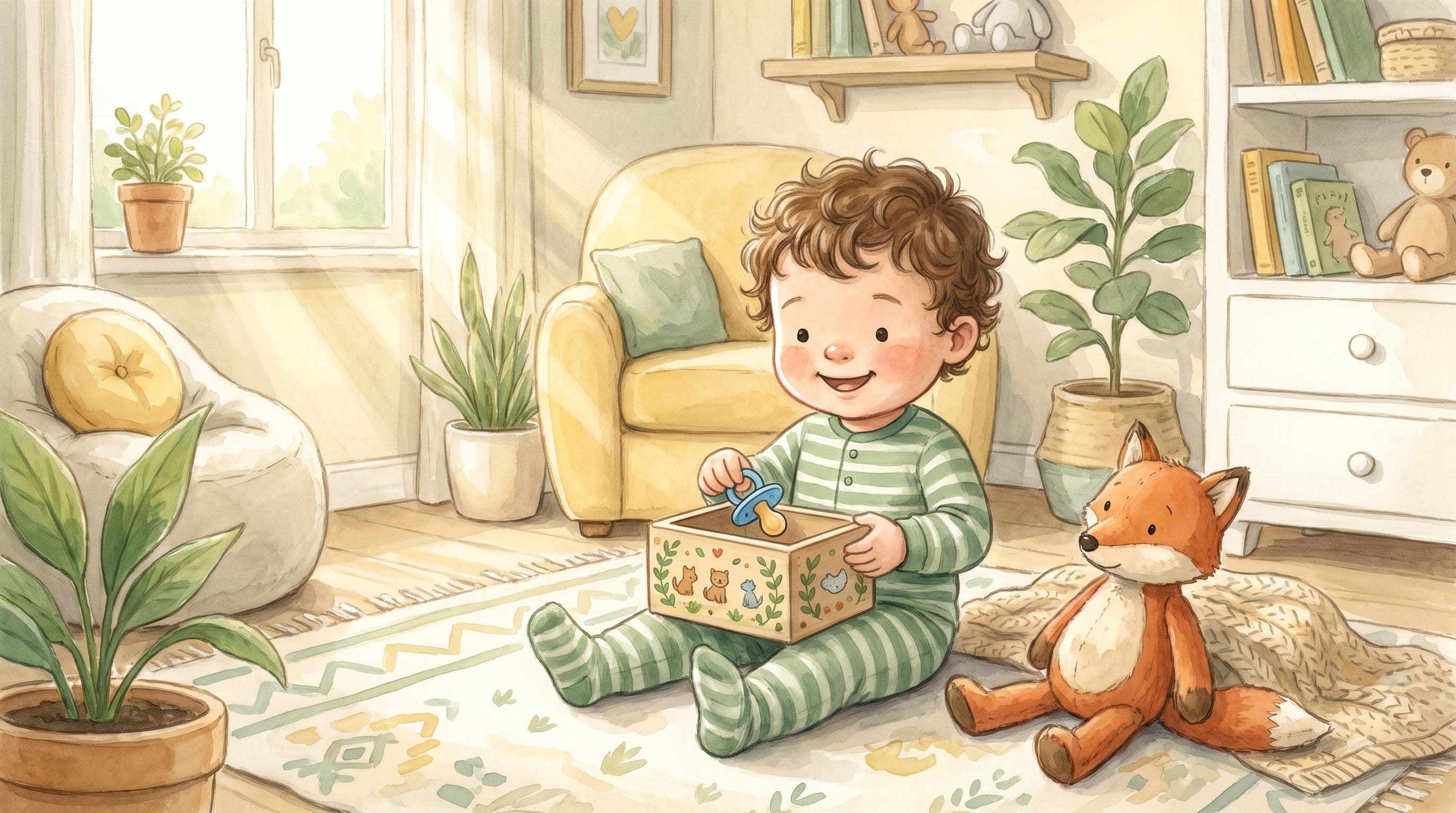
Liam loved four things: dinosaurs, pancakes, his stuffed fox Rusty, and his pacifier. The paci went in his mouth the second things got hard, at bedtime, in the car, whenever the day got loud. He was a big kid in every other way, but the paci stayed.
2. A worry he can name
When his mom mentioned that big kids don't usually need pacis, Liam's stomach dropped. The paci made scary things smaller. Giving it up felt like being asked to be brave with nothing in his hands, so he held on tighter.
3. A reason to let go
One morning, Dad read him a new book with a boy on the cover who had Liam's curly hair and Liam's own name. In the story, Rusty the fox had an idea: somewhere out there were new babies who needed pacifiers and didn't have any. What if Liam mailed his to the babies who needed them now?
4. He tries, and feels proud
Story-Liam gathered his pacis into a box, kept one special one in a keepsake tin, and mailed the rest. Rusty taught him the Big-Kid Squeeze for hard moments: hug your fox tight and take three slow breaths. Real Liam wanted to try it. The first night was wobbly. By the third, he barely remembered to look for it.
5. He won't stop asking for the book
The book stayed on Liam's shelf next to the keepsake tin. He asked for it every night that first week, and told everyone he mailed his pacis to babies who needed them.
How should you use a story like this at home?
- Read it for several days before the goodbye day, so the plan feels familiar before it happens.
- Let your child keep one pacifier in a keepsake box. A memento is easier than a total disappearance.
- Name the new comfort clearly: a specific stuffed animal and a simple calming move they can do anywhere.
- Expect a wobbly night or two and stay warm and matter-of-fact. Calm consistency shortens the transition.
When should a child give up the pacifier?
The American Academy of Pediatrics notes that strong sucking on a pacifier, thumb, or fingers beyond ages two to four can begin to affect the shape of the mouth and how the teeth line up, and suggests weaning around that window, or sooner if a dentist or doctor raises concerns (Pacifiers and Thumb Sucking). The right time is less about an exact age and more about your child being developmentally ready for a comfort swap.