Story ideas
How do you wean a toddler off the bottle without tears?
How to wean a toddler off the bottle without tears, by making the big-kid cup an exciting upgrade and keeping the comfort that came with the bottle, with an example story.
The short answer
Make the big-kid cup an exciting upgrade your child helps choose, keep the cuddles and comfort that used to come with the bottle, and celebrate the switch. Pediatric guidance suggests moving to an open cup gradually, ideally by about age two. A story where a character just like them proudly uses a big-kid cup makes the change feel like a win rather than a loss of comfort.
Key takeaways
- The bottle is often a comfort object, not just a feeding tool.
- Make the big-kid cup an exciting upgrade your child helps choose.
- Keep the cuddles and routines that used to come with the bottle.
- A story where your child is the proud hero makes letting go feel like a win.
How do you wean a toddler off the bottle without tears?
Make the big-kid cup an exciting upgrade your child helps pick, keep all the comfort that used to come with the bottle, and celebrate the switch. For many toddlers the bottle is bound up with feeling cozy and close, especially at nap and bedtime, so losing it can feel like losing comfort itself. The move gets easier the moment the comfort stops depending on the bottle.
The trick is to separate the two out loud: the snuggles, the lap time, the bedtime song all stay. Only the container changes. Framed that way, the cup becomes a step up rather than something taken away.
Why does a story work when the bottle is a comfort?
A story moves the comfort forward instead of removing it. When a child watches a hero switch to a big-kid cup, keep every snuggle, and feel proud, the change reads as growing up rather than losing out. Give the hero your child's name and face and the pride becomes theirs.
What does a good bottle-goodbye story look like?
The names and characters are invented for this example. In a real personalized book, the hero is your own child.
1. A hero with something big to try
Willa was learning to drink from a big-kid cup instead of her bottle. She was such a big kid in so many ways, but the bottle was her cozy favorite, especially at snuggle times.
2. A worry she can name
The bottle felt warm and soothing and familiar. Giving it up felt like giving up a little bit of coziness, and Willa wasn't sure a plain cup could ever feel as nice.
3. A hero who looks just like her
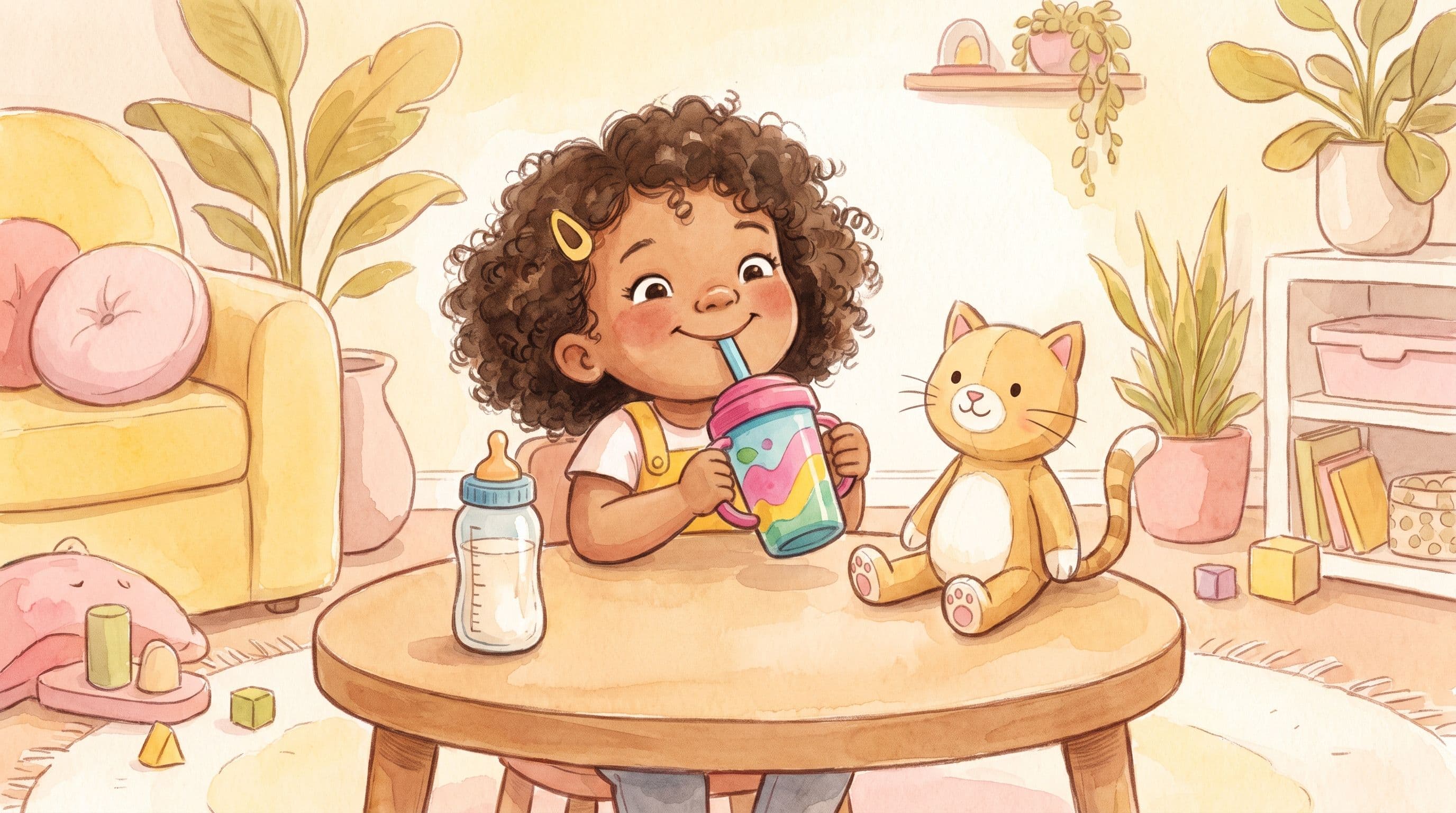
One evening her mom read her a new book with a girl on the cover who had Willa's curly hair and Willa's own name across the top. In the story, that Willa was giving up her bottle too, and her stuffed cat Muffin made it exciting. A big-kid cup is a special upgrade, Muffin purred, and here's the best part: all the cozy snuggles that used to come with the bottle still come with the cup. Willa even got to pick a cup in her favorite color.
4. She tries, and feels proud
Story-Willa used her special cup, kept all her snuggles, and felt proud. Real Willa wanted her own big-kid cup too. She picked a purple one, and at snuggle time she cuddled up just like always, sipping from her cup instead of her bottle. The cozy feeling was all still there. "I use a big-kid cup now," she said, and she meant it.
5. She won't stop asking for the book
Willa asked for the book at snuggle times, and the upgrade stuck. The bottle was forgotten sooner than anyone expected, because Willa had learned the comfort she loved was never really about the bottle. It was about the snuggles, and those weren't going anywhere.
How should you use a story like this at home?
- Let your child pick out a special big-kid cup.
- Keep the cuddles and routines that used to come with the bottle.
- Celebrate the switch out loud as a big-kid milestone.
- Ask your pediatrician about timing and any nutrition questions during the transition.
When should a toddler stop using a bottle?
The American Academy of Pediatrics advises moving off the bottle gradually and says it's healthiest for children to be drinking from an open cup by about age two, with a cup first offered around the time solids begin (From Bottle to Cup: Helping Your Child Make a Healthy Transition). Families vary, so if the transition turns into a real power struggle, your pediatrician can help you find the right pace.
Keep reading: the bottle and the pacifier are twin toddler milestones — see how the same approach helps a child giving up the pacifier.