Story ideas
How do you help a child feel confident about a birthmark, scar, or physical difference?
How to help a child with a visible difference by celebrating it as a signature, giving them a confident answer for questions, and filling them with pride in their whole self.
The short answer
Celebrate the difference as part of what makes your child one of a kind, a signature rather than a flaw, and give them a simple, confident answer for questions, like "It's my birthmark, I've had it since I was born." Speak about it positively and matter-of-factly, build pride in their whole self, and take any teasing seriously. A story that puts their mark front and center, celebrated, builds real, lasting confidence.
Key takeaways
- A child may notice people looking, field questions, or feel self-conscious about their mark.
- These features are part of what makes a child uniquely them.
- See the difference as a signature, and give them a confident way to answer questions.
- A story that puts their mark front and center, celebrated, builds real pride.
How do you help a child feel confident about a birthmark, scar, or physical difference?
Celebrate it as part of what makes them one of a kind, give them a simple, confident answer for questions, and fill them with pride in their whole, unique self. If your child has a birthmark, a scar, or another visible physical difference, helping them see it as special, a signature rather than a flaw, builds pride that carries through life.
A child who feels self-conscious about a mark can start to wish it away. A story reframes it as special.
Why does a story work for a visible difference?
A story reframes the mark as special. When a child watches a hero wear their birthmark or scar with pride and handle questions with ease, they learn that their difference is a signature to be proud of, not something to hide. Give the hero your child's name and face and the pride becomes theirs.
What does a good story about a visible difference look like?
The names and characters are invented for this example. In a real personalized book, the hero is your own child, and the story can celebrate their specific mark.
1. A hero with a mark
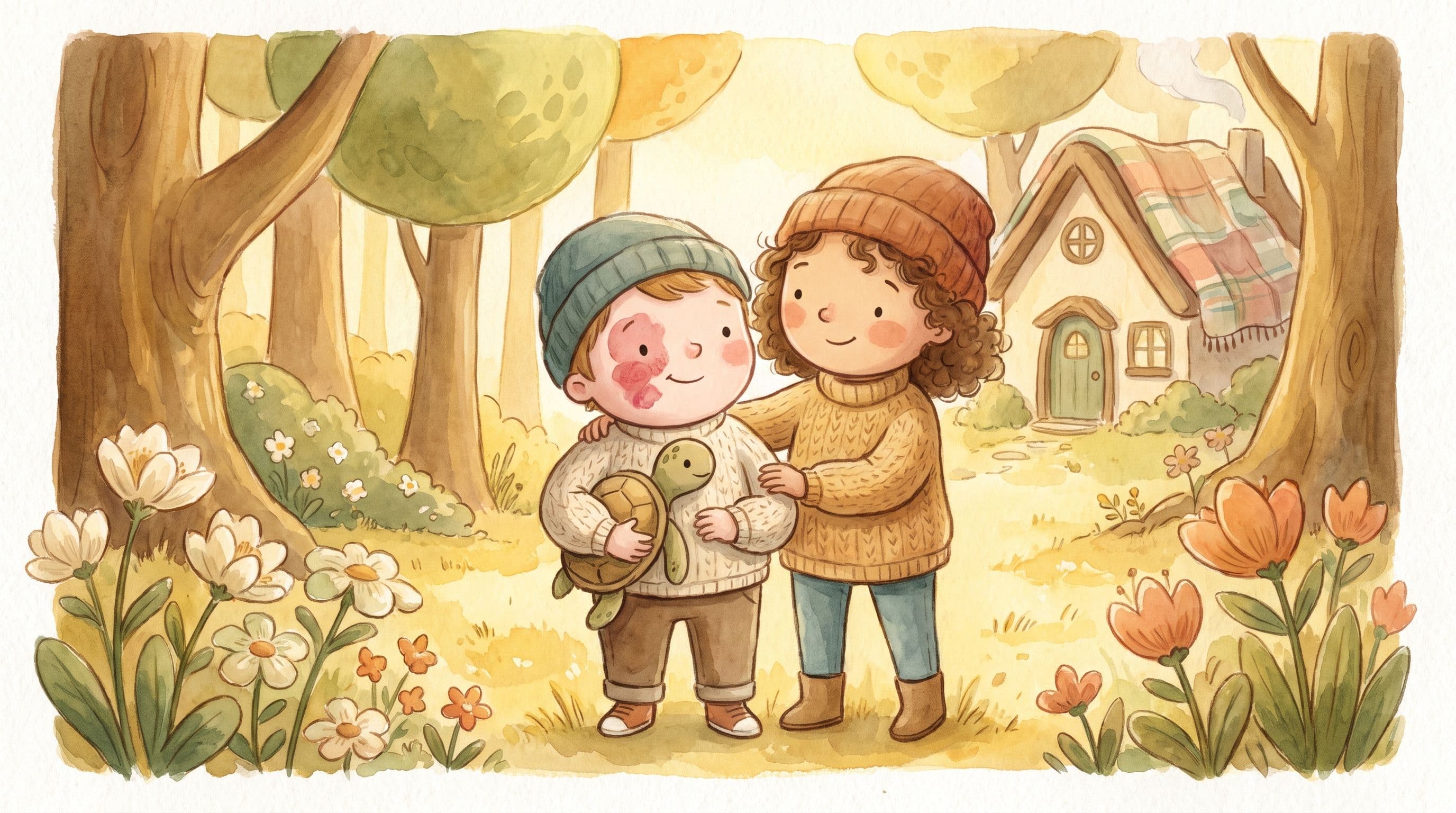
Reed had a birthmark on his cheek. It was part of him for as long as he could remember. But sometimes kids stared or asked about it, and Reed started to feel self-conscious, wishing he could just look like everyone else.
2. A feeling he can name
The stares and questions made Reed wonder if there was something wrong with his mark, and with him. He didn't have a good way to answer when kids asked, so he'd get quiet or cover his cheek.
3. A hero who looks just like him
One evening his mom read him a new book with a boy on the cover who had Reed's birthmark, standing proud, and Reed's own name across the top. In the story, that Reed had a special mark too, and his stuffed turtle Ziggy helped him see it differently. Your mark is a signature, Ziggy said, part of what makes you one of a kind, and there's not another one like it in the whole world. When kids are curious, they're usually just wondering, and you can answer with a simple, confident line: "It's my birthmark, I've had it since I was born." Ziggy reminded him that his mark was something to be proud of, a piece of his own special story. Story-Reed answered a question with a smile and stood tall, and it felt good.
4. He tries, and stands proud
Story-Reed wore his mark with pride and handled questions with ease. Real Reed wanted to feel that way too. He practiced his confident line, and when a kid asked about his cheek, he said, "It's my birthmark, I've had it since I was born," and kept right on playing. The kid said "Cool" and that was that. Reed stopped covering his cheek and started standing tall, proud of his one-of-a-kind mark.
5. He comes back to the book
Reed asked for the book whenever he needed a boost, and Ziggy's "signature" idea stuck. His mark stopped being something to hide and became part of what he liked about himself, because Reed had learned that being one of a kind is something to be proud of.
How should you use a story like this at home?
- Speak about your child's difference positively and matter-of-factly.
- Give them a simple, confident answer for curious questions.
- Celebrate their whole, unique self, mark and all.
- Take any teasing seriously and support your child's confidence.
What should a child say when kids ask about their difference?
A short, matter-of-fact answer works well, like "It's my birthmark, I've had it since I was born," and practicing it builds confidence. The American Academy of Pediatrics notes that a strong sense of self-worth comes from feeling valued and accepted for who they are, and that praising a child's real strengths and helping them feel loved builds the confidence to handle curiosity and teasing about a visible difference (Building Blocks for Healthy Self Esteem in Kids).
Keep reading: loving what makes you different is a lesson that protects against teasing — see how this approach helps a child teased for something they can't change.