Story ideas
How do you help a child who is much smaller or taller than their peers?
How to help a child who stands out for their height by treating size as no big deal and a source of pride, pointing out every size's perks, and centering who they are.
The short answer
Treat your child's size as no big deal and a source of pride, pointing out that every size has its own advantages and that who they are matters far more than how tall they are. Highlight the perks of their size, emphasize the qualities that count more than height, and give them a light, confident line for comments. A story where a character just like them owns their size with confidence helps them stand tall in exactly who they are.
Key takeaways
- A child at either end of the height range may hear comments constantly or feel set apart.
- Being much smaller or taller can make a kid self-conscious.
- Treat size as no big deal, point out its perks, and center who they are.
- A story where your child owns their size with confidence helps them stand tall.
How do you help a child who is much smaller or taller than their peers?
Treat it as no big deal and a source of pride, pointing out that every size has its own advantages and that who they are matters far more than how tall they are. If your child is much smaller or much taller than everyone their age, helping them see their size as simply one part of who they are lets them own it instead of feeling defined by it.
Constant comments about height can make a child feel their body is a problem. A story shifts the frame.
Why does a story work for size differences?
A story shifts the frame from problem to fun fact. When a child watches a hero own their size, enjoy its perks, and stand tall in who they are, they learn that being small or tall is just one fun fact about them, not the thing that defines them. Give the hero your child's name and face and the confidence becomes theirs.
What does a good story about size look like?
The names and characters are invented for this example, and the story can be adapted for a child who is much taller. In a real personalized book, the hero is your own child.
1. A hero who is a different size
Mabel was much smaller than the other kids her age. People often thought she was younger than she was, and she was always the shortest in every line and photo. She started to feel like her size made her stand out in a way she didn't love.
2. A feeling she can name
All the comments about how little she was made Mabel wish she could just be an average size like everyone else. She wondered if being small meant she was less, somehow.
3. A hero who looks just like her
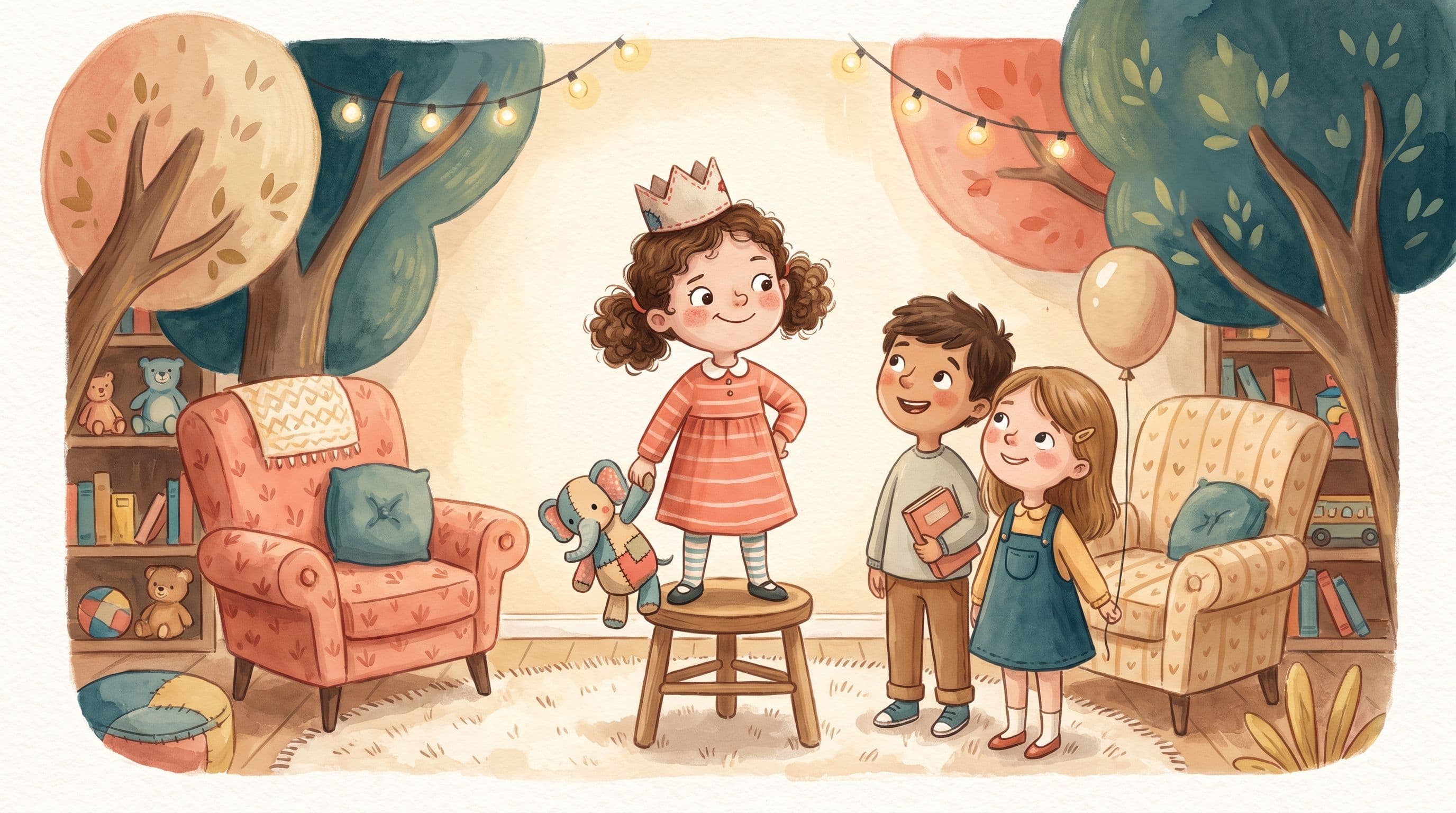
One evening her mom read her a new book with a girl on the cover who had Mabel's size and smile, standing proud among taller friends, and Mabel's own name across the top. In the story, that Mabel was much smaller too, and her stuffed elephant Ellie helped her own it. Your size is just one fun fact about you, Ellie said, not the most important thing, that's your kindness, your ideas, your heart. And every size has perks: small kids can be quick and nimble and fit in the best hiding spots, and tall kids can reach high shelves and see over crowds. Ellie reminded her that who you are matters so much more than how tall you are. Story-Mabel stood tall in who she was, small and mighty, and felt great.
4. She tries, and owns her size
Story-Mabel owned her size with confidence. Real Mabel wanted to feel that way too. She thought about her perks, quick, nimble, great at hide-and-seek, and about all the things that mattered more than her height. When someone commented on how small she was, she just smiled and said, "Small and mighty, that's me." She stopped wishing to be different and started standing tall in exactly who she was.
5. She comes back to the book
Mabel asked for the book again and again, and Ellie's "small and mighty" became her motto. Her size stopped bothering her, because Mabel had learned that it's just one fun fact about her, and the things that really matter have nothing to do with how tall she is.
How should you use a story like this at home?
- Treat your child's size as no big deal and a source of pride.
- Point out the fun advantages of their size.
- Emphasize the qualities that matter more than height.
- Give them a light, confident line for comments about their size.
What helps a child teased about their height?
Building confidence and a light response, plus emphasizing what matters more than size, helps, and persistent teasing is worth taking seriously and involving the school. The American Academy of Pediatrics notes that self-worth grows when children feel valued for who they are rather than how they look, and that praising a child's real strengths and helping them feel accepted builds the confidence to shrug off comments about their body (Building Blocks for Healthy Self Esteem in Kids).
Keep reading: owning your size is part of loving everything that makes you you — see how this approach helps a child with a birthmark, scar, or physical difference.