Story ideas
How do you help a child with ADHD who feels like 'too much'?
How to help a child with ADHD who feels like 'too much' by reframing their bright, busy brain as a gift with real strengths, while giving tools for the tricky parts.
The short answer
Reframe your child's brain as a gift with real strengths, creativity, energy, enthusiasm, and hyperfocus on what they love, while giving them tools and understanding for the tricky parts. Notice and reduce "too much" messaging, reflect their strengths back often, offer practical supports like movement breaks and lists without shame, and partner with their care team. A personalized, affirming story helps a child who feels like "too much" see themselves as exactly enough.
Key takeaways
- "Too much" is a phrase a child has heard, in words or in sighs, and it can quietly wound.
- A child with ADHD often has a bright, fast, creative brain the world isn't set up for.
- Reframe the brain as a gift while giving tools for the parts that are hard.
- A story where your child sees their busy brain as a gift helps them feel like exactly enough.
How do you help a child with ADHD who feels like "too much"?
Reframe their brain as a gift with real strengths, creativity, energy, enthusiasm, hyperfocus on what they love, while giving them tools and understanding for the tricky parts. If your child has ADHD and feels like "too much," they hear "settle down," "focus," "stop" a lot, and can start to feel like a problem. A warm, affirming story can help them see their busy brain as the gift it is.
A child who constantly hears they're too much starts to believe it. A story rewrites that narrative.
Why does an affirming story work?
A story rewrites the "too much" narrative. When a child sees a hero with the same bright, busy brain celebrated for their strengths and gently supported with the hard parts, they learn they aren't a problem to be managed, they're a wonderful kid whose brain works fast and big. Give the hero your child's name and face and the pride becomes deeply personal.
What does a good ADHD-affirming story look like?
The names and characters are invented for this example. In a real personalized book, the hero is your own child, and the story can reflect their particular strengths and challenges.
1. A hero who feels like too much
Piper had a brain that went fast and big. She had a million ideas, boundless energy, and huge enthusiasm. But she also heard "settle down," "focus," and "not so loud" a lot, and she'd started to feel like maybe she was just too much for everyone.
2. A feeling she can name
Being told to tone herself down over and over made Piper feel like something about her was wrong. She didn't want to be too much. She just didn't know how to be any other way, and it made her feel bad about herself.
3. A hero who looks just like her
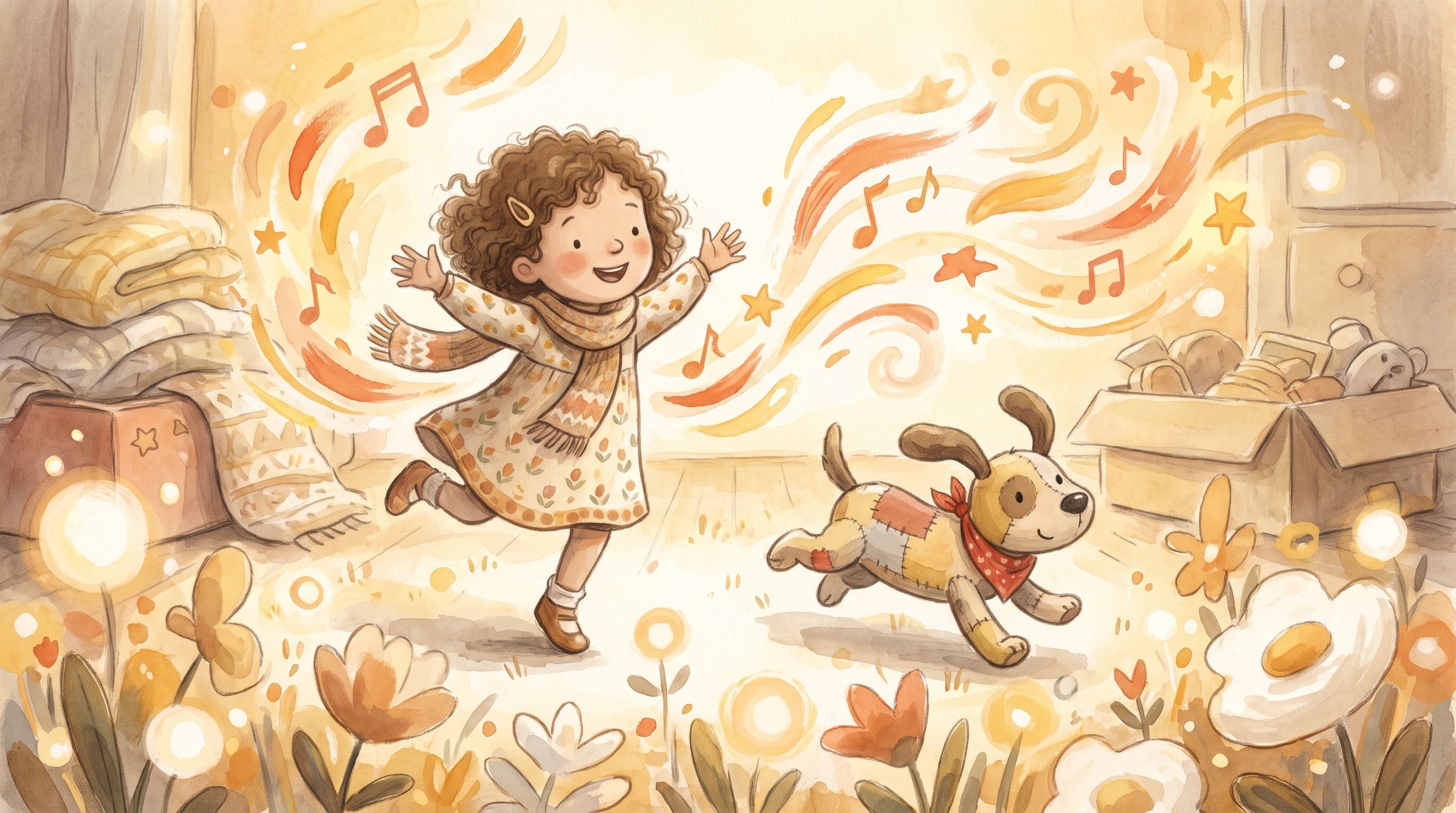
One evening her mom read her a new book with a girl on the cover who had Piper's curly hair, mid-leap with a huge grin, and Piper's own name across the top. In the story, that Piper had a bright, busy ADHD brain too, and her spirited stuffed dog Zoom told her the truth. Your brain isn't too much, Zoom said, it's a gift with real superpowers: amazing creativity, huge energy, the ability to hyperfocus on things you love, and a heart full of enthusiasm. Some things are trickier for ADHD brains, like sitting still or remembering steps, and that's where tools help, movement breaks, lists, and grown-ups who understand. But being you is not a problem to fix. Zoom showed her how to channel her energy into things she loved, and how to ask for the support she needed, all while staying wonderfully, fully herself.
4. She understands, and feels proud
As she heard the story, Piper sat up taller. Real Piper listened, holding her own stuffed dog. "My brain is a gift, not a problem?" "A wonderful gift," her mom said. Piper thought about her big ideas, her energy, the way she could focus for hours on things she loved, and she felt proud. She learned to take movement breaks when she needed them and to ask for help with the tricky parts, and she stopped trying to be less than she was. She wasn't too much. She was exactly enough.
5. She comes back to the book
Piper asked for the book whenever she needed a reminder of her worth, and Zoom's message stuck: her bright, busy brain is a gift. She grew up channeling her energy into the things she loved and asking for support without shame, proud of exactly who she is.
How should you use a story like this at home?
- Reflect your child's strengths back to them often, especially the ones tied to their ADHD.
- Reframe "too much" language and notice how often the world sends it.
- Offer practical tools, movement breaks, lists, routines, without shame.
- Partner with your child's care team, and seek out ADHD-affirming voices and support.
What do you do when a child hears they're "too much" all the time?
Notice and reduce that messaging, highlight their strengths, provide understanding and tools, and connect with ADHD-affirming resources. The American Academy of Pediatrics notes that children do best when families focus on each member's strengths and avoid excessive criticism, that recognizing effort helps overpower any sense of failure or shame, and that having even one fully supportive adult is one of the biggest factors in the future success of a child with ADHD (Building Blocks for Healthy Self Esteem in Kids).
Keep reading: loving a bright, busy brain is part of a bigger story about different minds — see how this approach helps a child understanding their autism.