Story ideas
How do you help a child teased for something they can't change?
How to help a child teased for a trait they can't change by building deep pride in that very thing, reframing it as what makes them special, and giving a confident response.
The short answer
Build deep pride in the very thing being teased, reframe it as part of what makes your child special, give them a calm, confident response like "I like who I am," and reassure them the problem is the unkindness, not them. Celebrate that trait out loud and often, and loop in the school if the teasing is ongoing. A story where a character just like them loves their unique trait and stands tall makes that pride real and lasting.
Key takeaways
- Teasing about a trait a child can't change cuts deep, because it targets who they are.
- You can't change the thing being teased, and you wouldn't want to.
- Build such solid pride that the teasing loses its power.
- A story that celebrates what makes them them is a beautiful place to start.
How do you help a child teased for something they can't change?
Build deep pride in that very thing, reframe it as part of what makes them special, give them a confident response, and reassure them the problem is the unkindness, not them. If your child is being teased for their height, freckles, accent, name, or a physical feature, you can't change it, and you wouldn't want to. What you can do is help your child build such solid pride in themselves that the teasing loses its power.
When teasing hits something a child can't change, "just ignore it" doesn't reach the hurt. A story reaches it by celebrating the very thing being teased.
Why does a story work when teasing targets who they are?
A story celebrates the very thing being teased, so a child absorbs a truth that sticks: what makes them different is exactly what makes them wonderful, and unkind words say more about the teaser than about them. Give the hero your child's name and face and the pride becomes theirs.
What does a good standing-tall story look like?
The names and characters are invented for this example. In a real personalized book, the hero is your own child, and the story can celebrate their own unique trait.
1. A hero dealing with something hard
Some kids at school had been teasing Rohan about something he couldn't change, a part of who he is. It made him wish he could be different, and it chipped away at how he felt about himself.
2. A worry he can name
Why did they have to pick on the very thing he couldn't change? Rohan started to feel embarrassed about something that was simply part of him, and the teasing made him want to shrink and hide.
3. A hero who looks just like him
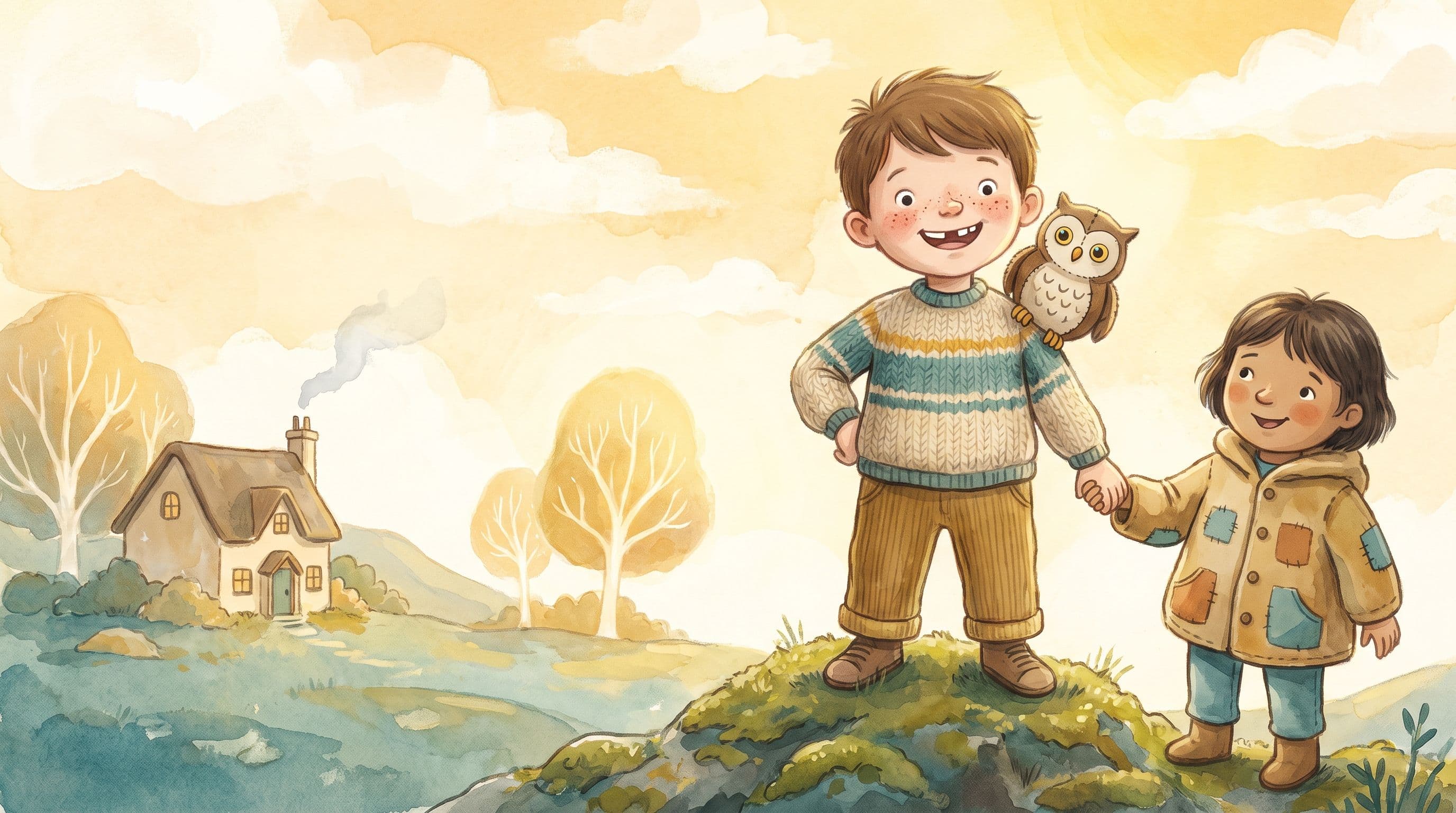
One evening his mom read him a new book with a boy on the cover who had Rohan's own features, standing tall and proud, and Rohan's own name across the top. In the story, that Rohan was teased for something he couldn't change too, until his wise stuffed owl Sage helped him see the truth. The thing they teased was actually part of what made him wonderfully, uniquely him, and the world is better because everyone is different. Sage reminded him that when someone is unkind about who you are, the problem is their unkindness, not you. And Sage gave him a confident response for the teasers: a calm shrug and "I like who I am." Story-Rohan stood tall, loved his unique trait, and the teasing rolled right off.
4. He tries, and stands tall
Story-Rohan carried his head high, and his pride made him strong. Real Rohan wanted to feel that solid too. He practiced Sage's calm response and, more importantly, started noticing all the ways his unique trait was part of what made him great. When a kid teased him, he shrugged and said, "I like who I am," and kept right on going. The words stopped stinging, because Rohan knew the truth: he was exactly who he was meant to be.
5. He comes back to the book
Rohan asked for the book whenever he needed a boost, and Sage's truth stayed with him: what makes you different makes you wonderful. His pride grew unshakable, because he'd learned to love the very thing others had teased, and to know that unkindness was never about him.
How should you use a story like this at home?
- Celebrate the specific trait being teased, out loud and often.
- Make clear the problem is the unkindness, not your child.
- Practice a calm, confident response together.
- Loop in the school if the teasing is ongoing, and consider a counselor if it's affecting your child's wellbeing.
What do you say when a child wants to change themselves because of teasing?
Reassure them that the trait is part of what makes them wonderful and that unkind words reflect the teaser, not them, and celebrate who they are. The American Academy of Pediatrics notes that a strong sense of self-worth comes from feeling loved, capable, and accepted for who they are, and that praising a child's real strengths and helping them feel valued builds the resilience to weather teasing and setbacks (Building Blocks for Healthy Self Esteem in Kids).
Keep reading: when teasing crosses into something bigger, kids need to know how to get help — see how this approach helps a child who's being bullied.