Story ideas
How do you help a child who is being bullied?
How to help a child being bullied with the messages that matter most, it's not your fault and telling a trusted grown-up is brave, plus a gentle example story.
The short answer
Repeat the messages that matter most: it's not your fault, you deserve to feel safe, and telling a trusted grown-up is brave, not tattling. Help your child name the grown-ups they can go to, take any report seriously, and involve the school promptly. Because bullying can have a serious impact, consider a counselor or child therapist if it's ongoing. A gentle story where a character just like them speaks up and gets help can give a child courage.
Key takeaways
- Kids who are bullied often stay silent out of fear, shame, or worry that telling will make it worse.
- The two things they most need to hear: this is not your fault, and telling is brave.
- Telling a trusted grown-up is keeping yourself safe, not tattling.
- A gentle story where your child speaks up and gets help can help them find their voice.
How do you help a child who is being bullied?
Say the vital truths, plainly and often: it's not your fault, you deserve to feel safe, and telling a trusted grown-up is brave and the right move, not tattling. If your child is being bullied, it's one of the hardest things for them to talk about. A gentle story can carry those messages and help a child find their voice.
A bullied child often can't find the words, or fears that speaking up will backfire. A story gives the feelings a safe container and models the brave step.
Why does a story work when a child stays silent?
A story shows a child that telling works. When they watch a hero who's being bullied tell a caring grown-up and get help, they learn it isn't tattling and that adults will step in, which can be exactly the push a silent child needs. Give the hero your child's name and face and the courage becomes theirs. Bullying can have a serious impact, and a school counselor or child therapist can be an important source of support.
What does a gentle bullying story look like?
The names and characters are invented for this example. In a real personalized book, the hero is your own child.
1. A hero dealing with something hard
A kid at school was being mean to Reid, over and over, and it was making Reid's days miserable. He didn't know what to do, and he hadn't told anyone, because part of him worried it might be his fault or that telling would make it worse.
2. A worry he can name
Reid felt small and unsure. Was he doing something wrong? Would telling a grown-up be tattling? Would it make the mean kid even meaner? So he kept it inside, and the heavy feeling grew.
3. A hero who looks just like him
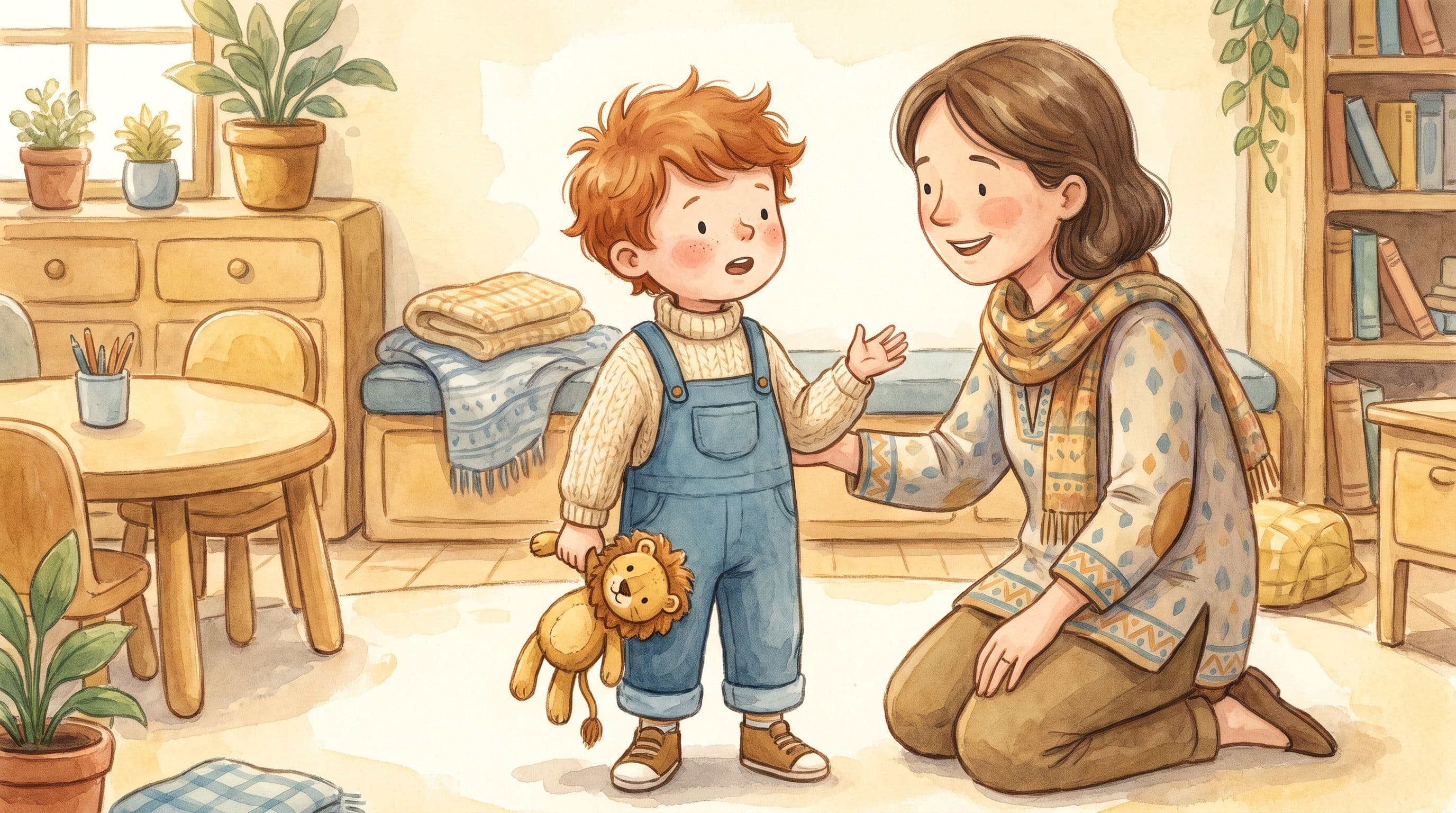
Gently, one evening, his mom read him a new book with a boy on the cover who had Reid's red hair, talking to a kind teacher, and Reid's own name across the top. In the story, that Reid was being bullied too, and his stuffed lion Rory told him the truths that mattered most. It is not your fault, not even a little. No one deserves to be treated unkindly, and you deserve to feel safe. Telling a trusted grown-up is not tattling, tattling is trying to get someone in trouble, but telling is keeping yourself safe, and that is brave and exactly right. Rory helped story-Reid find a grown-up he trusted and say the words, and the grown-up listened, believed him, and helped make it stop.
4. He finds his voice
As he heard the story, Reid felt a little braver and a lot less alone. Real Reid held his own stuffed lion and thought about who he trusted. The next day, he went to his teacher and said, "Someone has been being mean to me, and I need help." His teacher knelt down, listened carefully, told him it was not his fault, and promised to help. A weight lifted off Reid's chest. He wasn't carrying it alone anymore.
5. He comes back to the book
Reid asked for the book again, because it reminded him of the brave thing he'd done and the truths that mattered: it wasn't his fault, he deserved to feel safe, and telling a grown-up was the strong, right choice. With the caring adults in his corner, things started to get better.
How should you use a story like this at home?
- Repeat the core messages: it's not your fault, you deserve to feel safe, telling is brave.
- Help your child identify the trusted grown-ups they can go to.
- Take any report of bullying seriously and involve the school promptly.
- Consider a school counselor or child therapist, especially if the bullying is ongoing or affecting your child's wellbeing.
How do you get a child to tell you if they're being bullied?
Creating a safe, non-judgmental space, reassuring them it's not their fault, and normalizing asking for help all make it easier for a child to open up. The American Academy of Pediatrics notes that children often don't report bullying out of fear of retribution, and that having just one person listen and support a bullied child helps them handle it in a healthier way — so if the bullying continues, seek help from teachers, counselors, school leaders, and your pediatrician (Why Bullying Hurts All Children—and What Parents Can Do About It).
Keep reading: feeling left out and being bullied can blur together for a hurting kid — see how this approach helps a child who's being left out at recess.