Story ideas
How do you help a child feel safe joining a new foster family?
How to help a child joining a foster home feel safe with gentle, steady messages, a welcomed range of feelings, and reassurance they don't have to figure everything out.
The short answer
Lead with clear, gentle messages of safety: you are safe here, the grown-ups will take care of you, all of your feelings are okay, and you don't have to figure everything out right now. Welcome every feeling without pressure, keep comfort objects and predictable routines close, and let the child set the pace. Because foster care involves complex feelings and histories, do this in partnership with the child's caseworker or a trauma-informed professional.
Key takeaways
- A child joining a foster family arrives in an unfamiliar home during an uncertain, often frightening time.
- They may carry grief, confusion, and worry, and a very real need to know they are safe.
- Lead with safety, welcome every feeling, and remove the burden of figuring it all out.
- A gentle story where your child is welcomed warmly, done alongside their care team, can offer real comfort.
How do you help a child feel safe joining a new foster family?
Lead with gentle, steady messages: you are safe here, the grown-ups will take care of you, all of your feelings are okay, and you don't have to figure everything out right now. When a child is joining a foster family, they are arriving somewhere unfamiliar during an uncertain, often frightening time — carrying big feelings and a very reasonable need to know they are safe. A gentle, honest story can offer some steadiness.
A child entering foster care has often experienced a great deal, and words spoken directly can feel overwhelming. A story offers reassurance at a safe distance.
Why does a gentle story help?
A story offers reassurance through a character, at a distance that feels safe. When a child sees a hero like them enter a caring home, be shown their own cozy space, and hear that they are safe and their feelings are welcome, some of the fear can begin to soften. Give the hero the child's name and face and the reassurance becomes personal. Because foster care involves complex feelings and circumstances, a caseworker, therapist, or trauma-informed professional can help make sure a story like this fits a specific child's needs.
What does a gentle foster-family story look like?
The names and characters are invented for this example. In a real personalized book, the hero is your own child, ideally with guidance from their care team.
1. A hero arriving somewhere new
Sam came to live with a foster family, in a home he'd never been to before, with grown-ups he was just getting to know. Everything was unfamiliar, and Sam wasn't sure what to expect.
2. A worry he can name
Where was he? Was he safe? What was going to happen? Sam had a lot of big feelings all tangled up, and he didn't have words for most of them. The not-knowing was hard.
3. A hero who looks just like him
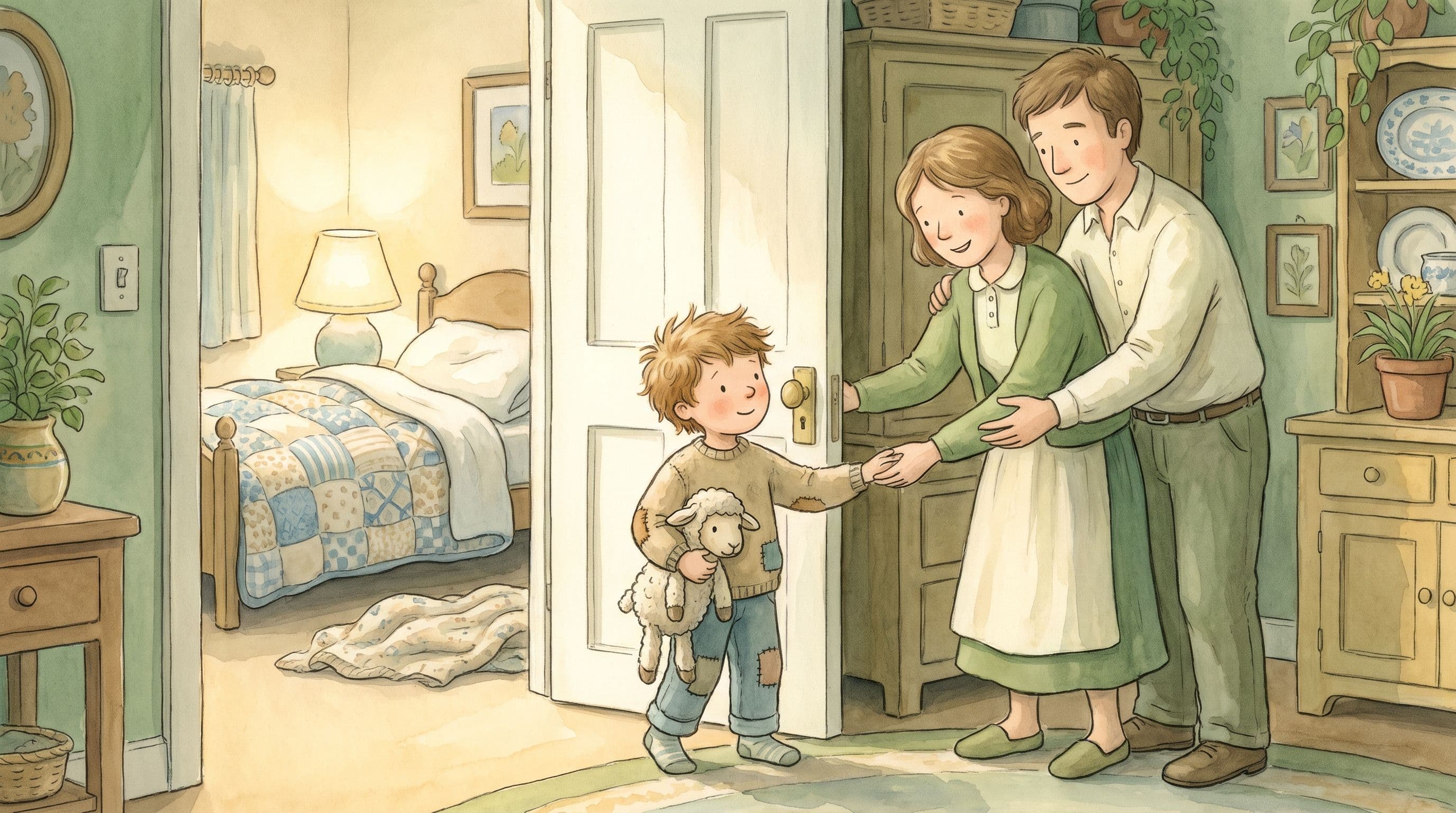
Gently, one evening, a grown-up read Sam a new book with a boy on the cover who had Sam's light brown hair, being welcomed into a cozy home, and Sam's own name across the top. In the story, that Sam was joining a foster family too, and his stuffed lamb Willow stayed right beside him. The book said the steady, gentle things Sam most needed to hear. This is a safe place. The grown-ups here will take care of you and keep you safe. You have your own cozy bed and your own space. Whatever you're feeling — happy, sad, scared, mixed-up — it's all okay, and you don't have to figure anything out right now. You are not alone.
4. He feels a little safer
As he heard the story, some of the tightness in Sam eased. Real Sam held his own soft lamb and listened. His foster family showed him his cozy room, the safe grown-ups he could go to, and let him know his feelings were welcome. "You're safe here," they told him gently. Sam still had big feelings, and that was okay. But he was starting to believe, a little, that this was a safe place.
5. He comes back to the book
Sam asked for the book on the hard nights and the quiet ones, because it reminded him of the steady things: he was safe, he was cared for, and his feelings were allowed. Willow stayed close. Nothing was fully figured out, and it didn't have to be, but underneath the uncertainty was something gentle and real: he had found a safe place, and he wasn't alone.
How should you use a story like this at home?
- Lead with safety and steadiness, and keep the tone gentle and unhurried.
- Welcome all feelings without pressure, and let the child set the pace.
- Keep comfort objects and predictable routines close.
- Work closely with caseworkers, therapists, and trauma-informed professionals, who can tailor support to the child's specific needs and history.
Should you use a book to talk about foster care with a child?
A gentle, personalized story can offer reassurance at a safe distance — best done in partnership with the child's caseworker or a trauma-informed therapist. The American Academy of Pediatrics notes that children in out-of-home placement typically experience confusion, worry, fear, sadness, and a loss of control, and recommends supports like sending a comfort object such as a stuffed animal with the child each day, avoiding isolation-based discipline for a child who may already feel abandoned, and engaging a mental health professional when a child has ongoing difficulty (Helping Children in Foster Care Successfully Transition into Child Care).
Keep reading: a safe home and a forever family are part of the same story of belonging — see how this approach helps a child celebrating adoption day.