Story ideas
How do you help a child who is afraid of dogs?
How to help a child who's afraid of dogs by teaching the safe way to meet one and a calm-down move to use if they feel scared, with a full example story.
The short answer
Teach your child the safe way to be around dogs: ask the owner first, stand calm and still, let the dog sniff a soft fist, and "be a tree" if they feel scared. Start with gentle, leashed, owner-supervised dogs and never force contact. A story where a character just like them meets a gentle dog the safe way builds real confidence, instead of keeping the fear alive through avoidance.
Key takeaways
- Dogs are fast, loud, and unpredictable; even a friendly one can look huge to a small child.
- Avoiding every dog keeps the fear alive — a calm plan lets it shrink.
- Teach real safety: ask first, let the dog sniff, and a "be a tree" fallback.
- A story where your child meets a gentle dog the safe way builds genuine confidence.
How do you help a child who is afraid of dogs?
Teach your child a calm, confident plan for being around dogs, so dogs feel manageable instead of terrifying. The fear makes sense: dogs are unpredictable, they move quickly, and to a small child even a friendly one can seem huge. The goal isn't to force affection. It's to replace "freeze, cry, or bolt" with a set of steps they can actually use.
Avoiding every dog keeps the fear alive, because your child never gets the chance to learn that most dogs are safe and predictable. A safe, structured first encounter is what changes that.
Why does a story work when avoidance doesn't?
A story offers a safe first meeting. When a child watches a hero meet a calm dog using clear rules, they gain a plan they can use the next time a dog trots over. Give the hero your child's name and face and the plan becomes theirs.
What does a good meeting-a-dog story look like?
The names and characters are invented for this example. In a real personalized book, the hero is your own child.
1. A hero with something big to learn
Mason loved the park, except for one thing: dogs. As soon as one came into view, his fun stopped. He'd grab a grown-up's leg and want to leave, even if the dog was small and wagging.
2. A worry he can name
Dogs were fast and loud and hard to predict, and Mason never knew what one might do. That not-knowing made his heart race. So he steered clear of every dog, which meant a lot of the park was off-limits.
3. A hero who looks just like him
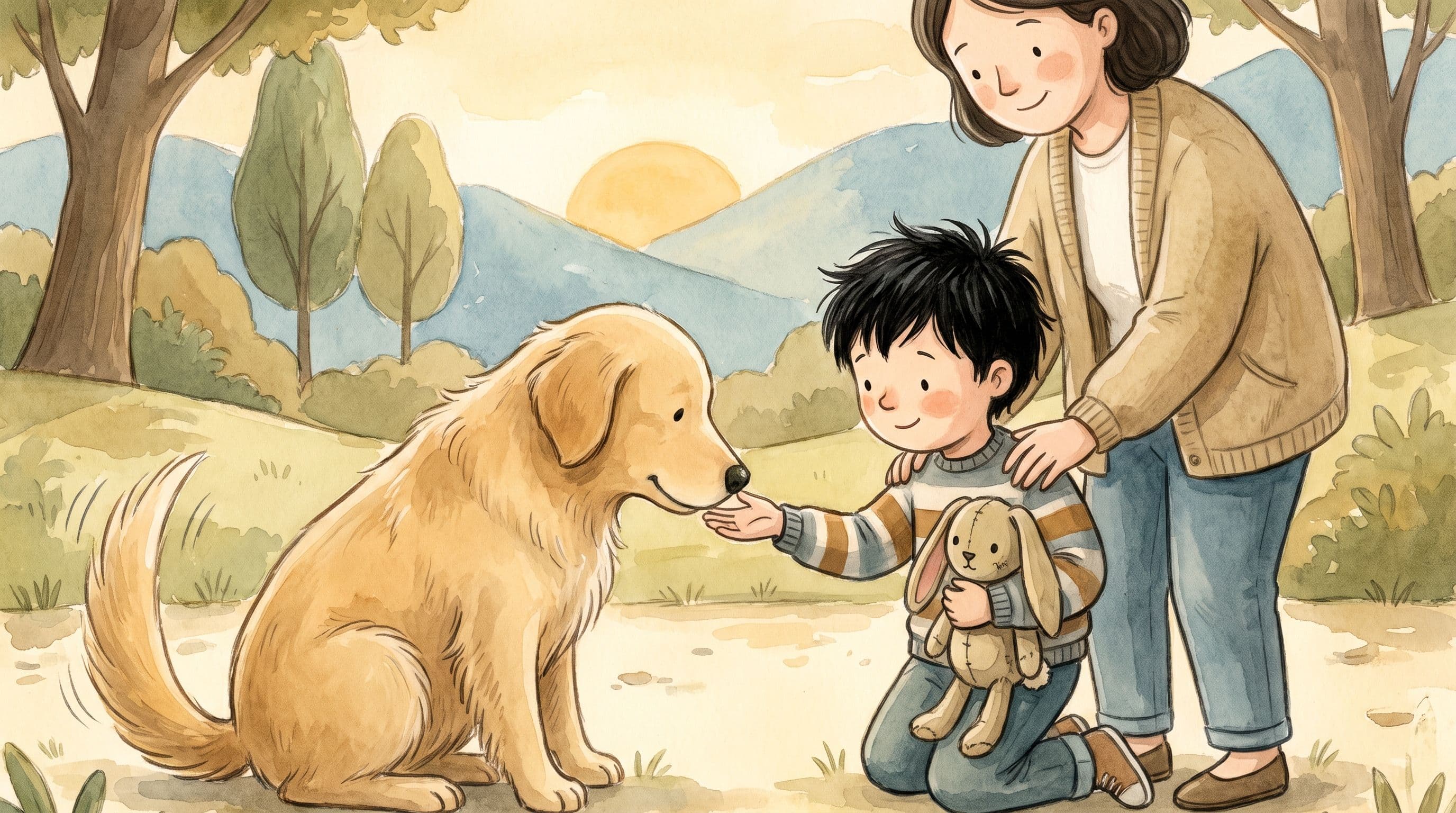
One evening Dad read him a new book with a boy on the cover who had Mason's black hair and Mason's own name across the top. In the story, that Mason was scared of dogs too, until his stuffed bunny Clover taught him the Dog-Meeting Rules: always ask the owner first, stand calm and still, make a soft fist and let the dog sniff it, and if you ever feel scared, "be a tree" — stay still and quiet until you feel okay. A calm kid helps a dog stay calm too.
4. He tries, and feels proud
Story-Mason met a gentle dog using the rules, and it sniffed his fist and wagged. Real Mason wanted to try. At the park, a calm dog came near with its owner. Mason asked, "Can I say hi?" He stood still, made a soft fist, and let the dog sniff. Its tail wagged. He even gave it one careful pat. "I met a dog. I did the rules and I met a dog."
5. He won't stop asking for the book
Mason asked for the book again and again and practiced the Dog-Meeting Rules with every calm, owner-supervised dog he met. He taught the "be a tree" trick to a friend. Dogs stopped ending his fun, because now he had a plan that kept him feeling safe and in control.
How should you use a story like this at home?
- Start with calm, leashed, owner-supervised dogs, and always ask the owner first.
- Never force contact. Let your child set the pace and stop whenever they want.
- Practice the "be a tree" move at home so it's automatic when they feel scared.
- Teach genuine dog-safety rules alongside the story, since safety around unknown dogs always matters.
Why is my child so afraid of dogs?
Dogs are fast, loud, and unpredictable, and to a small child even a friendly one can look large; a calm plan usually helps more than avoidance. It's worth pairing that plan with real safety habits the American Academy of Pediatrics recommends: always ask the owner's permission, let a dog sniff before petting and avoid its face, never bother a dog that's sleeping or eating, back away slowly and calmly from a threatening dog, and never leave a young child alone with any dog (Dog Bite Prevention Tips).
Keep reading: dog fear and dark fear often live in the same brave-in-progress kid — see how the same approach helps a child afraid of the dark.