Story ideas
How do you help a child who is afraid of the dark?
How to help a child who's afraid of the dark by naming the fear and giving them a simple coping tool they can use alone in bed, with a full example story.
The short answer
Give your child something to do with the fear, not just less darkness to be afraid of. Name the fear rather than dismissing it, then hand them a simple coping tool they can use lying in bed alone, like a few slow breaths or a calming ritual. Read a story where a character just like them uses that tool as part of the regular bedtime routine, so it becomes automatic before lights-out.
Key takeaways
- The fear is real: a young imagination fills an empty room with shapes and sounds.
- A nightlight brightens the room, but a coping tool changes how your child feels.
- Name the fear first, then give a simple tool they can use lying down, alone.
- A story where your child uses that tool lets them rehearse feeling safe before lights-out.
How do you help a child who is afraid of the dark?
Give them something to do with the fear, not just less darkness to be afraid of. A young child's imagination is powerful enough to fill an empty room with shapes and sounds that feel completely real, and no amount of "there's nothing there" talks that fear out of a small body. A nightlight helps with the room, but the fear itself comes from what the imagination does with the dark.
So use that same imagination in the other direction. Name the fear, then hand your child a simple, repeatable tool they can reach for in the moment, lying in bed, without a parent in the room.
Why does a story work when a nightlight alone doesn't?
When a child watches a character they recognize handle the same fear and come out okay, their brain files it as evidence: kids like me can do this. Give that character their own name and face and the book becomes a rehearsal your child actually remembers at 9pm.
What does a good fear-of-the-dark story look like?
The names and characters are invented for this example. In a real personalized book, the hero is your own child.
1. A hero with something big to learn
Ethan could build a spaceship out of couch cushions and climb higher than kids two years older. But one thing undid all that bravery in a second: the lights going off. "Just five more minutes with the lamp on," he'd say. Every single night.
2. A worry he can name
Once the room went dark, the closet door looked like it was open a crack. The curtains moved in a way that didn't seem like just wind. Ethan would lie stiff as a board, staring at every shadow, sure something was watching him. He never said the word "scared." He just didn't sleep.
3. A hero who looks just like him
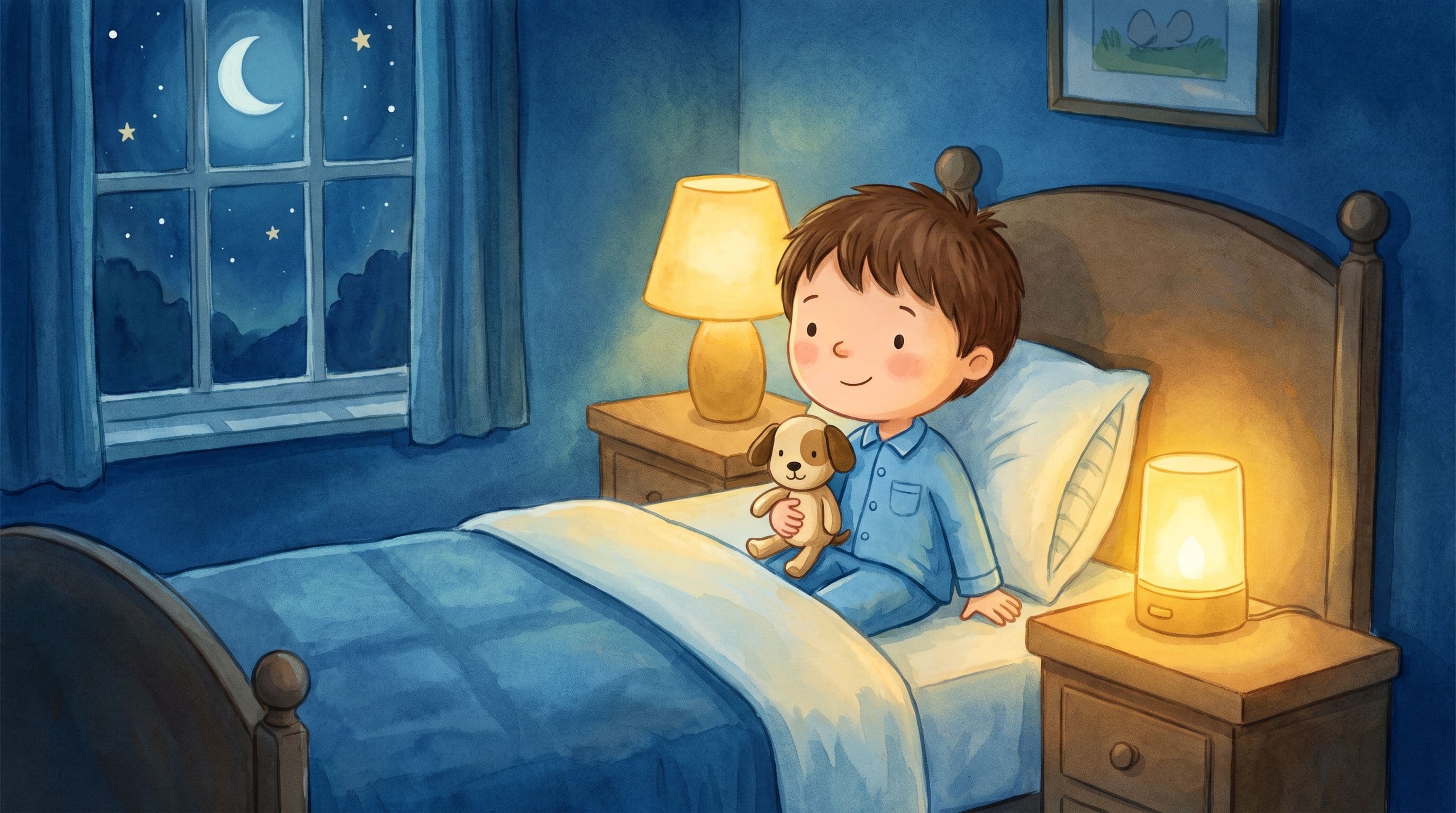
One evening Dad brought home a new book with a boy on the cover who had Ethan's exact hair and Ethan's own name printed across the top. In the story, that Ethan lay awake same as always, sure the dark was hiding something. Real Ethan sat up. "That's my room," he said quietly. Story-Ethan had a stuffed dog named Sergeant Biscuit, who knew a secret about the dark.
4. He tries, and feels proud
Sergeant Biscuit taught story-Ethan the Moon Check: look out the window, find the moon, and remember the very same moon is shining on Grandma's house and on every kid who's ever been a little scared of the dark. "You're never the only one awake." Story-Ethan tried it and felt his shoulders drop. Real Ethan turned to his own window. There it was, his moon too. He did the Moon Check and fell asleep before he finished counting the stars beside it.
5. He won't stop asking for the book
That book earned a permanent spot on the pillow. Ethan asked for it every night for two weeks and taught the trick to his stuffed dinosaur. The lamp still goes off a little slower than his parents would like, but it goes off. Most nights now, Ethan checks the moon, smiles, and closes his eyes on his own.
How should you use a story like this at home?
- Read it as part of the regular bedtime routine, not just on hard nights. Familiarity makes the tool automatic.
- Keep the coping tool simple enough to do lying down, in the dark, without help.
- Let your child retell the story back to you or a stuffed animal — retelling builds confidence faster than listening.
- Name the fear first, then offer the tool, rather than jumping straight to "there's nothing to be afraid of."
Is it normal for a child to be afraid of the dark?
Very — it's one of the most common childhood fears. The American Academy of Pediatrics advises being sympathetic and naming the worry rather than dismissing it, letting a child keep a light on if it helps, and, when they're calm, teaching coping skills like slow breathing and positive self-talk while praising brave behavior; most of these fears fade with time and support (Fears & Phobias in Children: How Parents Can Help). If the fear persists and interferes with daily life, it's worth talking with your pediatrician.
Keep reading: bedtime fear and leaving your bed often go together — see how the same approach helps a child who won't sleep in their own room.