Story ideas
How do you help a child through a big cross-country move?
How to help a child through a big move by honoring the sadness of leaving, helping them keep pieces of home, and building hope about the new place, with a full example story.
The short answer
Honor your child's sadness about leaving, help them keep pieces of home, photos, keepsakes, and ways to stay in touch with friends, and keep familiar routines and comfort objects steady through the move. Then build hope by exploring the new place and finding things to look forward to. A story where a character just like them says goodbye, carries home with them, and finds home again makes the change feel survivable and even exciting.
Key takeaways
- A big move means leaving home, school, friends, and everything familiar.
- Excitement and grief often come tangled together.
- Honor what they're leaving, help them carry pieces of home, and build hope about the new place.
- A story where your child moves and finds home again makes the change feel survivable.
How do you help a child through a big cross-country move?
Honor their sadness about leaving, help them keep pieces of home, photos, ways to stay in touch with friends, familiar routines, and build hope about the new place. When your family is making a cross-country move, excitement and grief often come tangled together. Helping your child honor what they're leaving and feel hopeful about the new adventure helps them feel at home again.
A child facing a move can feel unmoored, like they're losing everything. A story holds both the grief and the hope.
Why does a story work for a big move?
A story holds both the grief and the hope. When a child watches a hero say goodbye, carry home with them, and slowly make a new place theirs, they learn that home isn't only a house, it travels with them, and it can be built again. Give the hero your child's name and face and the reassurance becomes theirs.
What does a good moving story look like?
The names and characters are invented for this example. In a real personalized book, the hero is your own child.
1. A hero with a big change coming
Elliot's family was moving far away, all the way across the country. It meant leaving his house, his school, his friends, and everything he knew for a brand-new place he'd never seen. Elliot felt sad, nervous, and a tiny bit excited, all at once.
2. A worry he can name
Would he ever see his friends again? Would the new place ever feel like home? Elliot didn't want to leave everything he loved, and the move felt like losing his whole world.
3. A hero who looks just like him
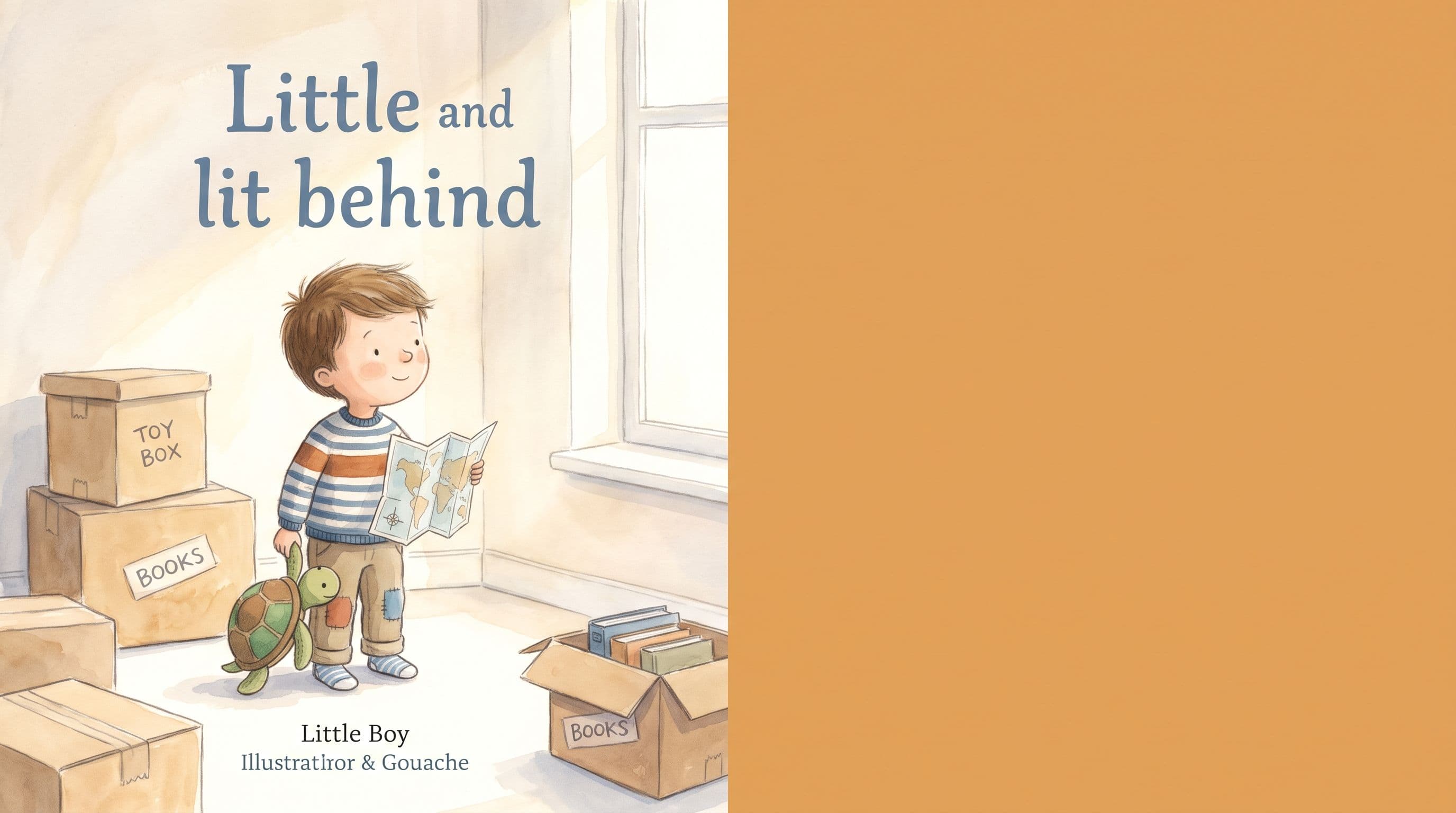
One evening his mom read him a new book with a boy on the cover who had Elliot's brown hair, among moving boxes with a map and a stuffed turtle, and Elliot's own name across the top. In the story, that Elliot was moving far away too, and his stuffed turtle Compass shared the perfect wisdom: a turtle carries its home on its back, so it's always home. Compass helped him honor the sadness of leaving, it's okay to be sad about goodbye, that means you loved it. Then he helped Elliot pack pieces of home to bring along: photos, a way to video-call his old friends, and his same cozy bedtime routine. And he helped him get curious and hopeful about the new place, new parks to explore, new friends to meet. Story-Elliot said his goodbyes, carried home with him, and slowly made the new place his own.
4. He moves, and makes a new home
Story-Elliot found home again in the new place. Real Elliot wanted to believe he could too. He said proper goodbyes to his friends and his old house, packed his photos and his turtle, and kept his same bedtime routine in the new home. He video-called his old friends, and slowly he explored his new neighborhood, found a new park, and met a new friend. Bit by bit, the new place started to feel like his. "Home came with me," he realized, hugging Compass.
5. He comes back to the book
Elliot asked for the book before, during, and after the move, and Compass's wisdom carried him through. The change was still hard, but underneath it was something steady: home travels with you, and it can be built again, one new park, one new friend at a time.
How should you use a story like this at home?
- Let your child feel and express sadness about what they're leaving.
- Help them keep pieces of home: photos, keepsakes, and ways to stay in touch with friends.
- Keep familiar routines and comfort objects steady through the move.
- Build hope by exploring and finding things to look forward to in the new place.
What helps a child grieving leaving their friends?
Validating the grief, setting up ways to stay connected like calls and letters, and gently building excitement about new friendships all help, and the adjustment takes time. The American Academy of Pediatrics notes that keeping familiar routines and comfort objects steady, naming and working through difficult feelings, and modeling calm coping all build the resilience children need to handle a big change like a move (Helping Children Handle Stress).
Keep reading: a big move usually means a new school, too — see how this approach helps a child starting a new school mid-year.