Story ideas
How do you help a child handle a long-awaited plan getting cancelled?
How to help a child through a cancelled plan by letting them feel the disappointment first, then getting flexible with a fun backup plan or rescheduling, with a story.
The short answer
Let your child feel the disappointment first, it's real and okay, and don't rush them to look on the bright side. Then, when they're ready, help them get flexible by brainstorming a fun backup plan together and rescheduling the original when possible, so there's still something to look forward to. Model your own flexibility when plans change. A story where a character just like them bounces back and makes a new adventure builds real resilience.
Key takeaways
- A cancelled plan can hit a child surprisingly hard after they've counted the days.
- Disappointment is a real and important feeling.
- Let them feel the letdown first, then get flexible with a backup plan.
- A story where your child bounces back and makes a new adventure builds resilience.
How do you help a child handle a long-awaited plan getting cancelled?
Let them feel the disappointment first (it's real and okay), then help them get flexible by finding a fun backup plan or rescheduling. When a long-awaited plan gets cancelled, a child had built it up and counted the days, and now it's gone. Learning to sit with the letdown and then bounce back with flexibility is a life skill, and a story can help.
Rushing a disappointed child to "look on the bright side" can make them feel unheard. A story honors the feeling and then models the bounce-back.
Why does a story work when disappointment hits hard?
A story honors the feeling and then models the bounce-back. When a child watches a hero be genuinely sad about a cancelled plan and then create a fun alternative, they learn that disappointment passes and that flexibility opens new doors. Give the hero your child's name and face and the resilience becomes theirs.
What does a good bounce-back story look like?
The names and characters are invented for this example. In a real personalized book, the hero is your own child.
1. A hero with something to look forward to
Cody had been counting down the days to a big outdoor adventure he'd planned all week. Then the morning came, and so did the rain, buckets of it. The plan was cancelled. Cody was crushed.
2. A feeling he can name
All that excitement had nowhere to go, and it turned into a heavy, teary disappointment. It felt so unfair, and Cody didn't want a different plan, he wanted the one he'd been dreaming about.
3. A hero who looks just like him
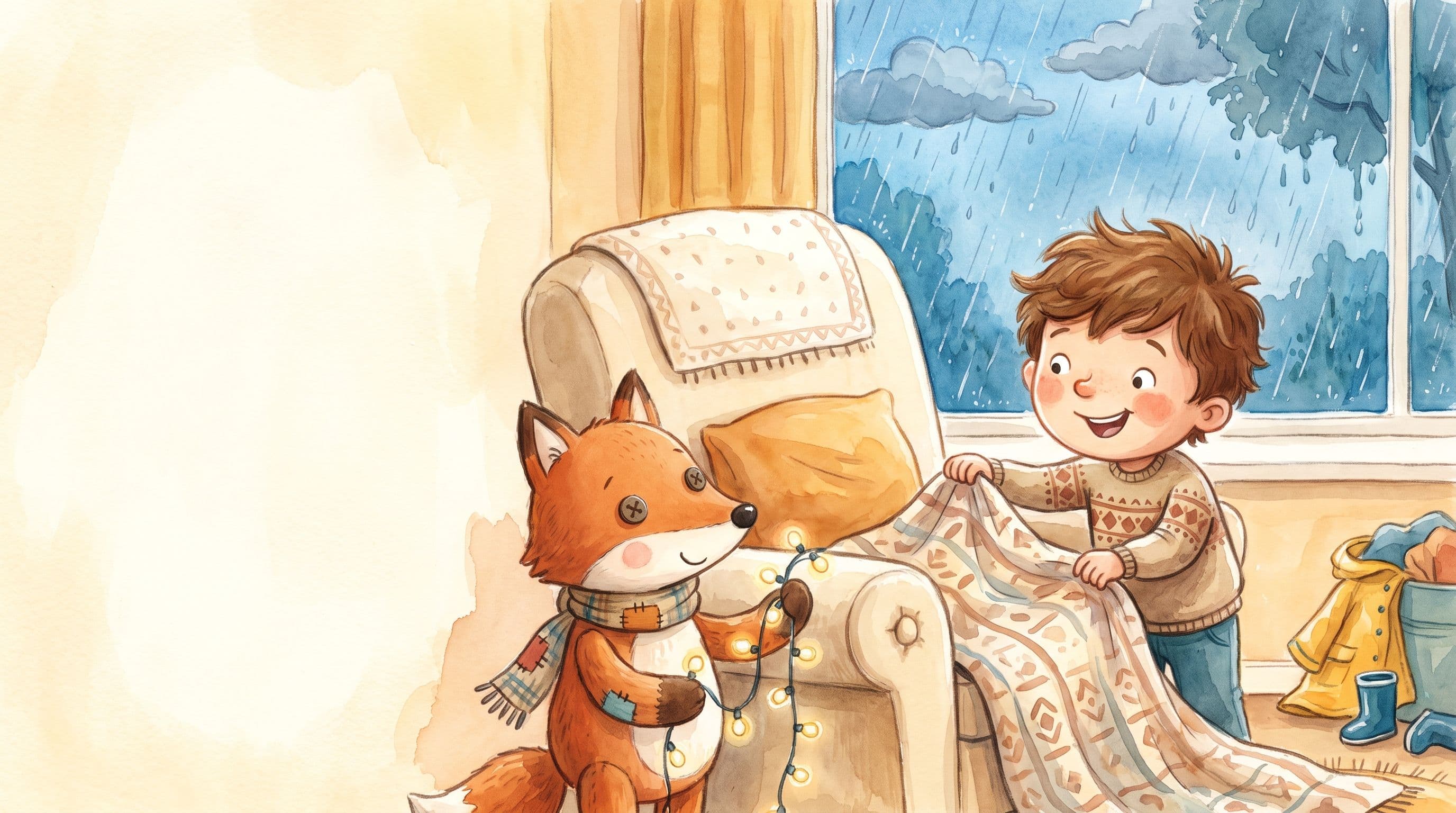
That afternoon his mom read him a new book with a boy on the cover who had Cody's brown hair, building a cozy fort while it rained, and Cody's own name across the top. In the story, that Cody had a plan cancelled too, and his stuffed fox Ginger helped him through it. First, Ginger said, it's okay to feel sad, disappointment is real, and you don't have to be happy about it right away. Then, when you're ready, get flexible: a cancelled plan makes room for a new adventure. Together they made a Backup Plan, a giant pillow fort, a movie, and hot cocoa, an indoor adventure that turned out to be its own kind of great. And the outdoor plan? They picked a new day for it.
4. He tries, and bounces back
Story-Cody let himself be sad, then made a Backup Plan and had a blast. Real Cody wanted to try it. He let himself feel disappointed for a while, and his mom just sat with him. Then, when he was ready, they made a Backup Plan: an epic pillow fort with cocoa and a movie. It ended up being one of his favorite afternoons. They circled a new date for the outdoor adventure on the calendar. Cody had bounced back, and it felt good to know he could.
5. He comes back to the book
Cody asked for the book whenever plans changed, and Ginger's Backup Plan trick became his go-to. Disappointments still stung, but they didn't sink him, because Cody had learned that a cancelled plan is sad for a while and then an invitation to make a new adventure.
How should you use a story like this at home?
- Let your child feel the disappointment before problem-solving.
- When they're ready, brainstorm a fun backup plan together.
- Reschedule the original plan when possible, so there's something to look forward to.
- Model your own flexibility when plans change.
What helps a child who melts down when plans change?
Validating the feeling, giving them time, and then involving them in a backup plan all help build flexibility over time, and preparing them in advance for possible changes can help too. The American Academy of Pediatrics notes that helping children name and work through difficult feelings, keeping routines predictable, and modeling calm coping all build the resilience kids need to handle stress and disappointment (Helping Children Handle Stress).
Keep reading: handling a cancelled plan is a cousin of handling a loss — see how this approach helps a child losing a game without falling apart.