Story ideas
How do you help a child handle losing a game without melting down?
How to help a child handle losing by normalizing it, giving them a calming move for the big feeling, and reminding them the fun is in playing and trying again, with a story.
The short answer
Normalize losing, everyone loses sometimes, and it doesn't measure their worth, give your child a calming move for the big feeling like three deep breaths, and remind them the fun is in playing and trying again. Model good sportsmanship when you lose too, praise good-sport behavior more than winning, and play plenty of low-stakes games so losing gets familiar. A story where a character just like them loses gracefully makes good sportsmanship feel possible.
Key takeaways
- For young kids, losing can feel like proof they're not good enough.
- Big feelings pour out as tears, anger, or flipping the board.
- Normalize losing, give a calming move, and remind them the fun is in trying again.
- A story where your child loses gracefully makes good sportsmanship feel possible.
How do you help a child handle losing a game without melting down?
Normalize it (everyone loses sometimes, it's part of playing), give them a calming move for the big feeling, and remind them the fun is in playing and trying again. If your child falls apart after losing a game, learning that losing is a normal part of playing, that it doesn't measure their worth, and that trying again is where the fun is, helps them become a gracious, resilient player.
In the heat of a loss, a child can't hear "it's just a game." A story teaches the skill before the meltdown.
Why does a story work when losing feels unbearable?
A story gives a child a model for handling the big feeling before it hits. When they watch a hero lose, feel the disappointment, take a breath, and stay a good sport, they discover that losing well earns respect and keeps the fun going. Give the hero your child's name and face and the resilience becomes theirs.
What does a good sportsmanship story look like?
The names and characters are invented for this example. In a real personalized book, the hero is your own child.
1. A hero with something to learn
Cleo loved games, as long as she won. The moment she started losing, her fun turned to frustration, and by the end she was often in tears or ready to knock over the board. Losing felt awful, and she didn't know what to do with the feeling.
2. A worry she can name
When Cleo lost, a hot, upset feeling swelled up, and it felt like proof she wasn't good enough. The big feeling was too much to hold, so it burst out as a meltdown, and then no one wanted to play anymore.
3. A hero who looks just like her
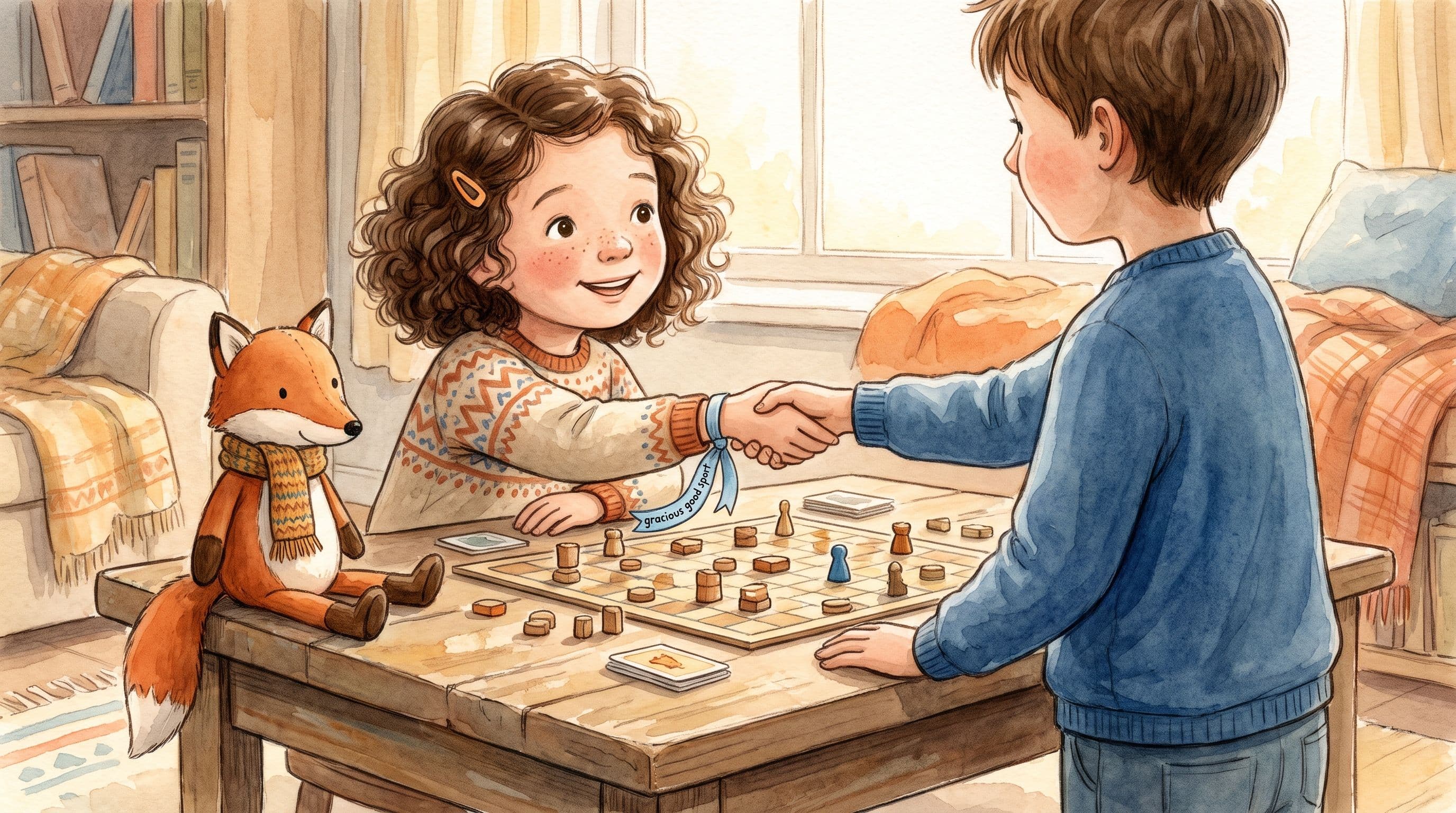
One evening her mom read her a new book with a girl on the cover who had Cleo's curly hair, shaking hands after a game, and Cleo's own name across the top. In the story, that Cleo hated losing too, until her stuffed fox Roxy taught her the Good Sport moves. Everyone loses sometimes, even champions, and losing doesn't mean you're not good, it means you played. When the hot feeling comes, take three deep breaths and let it settle. Then say the magic good-sport words: "Good game!" And remember, the real fun is in playing and getting to try again. Story-Cleo lost a game, breathed through it, said "Good game," and asked to play again, and she felt proud instead of crushed.
4. She tries, and stays a good sport
Story-Cleo handled losing with grace and kept the fun going. Real Cleo wanted to be a good sport too. The next time she lost, she felt the hot feeling rise, took three deep breaths, and let it settle. Then she said, "Good game!" and asked, "Can we play again?" It felt so much better than melting down, and her friends wanted to keep playing. Cleo had lost the game but won at being a good sport.
5. She comes back to the book
Cleo asked for the book before game nights, and Roxy's Good Sport moves stuck. Losing stopped ruining the fun, because Cleo had learned that everyone loses sometimes, the feeling passes with a few breaths, and the best part of any game is getting to play again.
How should you use a story like this at home?
- Normalize losing by modeling good sportsmanship when you lose too.
- Teach a simple calming move for the big feeling.
- Praise good-sport behavior even more than winning.
- Play plenty of low-stakes games so losing gets familiar and less scary.
Why does a child get so upset about losing?
Young children often tie winning to their worth and haven't yet developed the emotional tools to handle disappointment, and this improves with age, practice, and support. The American Academy of Pediatrics notes that healthy competition prepares kids for later life when the focus is on effort and personal improvement rather than winning, and that children do best when they're recognized for trying hard and improving rather than criticized for losing (Competition and Cheating).
Keep reading: handling a loss is close kin to handling a mistake — see how this approach helps a child scared of getting an answer wrong in class.