Story ideas
How do you help a child whose big feelings come out as tantrums?
How to help a child whose big feelings erupt as tantrums by naming the feeling, teaching a simple calming breath, and reassuring them all feelings are okay, with a story.
The short answer
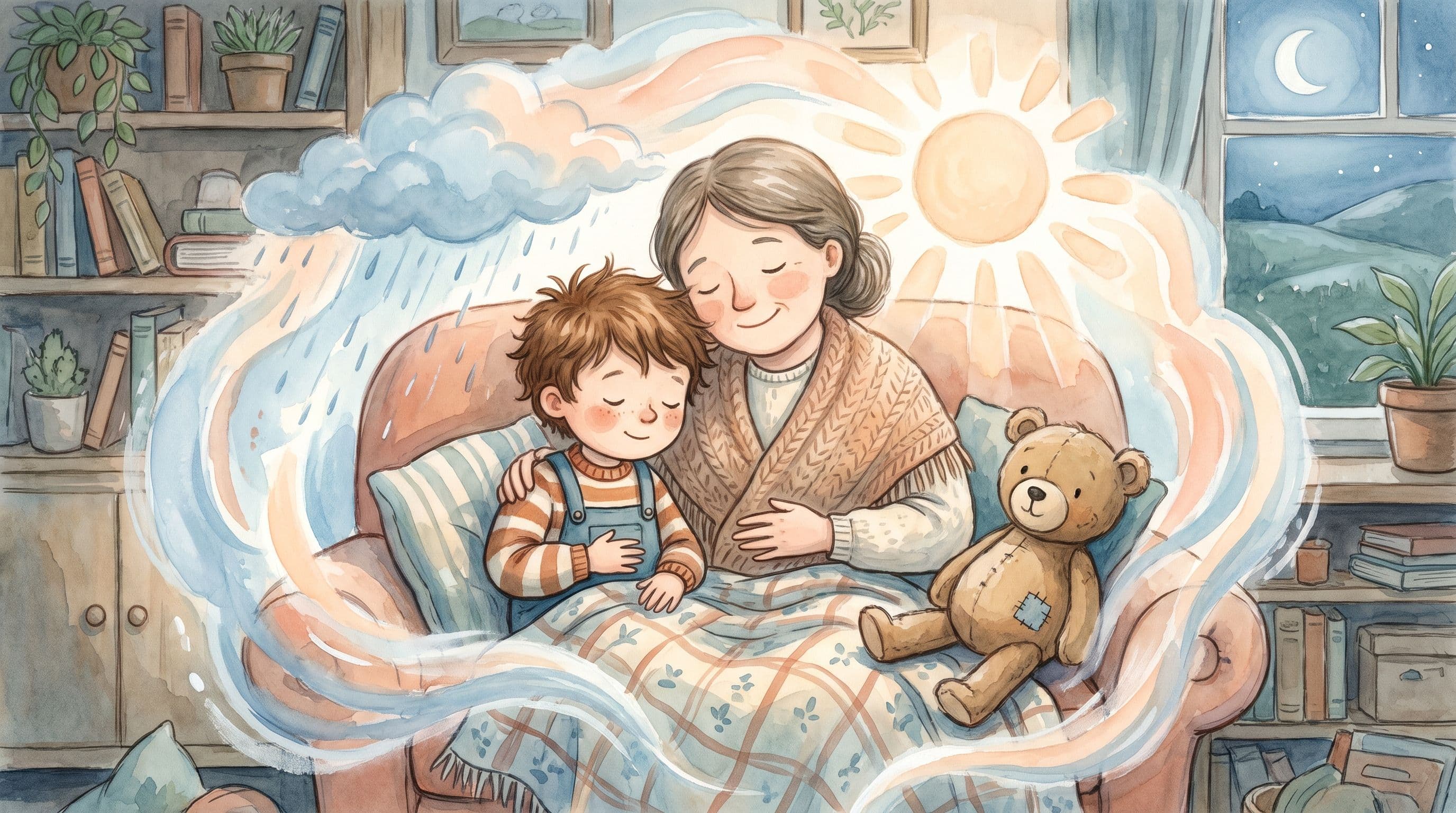
Name the feeling, teach a simple calming tool like deep belly breaths during calm moments, and reassure your child that all feelings are okay even when certain actions aren't. Build their emotional vocabulary by naming feelings together, validate the feeling while holding limits on unsafe actions, and stay calm yourself, since your calm helps regulate theirs. A story where a character just like them rides out a big feeling and finds calm gives them a tool they can use.
Key takeaways
- Young children feel emotions at full volume and can't yet manage them.
- Tantrums aren't bad behavior to punish; they're a sign a child needs help riding the wave.
- Name the feeling, teach a calming tool, and reassure them all feelings are okay.
- A story where your child rides out a big feeling and finds calm gives them a usable tool.
How do you help a child whose big feelings come out as tantrums?
Name the feeling, teach a simple calming tool like deep belly breaths, and reassure your child that all feelings are okay even when certain actions aren't. When big feelings come out as a tantrum, it's exhausting and completely normal, young children feel emotions at full volume and don't yet have the brain development to manage them. A story can give your child real tools and the words for what they feel.
In the middle of a tantrum, a child can't learn, their thinking brain is offline. A story teaches the skill during calm moments.
Why does a story work when feelings get too big?
A story teaches the skill during calm moments, so it's available later. When a child watches a hero feel a huge feeling, name it, and use a breath to find calm, they build a map for their own storms. Give the hero your child's name and face and the calm becomes theirs.
What does a good big-feelings story look like?
The names and characters are invented for this example. In a real personalized book, the hero is your own child.
1. A hero with something to learn
Beau felt everything in a big way. When he was happy, he was the happiest. But when he got frustrated or disappointed, a huge feeling would swell up so fast that it burst out as a tantrum, and afterward Beau felt shaky and sad.
2. A worry he can name
The big feeling came like a wave, too fast and too strong to stop, and Beau didn't know what to do with it. He didn't like how the tantrums felt, but he couldn't seem to help them.
3. A hero who looks just like him
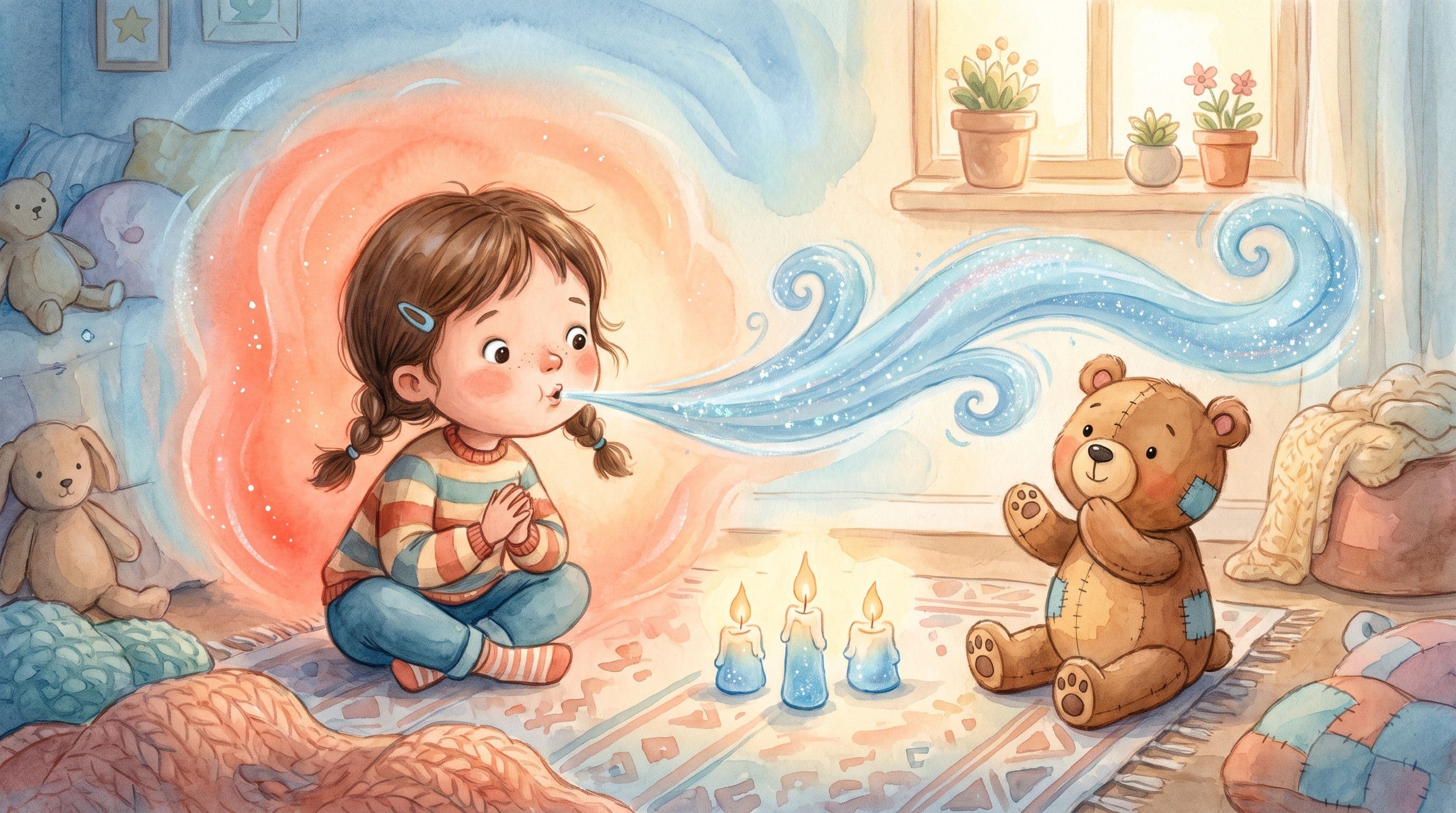
One evening his dad read him a new book with a boy on the cover who had Beau's brown hair, taking a calming breath with a grown-up, and Beau's own name across the top. In the story, that Beau had big feelings too, and his stuffed bear Rumble taught him two things. First, all feelings are okay, mad, sad, frustrated, they're all allowed, even though some actions like hitting are not. Second, when a big feeling comes like a wave, you can ride it out with Balloon Breaths: put your hands on your tummy, breathe in slowly to blow up the balloon, and breathe out slowly to let it go, until the wave gets smaller. Rumble helped story-Beau name his feeling ("I feel so frustrated!") and breathe through it, and the big feeling shrank down to a size he could handle.
4. He tries, and finds his calm
Story-Beau used Balloon Breaths and rode out his big feeling without a tantrum. Real Beau wanted that tool too. He practiced Balloon Breaths with his dad when he was calm, so he'd have it ready. The next time a big feeling swelled up, his dad reminded him, "Name it and breathe." Beau said, "I feel mad!" and did his Balloon Breaths, hands on his tummy, and the wave got smaller. It didn't work perfectly every time, but more and more, Beau could find his calm.
5. He comes back to the book
Beau asked for the book often, and Balloon Breaths became his go-to for big feelings. The tantrums came less and less, because Beau had learned that all his feelings were okay, and that he had a way to ride out even the biggest wave.
How should you use a story like this at home?
- Teach and practice calming tools during calm times, not mid-tantrum.
- Name feelings for and with your child to build their emotional vocabulary.
- Validate the feeling while holding limits on unsafe actions.
- Stay as calm as you can yourself; your calm helps regulate theirs.
Are tantrums normal?
Yes, very — young children feel big emotions before their brains can manage them, so tantrums are a normal part of development that eases as kids build emotional skills. The American Academy of Pediatrics notes that tantrums are most common between ages 1 and 3 and tend to improve after age 3, and suggests preventing them where you can with routines, rest, and snacks, offering small choices to give a child a sense of control, and holding a firm limit on hitting, kicking, or biting (Top Tips for Surviving Tantrums).
Keep reading: one of the biggest feelings of all is anger — see how this approach helps a child learning what to do with anger.