Story ideas
How do you help a child learn what to do with anger?
How to help a child with anger by teaching that anger is okay but hurting is not, and giving them safe outlets, calming breaths, stomping, squeezing, and words, with a story.
The short answer
Teach that anger is okay but hurting is not, and give your child safe outlets: calming breaths, stomping it out, squeezing something, or using words like "I'm angry!" Practice a few of these tools when everyone is calm, set up a calm-down spot with the ones they like, and model handling your own anger the same way. A story where a character just like them handles anger safely gives them a real toolkit they can reach for in the moment.
Key takeaways
- Hitting, yelling, throwing, and slamming doors are signs of a big feeling with nowhere safe to go.
- Anger itself is healthy and normal, a signal something feels unfair or frustrating.
- The goal isn't to stop feeling angry, but to learn safe, effective things to do with it.
- A story where your child handles anger safely gives them a real toolkit.
How do you help a child learn what to do with anger?
Teach that anger is okay but hurting is not, and give them safe outlets, calming breaths, stomping it out, squeezing something, or using words like "I'm angry!" If your child is learning what to do with anger, you may be seeing the outward signs of a big feeling with nowhere safe to go. What children need is not to stop feeling angry, but to learn safe, effective things to do with it. A story can hand them those tools.
An angry child can't absorb a lecture in the moment. A story teaches the tools in advance and normalizes the feeling.
Why does a story work when anger takes over?
A story teaches the tools before the storm and shows a child that anger is manageable. When they watch a hero feel real anger and choose a safe way to let it out instead of hurting, they learn they have choices even when they're mad. Give the hero your child's name and face and the control becomes theirs.
What does a good anger story look like?
The names and characters are invented for this example. In a real personalized book, the hero is your own child.
1. A hero with something to learn
When something felt unfair, Isla got angry, really angry. And when the anger came, she didn't know what to do with it, so it came out as yelling, or stomping, or sometimes hitting, and then she felt bad afterward.
2. A worry she can name
The angry feeling was so hot and so big that it seemed to take over her whole body. Isla didn't want to hurt anyone or get in trouble, but in the moment she just didn't know another way to let the fire out.
3. A hero who looks just like her
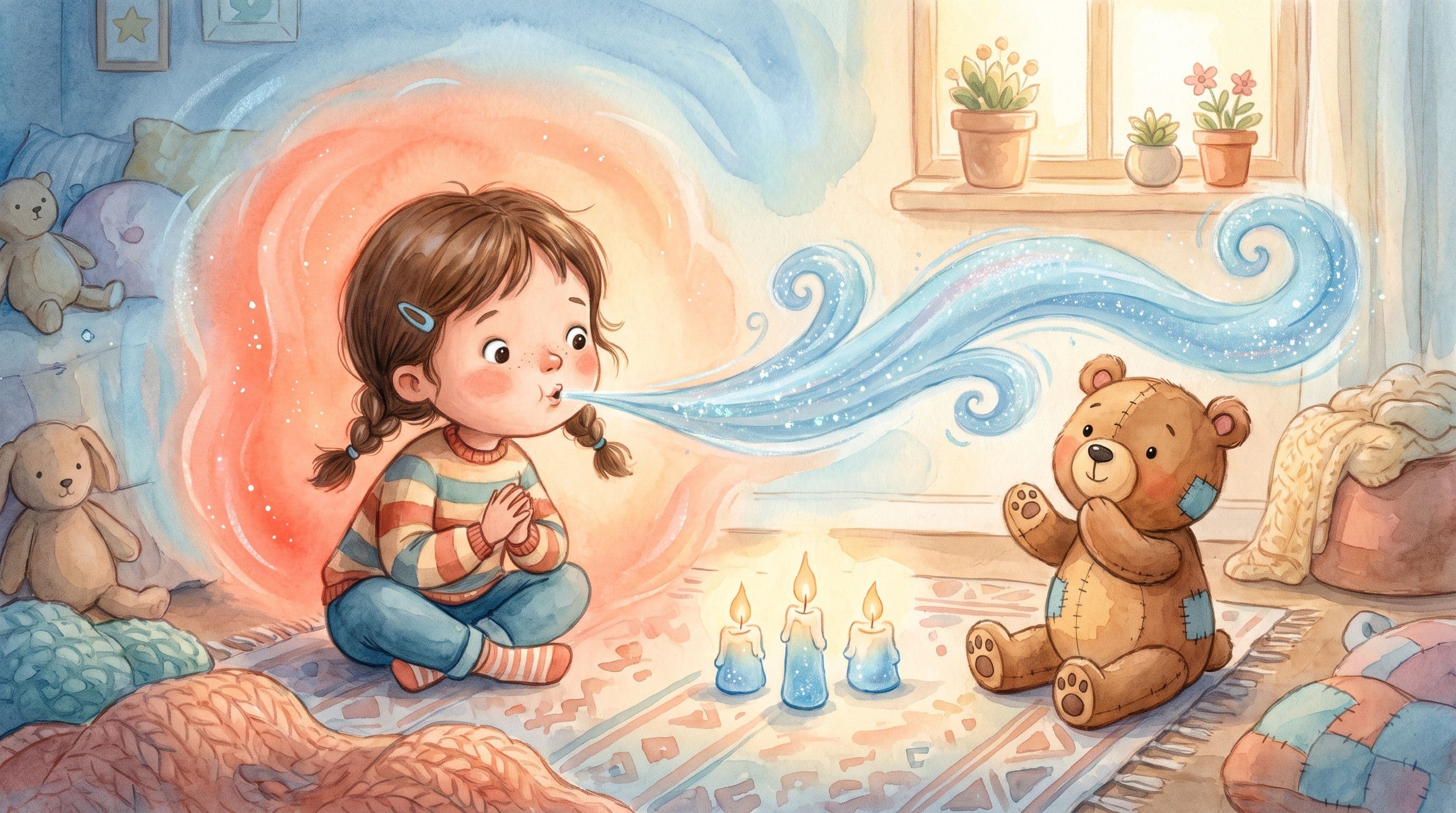
One evening her mom read her a new book with a girl on the cover who had Isla's brown hair, blowing out a calming breath, and Isla's own name across the top. In the story, that Isla got really angry too, and her stuffed bear Bruno gave her the Anger Toolbox. Anger is okay, Bruno said, everyone feels it, but hurting people or things is not okay, so we need safe tools instead. The Toolbox had four: Candle Breaths (breathe out slowly like blowing out birthday candles), Stomp It Out (stomp your feet hard until the fire cools), Squeeze (squeeze a pillow or your own fists tight, then let go), and Use Your Words ("I'm SO angry!"). Story-Isla picked a tool when the fire came, and the anger came out safely instead of hurting anyone.
4. She tries, and takes control
Story-Isla used her Anger Toolbox and handled her anger without hurting. Real Isla wanted her own toolbox. She practiced the four tools when she was calm. The next time she felt the fire, her mom said, "Pick a tool," and Isla chose Candle Breaths and Stomp It Out. She blew out slow and stomped her feet, and the hot feeling cooled down. She hadn't hit anyone, and she felt proud. "I used my toolbox," she said.
5. She comes back to the book
Isla asked for the book often, and Bruno's Anger Toolbox became something she reached for. The hitting and yelling faded, because Isla had learned that anger is allowed, hurting is not, and she had safe, powerful ways to let the fire out.
How should you use a story like this at home?
- Teach that anger is okay but hurting is not, clearly and consistently.
- Practice a few safe anger tools when everyone is calm.
- Create a calm-down spot with a couple of tools your child likes.
- Model handling your own anger with the same tools.
What do you do when a child hits when angry?
Hold a firm, calm limit on hitting while giving safe alternatives for the anger, and practice those tools ahead of time. The American Academy of Pediatrics advises responding to aggression with a clear, consistent message that hurting is not allowed, praising and reinforcing self-control when you see it, and modeling calm handling of your own frustration — and notes that if aggression is frequent or intense, a pediatrician or counselor can help (10 Tips to Prevent Aggressive Behavior in Young Children).
Keep reading: anger and other big feelings share the same roots — see how this approach helps a child whose big feelings come out as a tantrum.