Story ideas
How do you help a child wait their turn?
How to help a child wait their turn by making waiting active and shorter-feeling, counting, singing, or watching others, and reassuring them their turn is coming, with a story.
The short answer
Make waiting active and shorter-feeling, counting how many are ahead, singing a quiet song, or watching what others are doing, and reassure your child their turn is coming for sure. Practice waiting in small, low-stakes ways, praise their patience, and keep expectations age-appropriate, since the patience muscle grows slowly. A story where a character just like them fills the wait with something fun and then gets their turn makes patience feel doable.
Key takeaways
- Waiting is genuinely hard for young children, whose brains are wired for "now."
- Interrupting or cutting in line isn't defiance so much as an underdeveloped patience muscle.
- Make waiting active and shorter-feeling, and reassure them their turn is coming.
- A story where your child waits and gets their turn makes patience feel doable.
How do you help a child wait their turn?
Make waiting active and shorter-feeling, counting, singing, or watching others, and reassure them their turn is coming for sure. If your child struggles to wait their turn, you're seeing an age-typical skill still under construction. With practice and a few simple tools, that patience muscle grows, and a story can make patience feel possible.
To a young child, waiting can feel like forever with no guarantee their turn will come. A story shows waiting working out.
Why does a story work when waiting feels impossible?
A story shows a child that waiting works out. When they watch a hero fill the wait with something fun and then get their turn, waiting stops being an unbearable void and becomes a short, manageable, even enjoyable in-between. Give the hero your child's name and face and the patience becomes theirs.
What does a good waiting story look like?
The names and characters are invented for this example. In a real personalized book, the hero is your own child.
1. A hero with something to learn
June wanted everything now. Waiting for a turn on the slide, waiting to talk, waiting for a snack, it all felt impossible. She'd interrupt, push to be first, or get upset when she had to wait, and it caused a lot of bumpy moments.
2. A worry she can name
Waiting felt like forever, and June worried her turn might never come. The waiting feeling was so uncomfortable that she'd do anything to skip it, cut in line, grab, or fuss.
3. A hero who looks just like her
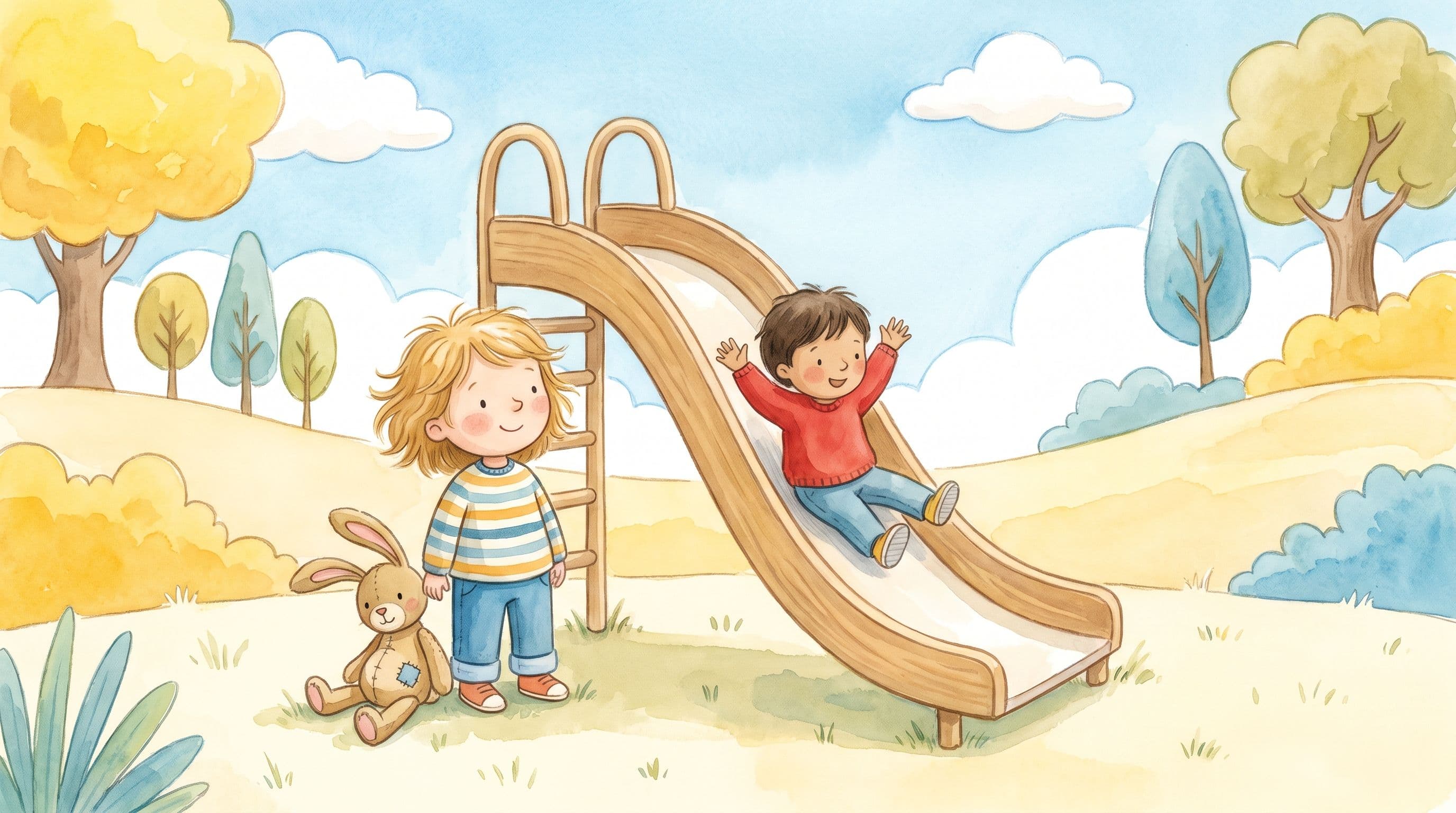
One evening her mom read her a new book with a girl on the cover who had June's blonde hair, waiting happily for the slide, and June's own name across the top. In the story, that June hated waiting too, until her stuffed rabbit Nibbles taught her the Waiting Games. Waiting feels shorter when you fill it: count how many kids are ahead of you, sing a quiet song in your head, watch what the person ahead is doing, or wiggle your fingers. And Nibbles gave her the most important reassurance, your turn is coming for sure, waiting just means it's almost here. Story-June counted and sang while she waited, and before she knew it, it was her turn.
4. She tries, and waits her turn
Story-June's Waiting Games made waiting easy. Real June wanted to try them. At the playground, when there was a line for the slide, she counted the kids ahead (three!), sang a song in her head, and watched them whoosh down. It went faster than she expected, and then it was her turn. She'd waited, all by herself, and it felt good. "Waiting isn't so bad with the games," she said.
5. She comes back to the book
June asked for the book often, and Nibbles's Waiting Games became her trick for lines, conversations, and snack time. Her patience muscle grew stronger, because June had learned that waiting is just a short in-between, and there are fun ways to fill it until her turn arrives.
How should you use a story like this at home?
- Give your child something to do during waits, like counting or a quiet song.
- Reassure them their turn is coming for sure.
- Practice waiting in small, low-stakes ways and praise their patience.
- Keep expectations age-appropriate, patience grows slowly.
Why is waiting so hard for young kids?
Young children's brains are wired for immediacy, and impulse control develops gradually, so struggling to wait is normal and improves with age and practice. The American Academy of Pediatrics notes that during the preschool years children steadily learn to take turns, cooperate, and manage impulses through play and gentle practice, and that this self-control grows naturally with maturity and patient coaching (Social Development in Preschoolers: Learning How to Share & Cooperate).
Keep reading: waiting your turn and sharing are two halves of playing well together — see how this approach helps a child sharing a favorite toy.