Story ideas
How do you help a young child share a favorite toy?
How to help a young child share a beloved toy by reassuring them sharing is temporary, using a turn-taking timer, and showing that sharing makes play more fun, with a story.
The short answer
Reassure your child that sharing is temporary, they'll get their toy back, and use simple tools like taking turns with a timer to make it concrete and fair. Let them put away one or two extra-special toys before a playdate, praise sharing warmly, and show them that sharing makes play more fun, not less. A story where a character just like them shares and enjoys it helps sharing feel good rather than like losing.
Key takeaways
- Sharing is one of the hardest social skills for a young child.
- A beloved toy can feel like part of themselves, so handing it over feels genuinely scary.
- Show them sharing is temporary, use a turn-taking timer, and make it fun.
- A story where your child shares and enjoys it makes sharing feel good, not like losing.
How do you help a young child share a favorite toy?
Reassure them sharing is temporary (they'll get it back), use simple tools like taking turns with a timer, and show them that sharing makes play more fun. If your child is learning to share a favorite toy, a beloved toy can feel like a part of themselves, and handing it over can feel like they might not get it back. Helping a child see that sharing is temporary turns a common flashpoint into a growing kindness.
A young child often experiences sharing as loss, so "you have to share" can trigger a meltdown. A story reframes it.
Why does a story work when sharing feels like losing?
A story shows a child that sharing isn't giving something up. When they watch a hero share a treasured toy, get it back, and have more fun playing together, sharing starts to feel like a way to make friends and double the fun. Give the hero your child's name and face and the generosity becomes theirs.
What does a good sharing story look like?
The names and characters are invented for this example. In a real personalized book, the hero is your own child.
1. A hero with something hard
Ari had a favorite truck, the best toy in the whole world, in his opinion. When a friend came over and wanted to play with it, Ari's heart raced. He did not want to share his truck. Not even a little.
2. A worry he can name
What if his friend didn't give it back? What if it got taken away forever? The truck felt too special and too important, and the idea of handing it over made Ari want to hold on tighter and maybe cry.
3. A hero who looks just like him
One evening his dad read him a new book with a boy on the cover who had Ari's brown hair, sharing a truck with a friend, and Ari's own name across the top. In the story, that Ari didn't want to share his favorite truck either, until his stuffed turtle Tuck taught him two things. First, sharing is temporary, your toy always comes back to you, so you're not losing it. Second, taking turns can be a game: use a timer, and when it dings, it's the other person's turn, then yours again. Best of all, Tuck showed him that sharing meant his friend stayed happy and they got to play trucks together, which was way more fun than playing alone.
4. He tries, and feels good
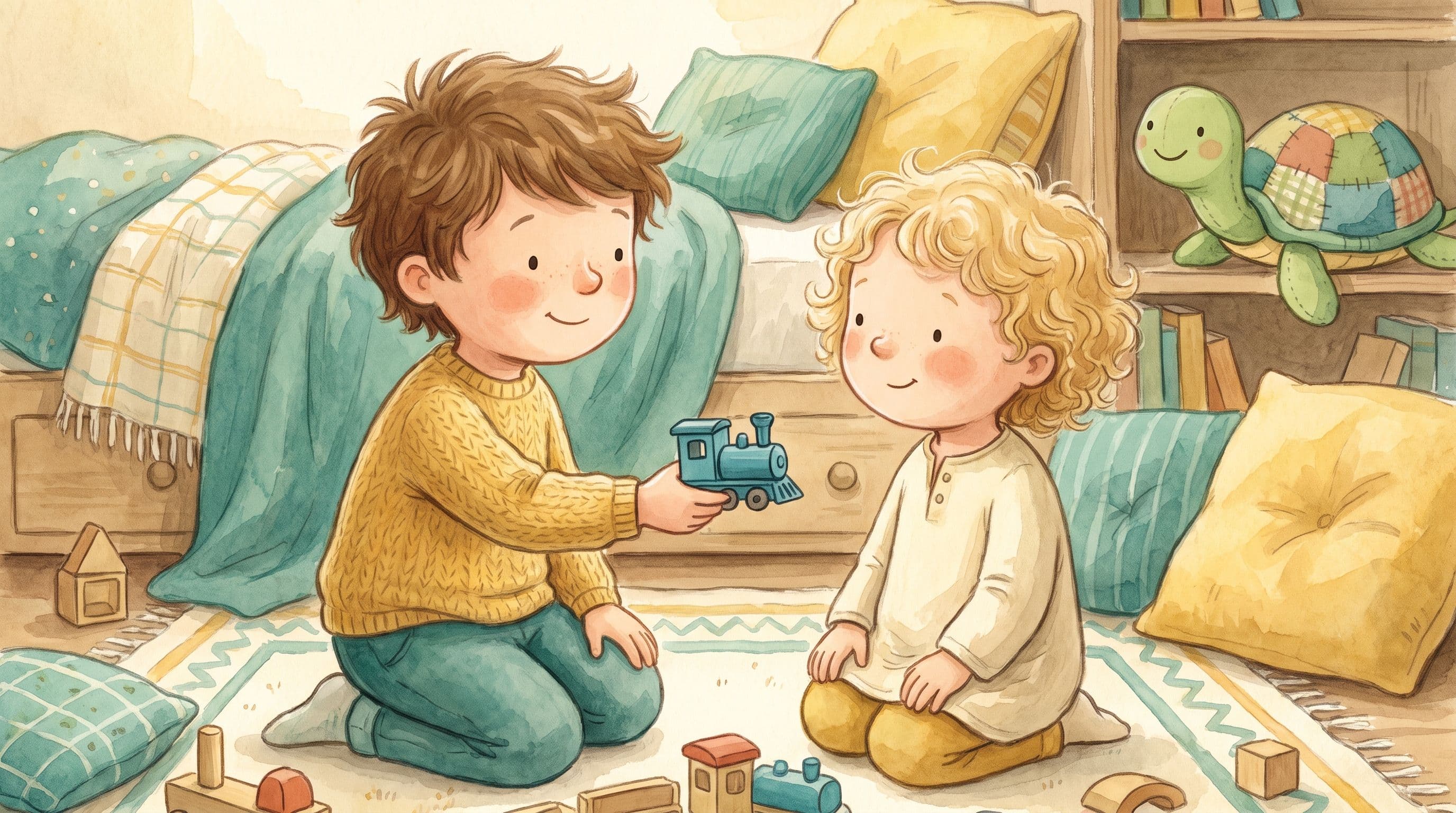
Story-Ari shared his truck, got it back, and had a blast playing with his friend. Real Ari wanted to try. When his friend visited, he took a big breath and offered a turn with the timer. When it dinged, the truck came right back to him, just like Tuck promised. Then they started racing trucks together, and it was more fun than Ari had ever had playing alone. "Sharing is kind of fun," he admitted, surprised.
5. He comes back to the book
Ari asked for the book again and again, and Tuck's turn-taking timer became a favorite game. Sharing got easier, because Ari had learned that his toys always came back, and that sharing them meant more friends and more fun.
How should you use a story like this at home?
- Reassure your child that shared toys come back to them.
- Use a timer for turn-taking to make sharing concrete and fair.
- Let your child put away one or two extra-special toys before a playdate.
- Praise sharing warmly so it feels rewarding.
Why is sharing so hard for young kids?
Young children often experience a favorite toy as part of themselves and sharing as loss, and they're still developing the ability to take another's perspective. The American Academy of Pediatrics notes that around the preschool years children gradually learn to take turns, cooperate, and consider others' feelings through play and practice, and that this social growth unfolds naturally with age, patience, and gentle coaching (Social Development in Preschoolers: Learning How to Share & Cooperate).
Keep reading: sharing and good sportsmanship are cousins in learning to play well with others — see how this approach helps a child losing a game without falling apart.