Story ideas
How do you help a child who is afraid of getting an answer wrong in class?
How to help a child who fears being wrong in class learn that mistakes are how brains grow, that everyone makes them, and that a brave try beats a silent right answer.
The short answer
Teach your child that mistakes are how brains grow, that everyone makes them, even grown-ups and teachers, and that being brave enough to try matters more than being right. Praise brave tries rather than only right answers, share your own mistakes so they see everyone makes them, and keep home a safe place to be wrong with no teasing. A story where a character just like them gets an answer wrong and is completely okay makes speaking up feel safe.
Key takeaways
- A child may sit on their hands even when they know the answer, terrified of being embarrassed.
- The fear of mistakes can quietly shrink a child's world.
- Mistakes are how brains grow, and everyone gets things wrong.
- A story where your child gets one wrong and stays okay makes speaking up feel safe.
How do you help a child who is afraid of getting an answer wrong in class?
Teach them that mistakes are how brains grow, that everyone makes them, and that being brave enough to try matters more than being right. If your child is scared of getting an answer wrong in class, they may stay quiet even when they know the answer, terrified of being embarrassed in front of everyone. Helping them understand that mistakes are how learning happens frees them to participate.
A child terrified of being wrong won't be talked out of it by "don't worry." A story shows them the feared thing happening, and turning out fine.
Why does a story work when a child fears embarrassment?
A story lets a child watch the feared moment happen and end well. When a hero answers wrong, feels that flash of embarrassment, and discovers the world doesn't end, the fear loses its grip and their hand starts to rise. Give the hero your child's name and face and the courage becomes theirs.
What does a good story about being wrong look like?
The names and characters are invented for this example. In a real personalized book, the hero is your own child.
1. A hero with something big to learn
Milo often knew the answer in class, but he almost never raised his hand. The thought of saying something wrong in front of everyone was too scary. So he stayed quiet, even when he was pretty sure he was right.
2. A worry he can name
What if he said the wrong thing and everyone laughed? What if the teacher thought he was silly? The fear of that moment loomed so large that staying invisible felt safer than trying.
3. A hero who looks just like him
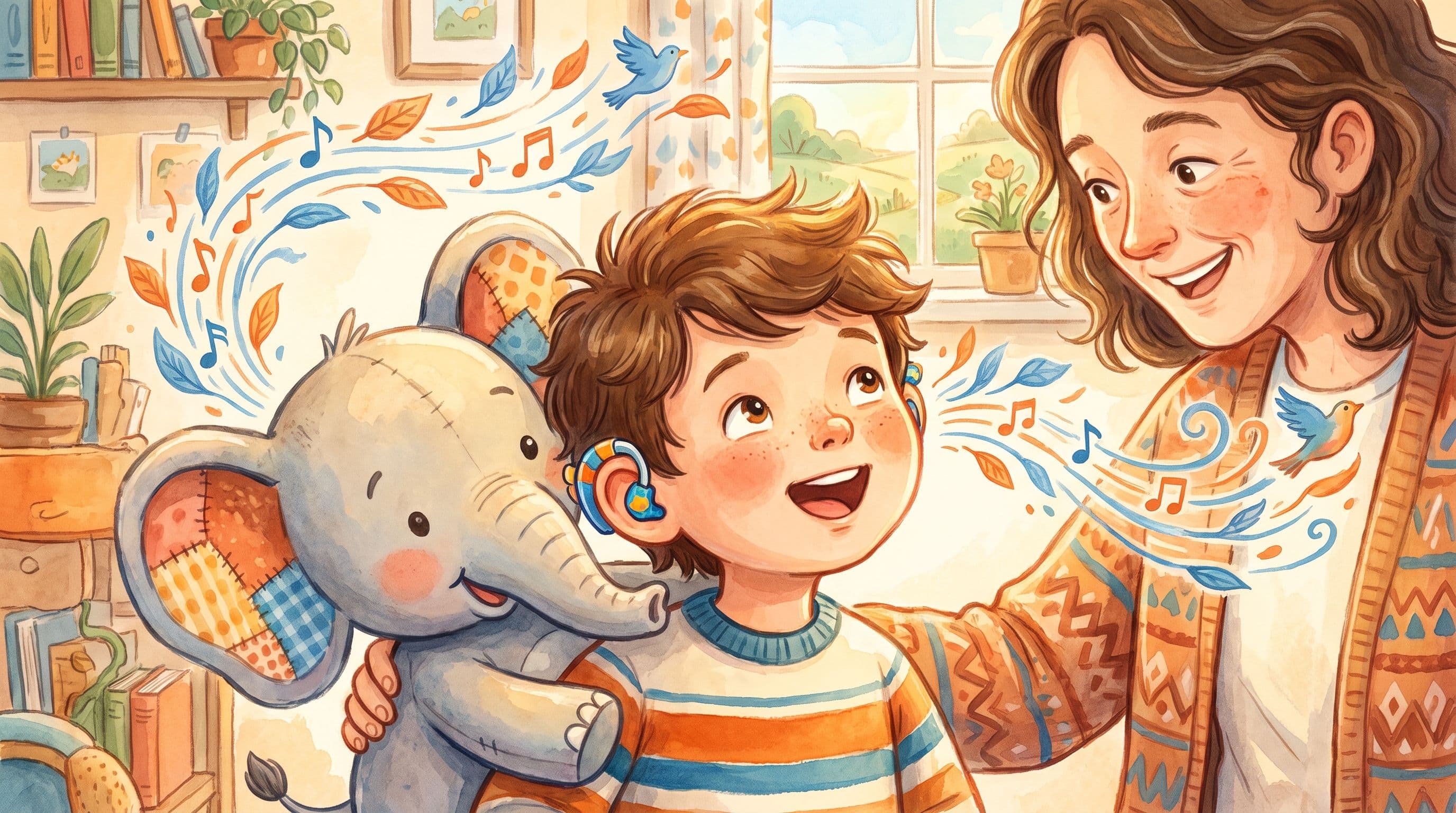
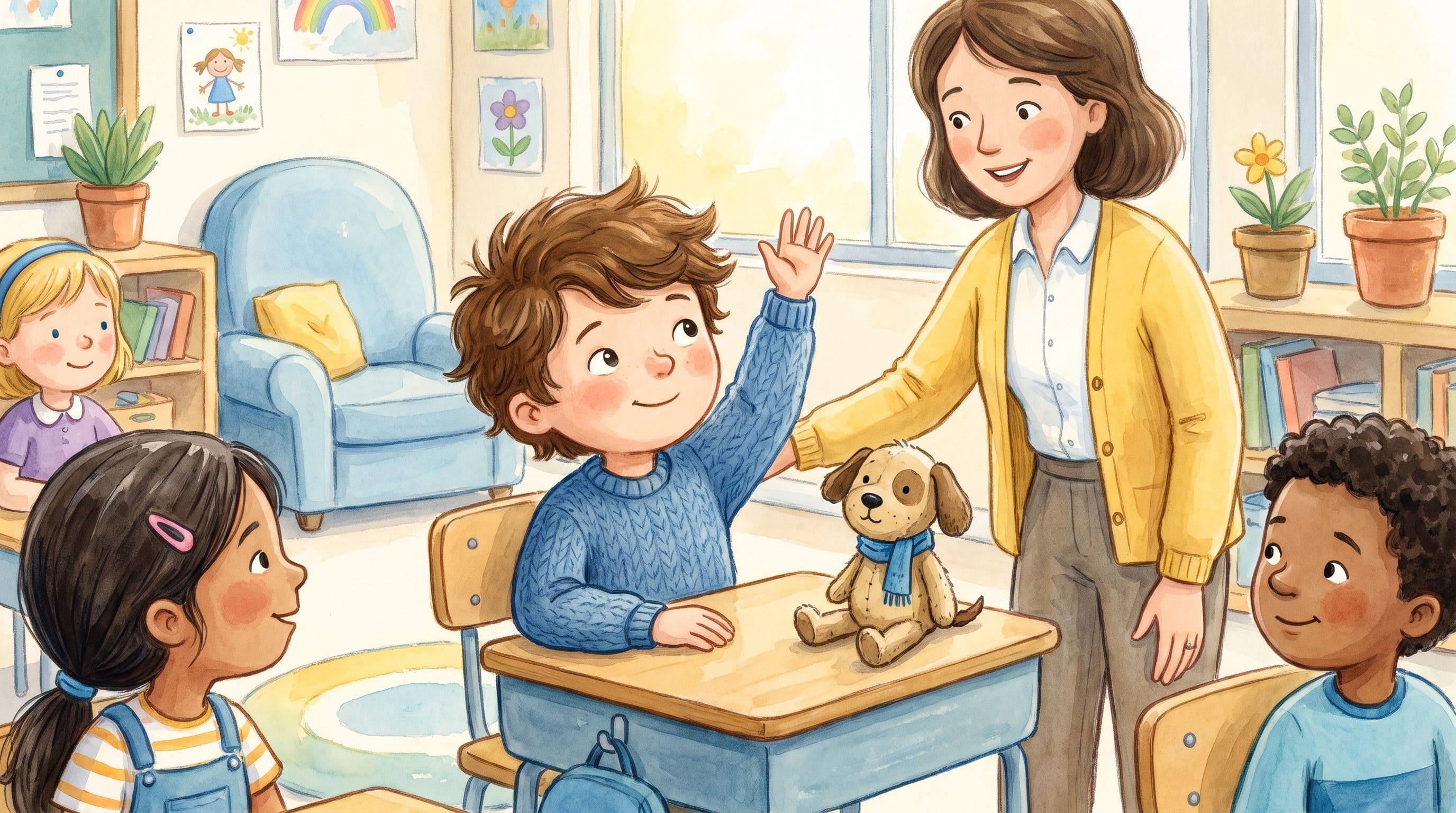
One evening his mom read him a new book with a boy on the cover who had Milo's brown hair, hand raised at his desk, and Milo's own name across the top. In the story, that Milo was scared of being wrong too, until his stuffed dog Domino told him a secret about brains. Every time you make a mistake and figure out the right answer, your brain actually grows a little stronger. Mistakes aren't proof you're not smart, they're how you get smarter. And here's the thing: everyone gets answers wrong, even grown-ups, even teachers. Being brave enough to try matters more than being right. Story-Milo raised his hand, gave an answer, and it was wrong, and nothing bad happened at all. The teacher just said, "Good try," and helped the class find the right answer together.
4. He tries, and is proud of himself
Story-Milo kept raising his hand, right or wrong, and got braver every day. Real Milo wanted to be that brave. In class, he took a breath and raised his hand. His answer wasn't quite right. He felt his cheeks go warm, but then the teacher smiled, said "Great try, let's think about it together," and it was fine. Totally fine. Milo had done the scary thing, and survived it. He raised his hand again the next day.
5. He comes back to the book
Milo asked for the book again and again, and Domino's brain secret stuck with him. He started raising his hand more, unafraid of the wrong ones, because he'd learned that a brave wrong answer is worth far more than a silent right one, and that mistakes were making him smarter every day.
How should you use a story like this at home?
- Praise brave tries, not just right answers.
- Share your own mistakes so your child sees that everyone makes them.
- Talk about how the brain grows from figuring out what went wrong.
- Keep home a safe place to be wrong, with no teasing about errors.
What helps a child who won't raise their hand even when they know the answer?
Reducing the fear of mistakes is usually the key, along with celebrating participation itself. The American Academy of Pediatrics notes that children need to feel comfortable, not defeated, when they make mistakes, that setbacks are a normal part of living and learning, and that praising effort and good tries — being specific — helps overpower any sense of failure or shame and gives a child renewed motivation (Building Blocks for Healthy Self Esteem in Kids).
Keep reading: confidence at speaking up and confidence at reading go together — see how this approach helps a child who's struggling to read.