Reading together
How do you help a child who is struggling to read?
How to help a child struggling to read while classmates race ahead, by protecting their confidence, celebrating tiny steps, and getting support without shame, with a story.
The short answer
Protect your child's confidence: praise effort and progress, never compare them to other kids, and celebrate tiny steps so momentum feels good. Frame extra help as something brave and smart, and remind them that reading is a journey, not a race. If struggles persist, talk with the teacher, since early support and screening for things like dyslexia can help. A story where a character just like them keeps going and improves helps them believe they can too.
Key takeaways
- The hardest part is often not the reading itself, but what it does to a child's confidence.
- A child who feels behind can decide they're "bad at reading" and stop trying.
- Protect their confidence, celebrate tiny steps, and get support without shame.
- A story where your child keeps going and improves helps them believe they can too.
How do you help a child who is struggling to read?
Protect their confidence, remind them that everyone learns at their own pace, celebrate tiny steps, and get support without shame. If your child is struggling to read while classmates seem to race ahead, the hardest part is often what it does to their belief in themselves. A child who feels behind can decide they're "bad at reading" and stop trying, which only makes it harder. Reminding them that reading is a journey, not a race, keeps them moving forward.
A child who feels behind hears "just keep trying" as more evidence they're failing. A story shows them a different truth.
Why does a story work when a child feels behind?
A story shows a child that struggling doesn't mean they can't. When they watch a hero who also finds reading hard keep going, get help, and slowly improve, they learn that a struggle means they're still growing. Give the hero your child's name and face and the resilience becomes theirs.
What does a good struggling-reader story look like?
The names and characters are invented for this example. In a real personalized book, the hero is your own child.
1. A hero with something hard
Aria was learning to read, but it was hard for her, harder, it seemed, than for the other kids. Some of her classmates were already reading whole books, and Aria was still working on words. She started to feel like maybe she just wasn't a reader.
2. A worry she can name
Watching other kids read so easily made Aria's chest tight. She decided she was "bad at reading" and started to dread it, hiding when it was her turn. Giving up felt safer than struggling in front of everyone.
3. A hero who looks just like her
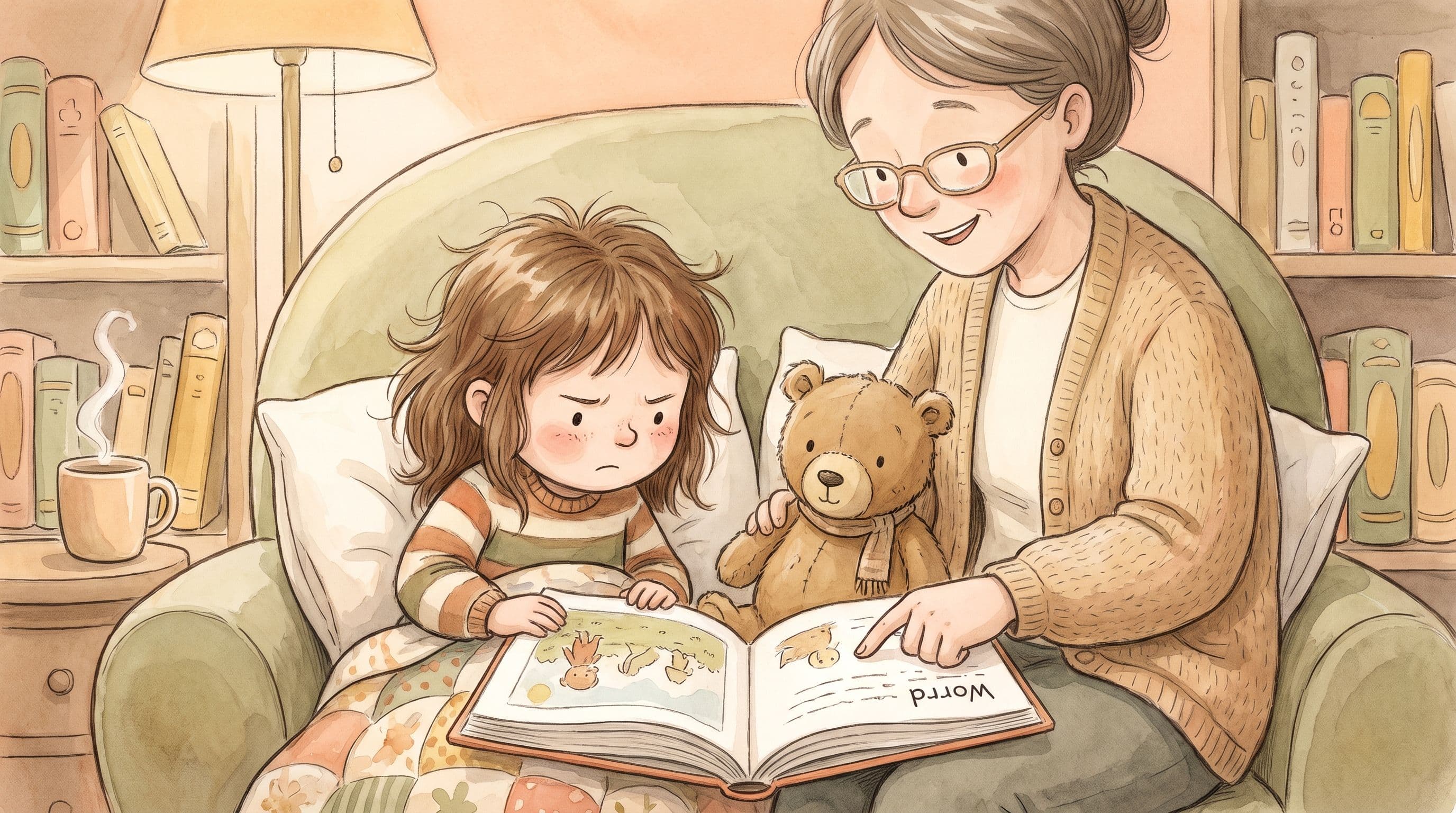
One evening her mom read her a new book with a girl on the cover who had Aria's brown hair, sounding out a word, and Aria's own name across the top. In the story, that Aria found reading hard too, and her stuffed bear Ziggy told her the most important thing: reading is not a race. Every brain learns at its own pace, and finding it hard doesn't mean you can't, it means you're still growing. Ziggy showed her that getting extra help isn't something to be ashamed of, it's what smart, brave kids do, and that celebrating tiny steps keeps you moving. Story-Aria kept going, one small word at a time, and slowly got better.
4. She tries, and keeps going
Story-Aria stopped comparing herself and started measuring her own progress, and it grew. Real Aria wanted to read her own way too. Instead of giving up, she practiced a little each day, celebrated each word she got, and worked with her teacher for extra help without feeling ashamed. "I'm not behind, I'm just growing," she reminded herself. Week by week, the words came a little easier. She was becoming a reader, on her own timeline.
5. She comes back to the book
Aria asked for the book whenever reading felt discouraging, and it reminded her that her pace was okay. She kept going, kept getting help, and kept celebrating small wins. The comparisons quieted, because Aria had learned the truest thing: reading is her own journey, and she was on her way.
How should you use a story like this at home?
- Praise effort and progress, never comparing your child to others.
- Celebrate tiny steps so momentum feels good.
- Frame extra help as something brave and smart, not a punishment.
- If reading struggles persist, talk with the teacher, since early support and screening for things like dyslexia can make a big difference.
What do you do when a child says they're bad at reading?
Gently reframe struggle as growth, focus on their own progress rather than peers, and get them support without shame. It's worth knowing when to seek help: the American Academy of Pediatrics explains that reading disorders are identified when a child's reading is significantly behind their classmates', can't be found on brain scans, and respond best to early educational intervention — so persistent difficulty is worth discussing with the school (Reading Disorders: What Parents Need to Know).
Keep reading: confidence at reading and confidence at speaking up go together — see how this approach helps a child scared of getting an answer wrong in class.