Reading together
How can you build a bedtime storytelling routine that lasts?
Create a simple, repeatable bedtime storytelling routine with a consistent cue, one short book, conversation, and a calm ending.

The short answer
Keep the routine short, predictable, and easy to repeat: use the same cue, choose one manageable story, let the child participate, and end with a familiar closing line. Consistency matters more than length. A ten-minute routine practiced regularly is more sustainable than an elaborate plan that exhausts everyone.
Key takeaways
- Use the same cue and order each night.
- Keep the routine short enough for difficult evenings.
- Let the child point, predict, remember, and choose.
- End calmly instead of turning the final page into a negotiation.
What should a simple bedtime reading routine include?
A durable routine needs only four parts: a cue, a comfortable reading place, one story, and a consistent ending.
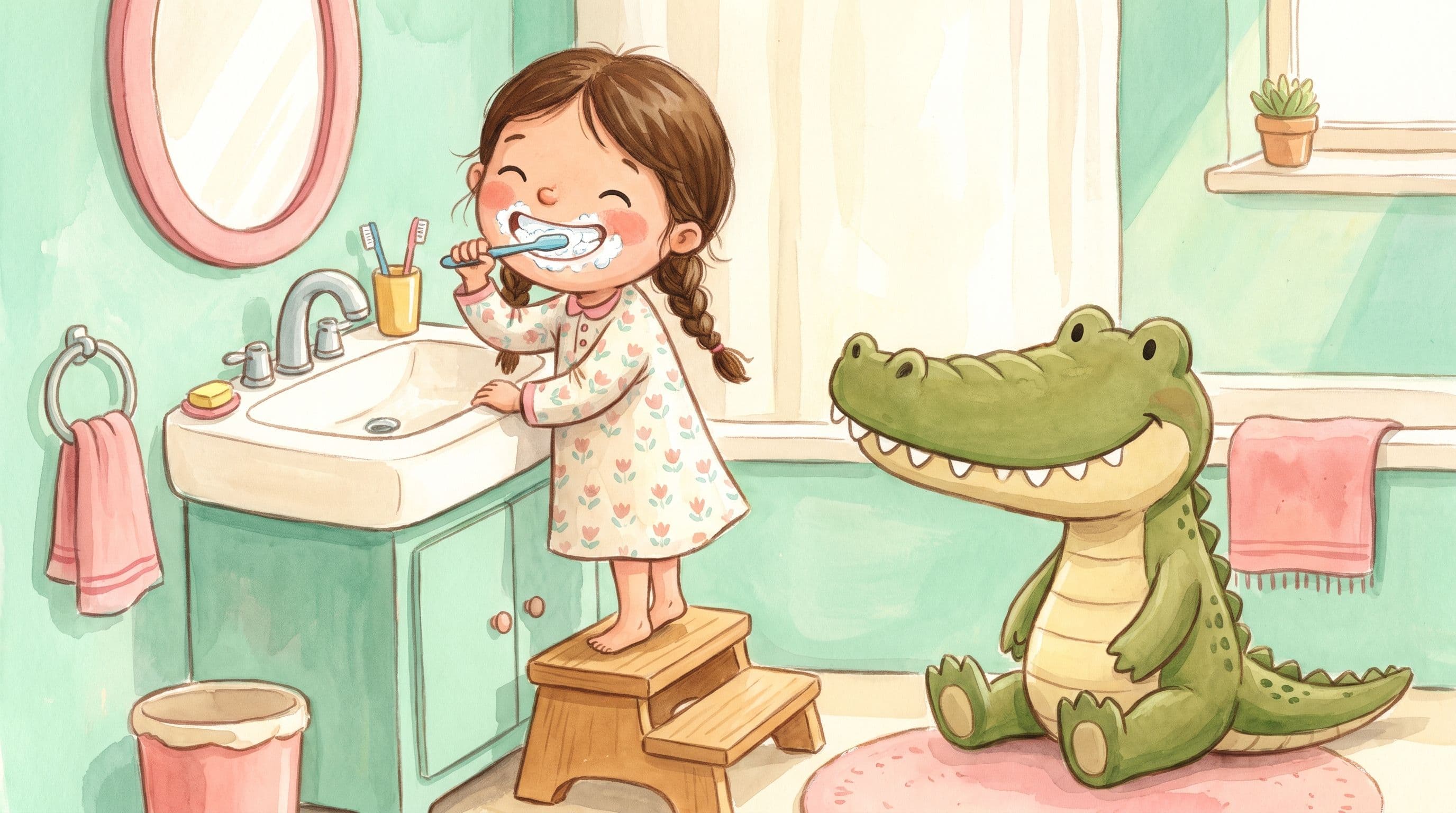
- Cue: Finish teeth brushing, dim the light, or play the same quiet sound.
- Settle: Sit in the same chair or place in bed.
- Read: Choose one short book or one chapter.
- Close: Repeat a familiar sentence, hug, or goodnight ritual.
The American Academy of Pediatrics’ Brush, Book, Bed program presents a simple nightly sequence: brush teeth, read together, and maintain a regular bedtime. The routine does not need to be long to be recognizable.
How can a child participate in the story?
Invite participation without testing. Ask what the child notices, what they think happens next, or how a character feels. Let them finish a repeated phrase, point to a familiar object, or tell part of a remembered page.
Reading Rockets describes dialogic reading as an interactive approach in which the adult prompts the child and responds to what they say.
With a personalized book, participation can be especially natural:
- “Who is that?”
- “Have you been somewhere like this?”
- “What would Riley say now?”
- “Show me the brave hands.”
Do not ask a question on every page. The goal is shared attention, not a quiz.
What if bedtime reading becomes a struggle?
Reduce the demands. Offer two book choices rather than an unlimited shelf. Read fewer pages. Let the child listen while holding a comfort object. If everyone is overtired, summarize the ending and return tomorrow.
A routine can bend without disappearing. “We always have one little story” may be sustainable even when the form changes.
Avoid using the story as a threat—“No book unless you hurry”—when possible. That can make reading feel like a prize that is repeatedly removed. Keep boundaries around bedtime while preserving the reading connection.
How can family stories become part of the routine?
Alternate published books with short personal stories. Tell the same memory several nights in a row and invite the child to add details. A digital personalized storybook can make that memory visible, while a printed copy can live with the rest of the bedtime books later.
The most calming stories often end with safety and return: the character comes home, finds help, understands what happened, or feels ready for sleep.
“The adventure can wait. Tonight, everyone is home.
”