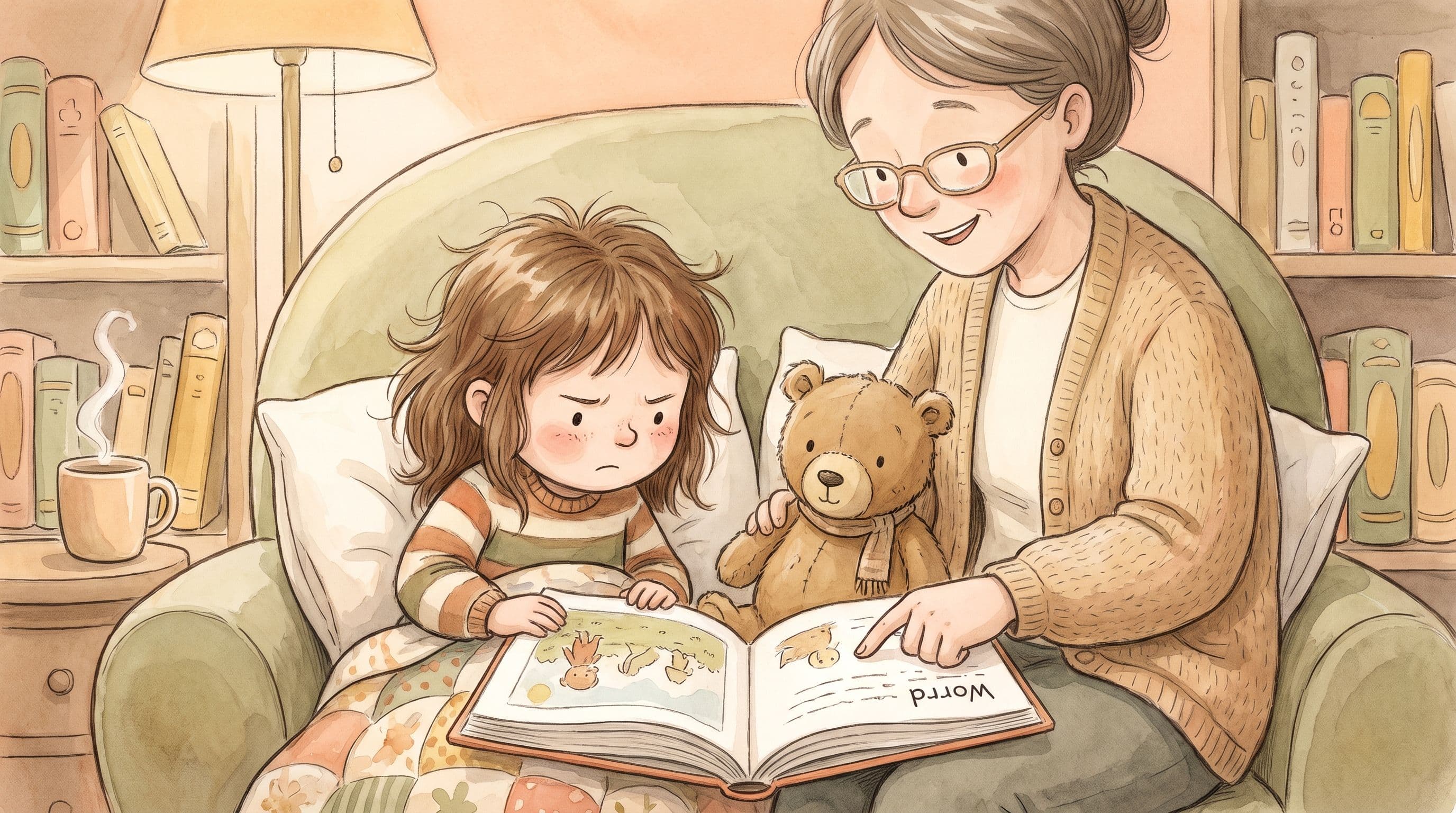
Reading together
How do you help a child learning to read fall in love with it?
How to spark a new reader by making it feel like cracking a code, sounding out and blending letters, celebrating each word, and reading a little every day, with a story.
The short answer
Make it feel like cracking a secret code, sound out the letters, blend them into words, and celebrate each one, while reading together a little every day. Keep it playful and pressure-free, point out words in the real world on signs and menus, and follow your child's teacher's approach. A story where a character just like them unlocks reading turns a mountain of rules into a treasure hunt where every word is a small, exciting victory.
Key takeaways
- Learning to read is one of childhood's biggest thrills, and sometimes a little daunting.
- There's a lot to hold: letter sounds, blending, sight words.
- Reframe reading as a code to crack, one small win at a time.
- A story where your child unlocks reading makes the whole thing feel like an adventure.
How do you help a child learning to read fall in love with it?
Make it feel like cracking a secret code, sounding out letters, blending them into words, and celebrating each one, while reading a little every day. If your child is learning to read, they're on the edge of the moment letters stop being squiggles and start becoming words. A child who sees reading as a code they get to crack, one small win at a time, tends to fall in love with it.
Reading can feel like a mountain of rules to a beginner. A story reframes it as a superpower being unlocked.
Why does a story work to launch a reader?
A story turns a lesson into a treasure hunt. When a child watches a hero sound out their first words and light up, reading becomes a hunt where every word is a small victory. Give the hero your child's name and face and the excitement becomes theirs.
What does a good learning-to-read story look like?
The names and characters are invented for this example. In a real personalized book, the hero is your own child.
1. A hero with something big to learn
Kai was learning to read. He knew his letters, and now the grown-ups kept saying he'd soon be reading words all by himself. Kai wasn't sure how a bunch of letters turned into a word, but he was curious.
2. A worry he can name
The letters looked like a puzzle he didn't have the key to. How did c-a-t become "cat"? It felt like a secret everyone else knew. Kai wanted to read, but he wasn't sure he could crack it.
3. A hero who looks just like him
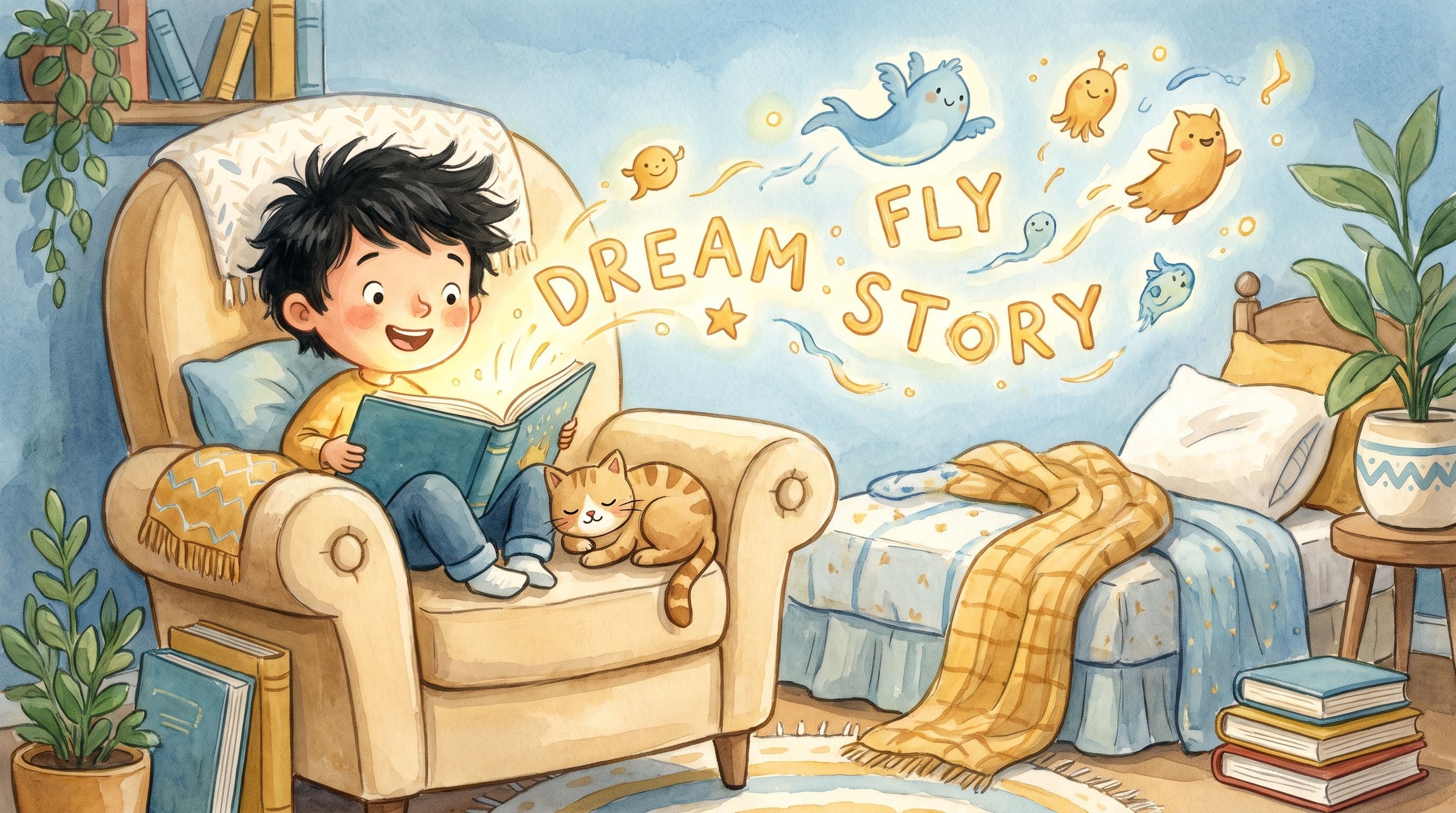
One evening his dad read him a new book with a boy on the cover who had Kai's black hair, holding a glowing book, and Kai's own name across the top. In the story, that Kai was learning to read too, and his stuffed cat Inkwell revealed the secret. Reading is a code, and you already have the key. Each letter makes a sound. Say the sounds, then blend them together, slow and smooth, and out pops a word. Inkwell cheered as story-Kai sounded out c-a-t, blended it, and cracked his very first word. Every word after that was another piece of the code unlocked.
4. He tries, and is proud of himself
Story-Kai sounded out word after word, and reading turned into a thrilling treasure hunt. Real Kai wanted to crack the code too. He pointed at a word, said each sound, and blended them, slow and smooth. "C-a-t... cat! It says cat!" His whole face lit up. He read another, and another. Each word he cracked felt like finding treasure, and he wanted more.
5. He comes back to the book
Kai asked for the book every night and started sounding out words everywhere, on signs, on cereal boxes, on menus. Reading became his favorite game, because Inkwell had shown him it was a code he could crack, one exciting word at a time.
How should you use a story like this at home?
- Read together every day, even just a few minutes.
- Celebrate each word and each try, not just perfect reading.
- Point out words in the real world, on signs, packages, and menus.
- Follow your child's teacher's approach, and keep it playful and pressure-free.
What's the best way to make reading fun?
Keep it playful and low-pressure, follow your child's interests, celebrate effort, and let them see reading as an adventure rather than a chore. The American Academy of Pediatrics encourages reading together daily, making it a warm and enjoyable routine, following your child's interests, and keeping the focus on enthusiasm and connection — because a child's love of learning matters more than the exact age at which reading clicks (10 Tips to Help Your Child Fall in Love with Reading).
Keep reading: the first day of school and the first read-it-yourself book are two big leaps — see how this approach helps a child on their first day of school.