Story ideas
How do you calm a child's first-day-of-school nerves?
How to calm first-day nerves by walking your child through the whole day in advance and reassuring them about pickup, with a full example story that makes it feel familiar.
The short answer
Walk your child through the whole day in advance, the hooks and cubbies, circle time, snack, playground, and pickup, so nothing is a surprise, and reassure them clearly that you always come back at the end. Visit the classroom beforehand if you can, keep drop-off goodbyes warm and brief, and send a comfort object along. A story where a character just like them has a happy first day makes the real one feel familiar and doable.
Key takeaways
- The night before can be full of butterflies, sometimes the child's, sometimes yours.
- A new building, teacher, and kids, plus the big question of whether a grown-up comes back.
- Walk through the whole day and reassure clearly about pickup.
- A story where your child has a happy first day makes the real one feel familiar.
How do you calm a child's first-day-of-school nerves?
Walk your child through the whole day in advance, and reassure them that you always come back. If your child is starting their first day of preschool or kindergarten, it's a lot of firsts at once — a new building, a new teacher, new kids, and the big question of whether a grown-up will come back at the end. Walking them through exactly what the day will hold, and reassuring them about pickup, turns those jitters into excitement.
A nervous child doesn't need "you'll be fine," they need to know what's going to happen. A story gives them the whole map.
Why does a story work when "you'll be fine" doesn't?
A story gives a child the whole map of the day. When they watch a hero hang their backpack, meet the teacher, play, and get picked up right on time, school stops being a mystery and becomes a day with a friendly shape and a happy ending. Give the hero your child's name and face and the confidence becomes theirs.
What does a good first-day story look like?
The names and characters are invented for this example. In a real personalized book, the hero is your own child.
1. A hero with a big day coming
Jonah was starting school. His backpack was packed and his shoes were by the door, but his tummy was full of butterflies. He'd never done a school day before, and he wasn't quite sure what one was like.
2. A worry he can name
Would his teacher be nice? Would he know anyone? What if he needed his grown-up and they weren't there? The unknowns piled up, and Jonah wasn't sure he wanted to go after all.
3. A hero who looks just like him
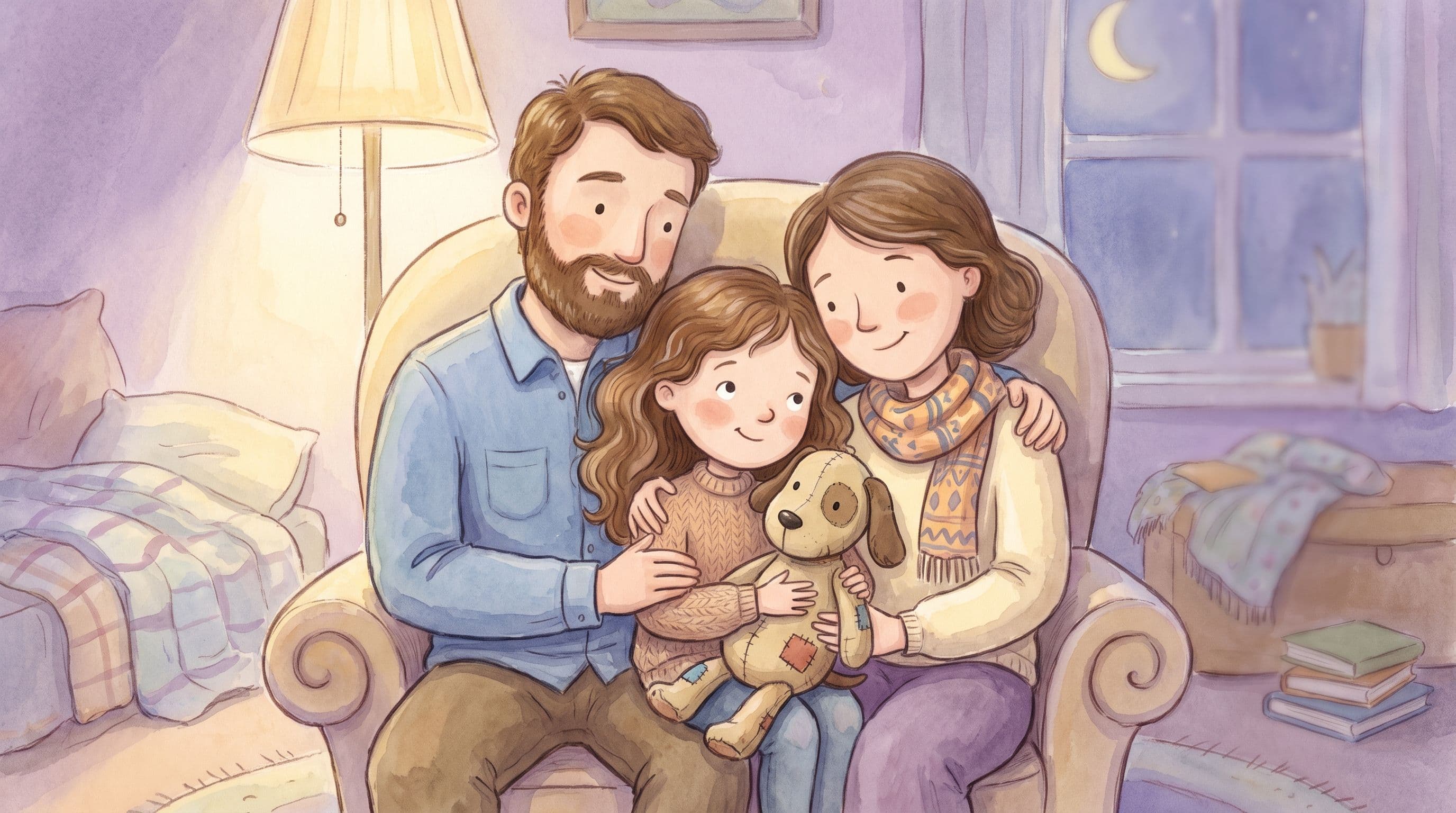
The night before, his dad read him a new book with a boy on the cover who had Jonah's brown hair, a backpack, and Jonah's own name across the top. In the story, that Jonah had a first day too, and his stuffed bear Biscuit walked him through the whole thing. You hang your backpack on a hook with your name on it. You sit in a circle and sing. You have snack and playtime and stories. And at the very end, your grown-up is always there to pick you up. Biscuit tucked into the backpack to come along for courage.
4. He tries, and has a great day
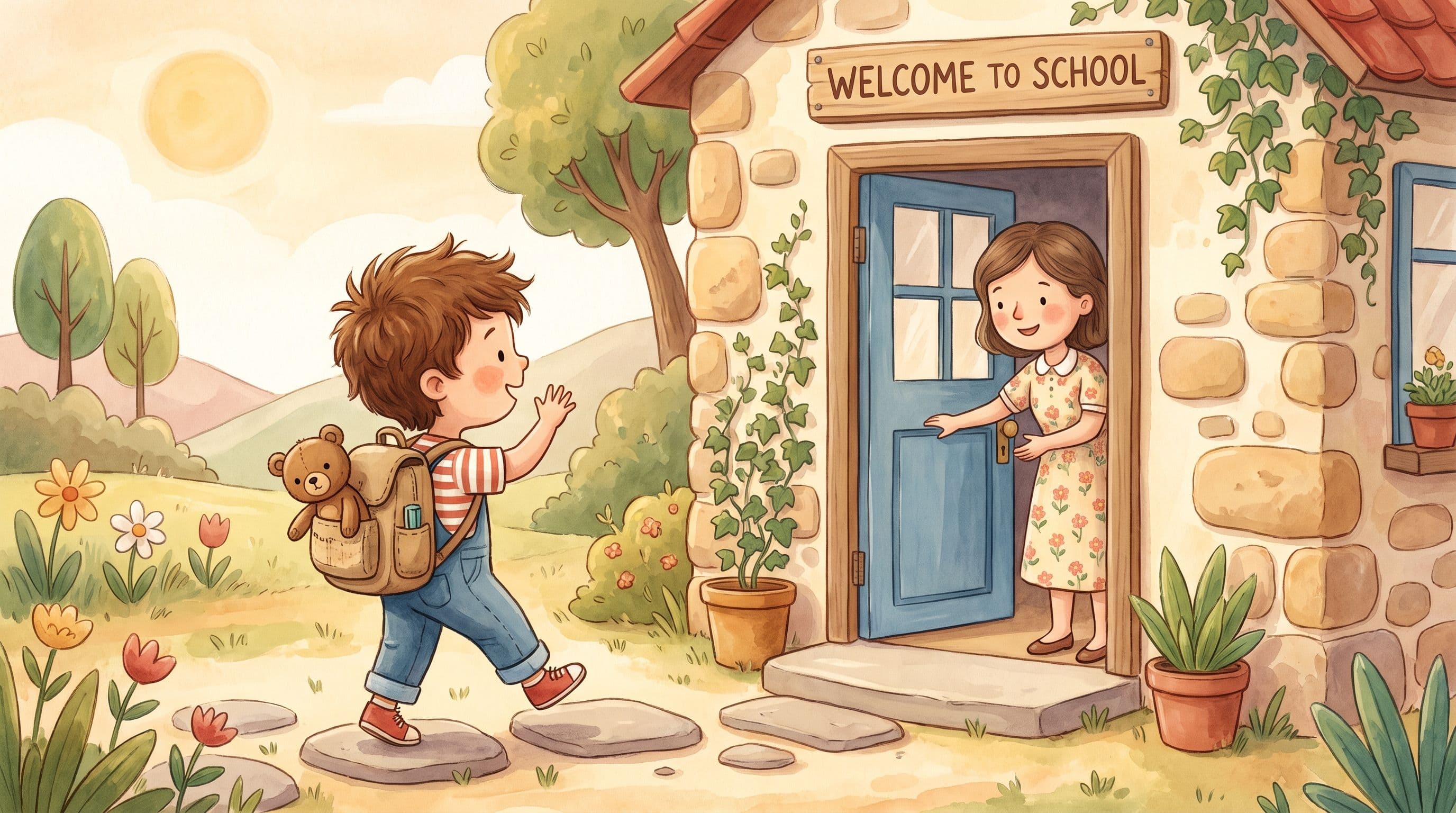
Story-Jonah did each part of the day and had a wonderful time, and his grown-up was right there at pickup, just like the book promised. Real Jonah felt ready because he knew the plan. He hung his backpack on his very own hook, sang at circle time, built a tower at playtime, and had his snack. When the day ended, there was his dad at the door. "It was just like the book!" Jonah beamed. He couldn't wait for day two.
5. He comes back to the book
Jonah asked for the book every night that first week, and Biscuit rode along in his backpack for a while. School stopped being scary, because Jonah knew exactly how the day went, and he knew for certain his grown-up always came back.
How should you use a story like this at home?
- Visit the school or classroom beforehand if you can, and meet the teacher.
- Walk through the day's routine so it feels familiar.
- Reassure your child clearly about who will pick them up and when.
- Keep drop-off goodbyes warm, confident, and brief.
What helps a child who cries at drop-off?
A consistent, brief goodbye ritual, a comfort object, and clear reassurance about pickup all help, and most children settle soon after you leave. The American Academy of Pediatrics suggests visiting the school or playground beforehand so it feels familiar, rehearsing the new situation, and reminding your child that teachers know students may be nervous and make an extra effort to help everyone feel comfortable; if your child seems worried, ask what's on their mind and problem-solve it together (Back-to-School Tips for Families).
Keep reading: starting fresh partway through the year is its own kind of brave — see how this approach helps a child starting a new school mid-year.