Story ideas
How do you help a child when a parent travels for work?
How to help a child with a frequently-traveling parent using a predictable goodbye ritual, easy ways to connect, and the steady message that a parent always comes back.
The short answer
Build a predictable goodbye ritual so departures feel familiar, keep connection easy with calls, voice notes, and little tucked-away notes, and use a countdown so the wait feels short and certain. Welcome the sad feelings rather than rushing past them, and remind your child, warmly and often, that their parent always comes back. A story where a character just like them stays close to a traveling parent makes each goodbye easier.
Key takeaways
- Repeated goodbyes can be genuinely hard, even when the trips are routine.
- Young children can't always grasp that a few days is short.
- A predictable ritual, easy connection, and a visible countdown turn goodbyes manageable.
- A story where your child stays close to a traveling parent makes each goodbye easier.
How do you help a child when a parent travels for work?
Build a predictable goodbye ritual, keep connection easy while apart, and use a simple countdown so the wait feels short and certain. If your child has a parent who travels for work, the repeated goodbyes can sting, even when the trips are routine — little kids don't always grasp that a few days is short, and each departure can bring fresh sadness. A steady rhythm and the message that their parent always comes back can turn those goodbyes from painful into manageable.
Repeated goodbyes don't automatically get easier, especially when a child can't yet measure time. A ritual with a reliable ending changes that.
Why does a story work when goodbyes keep coming?
A story gives the pattern a shape and a happy ending they can count on. When a child watches a hero say a warm goodbye, stay connected, and welcome their parent home, the trips stop feeling like losses and start feeling like a rhythm with a reliable return. Give the hero your child's name and face and the reassurance becomes theirs.
What does a good traveling-parent story look like?
The names and characters are invented for this example. In a real personalized book, the hero is your own child.
1. A hero with something to get used to
Ben's parent traveled for work, which meant saying goodbye every few weeks for a trip. Ben knew they always came back, but the goodbyes still stung, and the days in between could feel long.
2. A worry he can name
Each time the suitcase came out, Ben's chest got tight. A few days sounded like forever, and he wasn't always sure how to feel close to his parent while they were gone. The missing crept in right at the door.
3. A hero who looks just like him
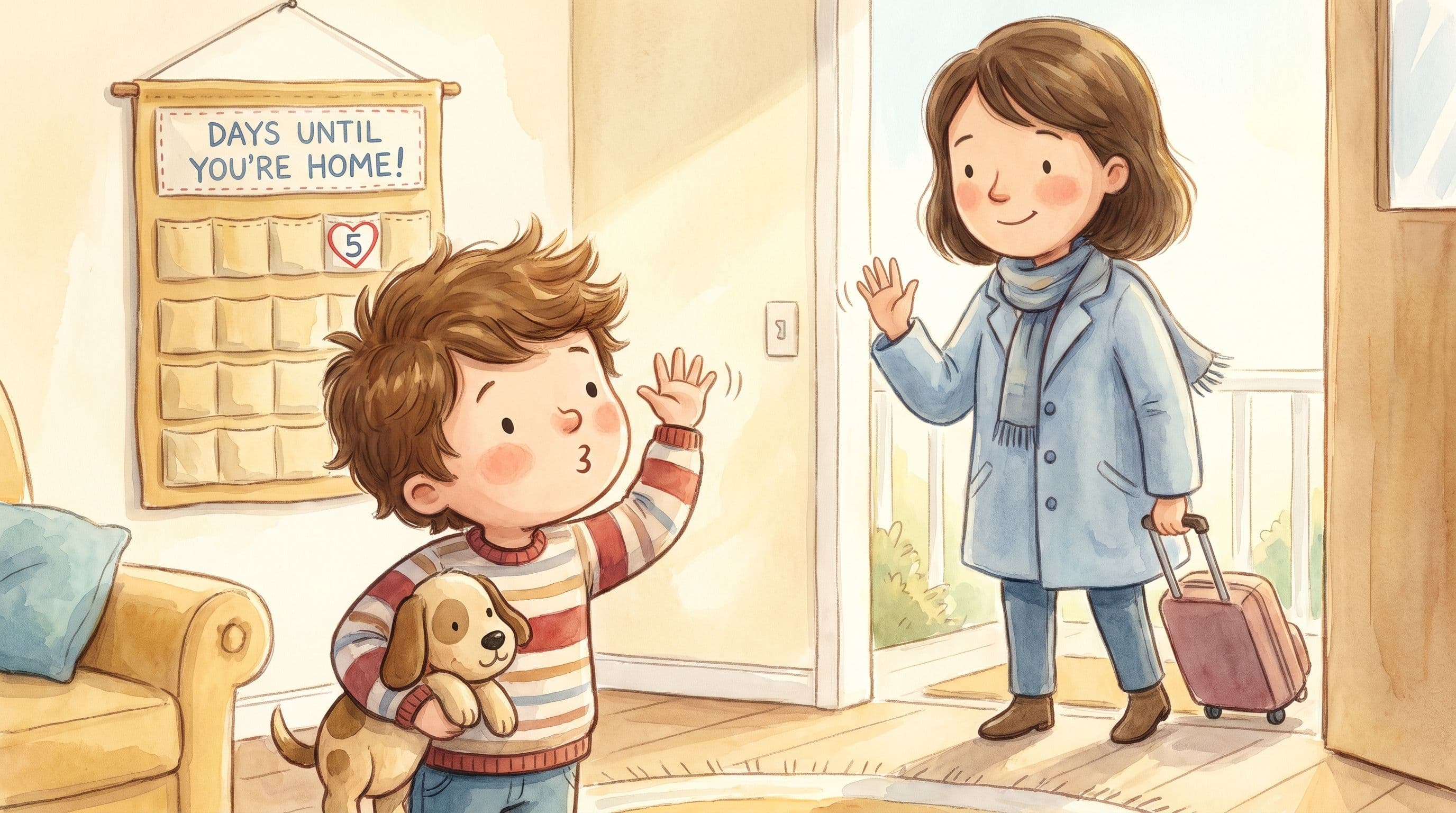
One evening his parent read him a new book before a trip with a boy on the cover who had Ben's brown hair, waving by a little suitcase, and Ben's own name across the top. In the story, that Ben had a traveling parent too, and his stuffed dog Pilot taught him the Always-Comes-Back Rule and a goodbye ritual: a special handshake at the door, a countdown calendar to color each morning, a bedtime video call to share the day, and a note tucked in his pocket for whenever he missed his parent. Pilot reminded him that the trips are short and the coming home is certain.
4. He tries, and feels close
Story-Ben used his goodbye ritual and countdown, and the trips felt shorter and the connection stayed strong. Real Ben wanted his own ritual too. He and his parent made up a special handshake, and Ben colored a square each morning, waved on video calls, and kept a little note in his pocket. "Only two more squares till you're home," he'd report. The goodbyes still had a pinch of sad in them, but Ben knew the rule: his parent always comes back.
5. He comes back to the book
Ben asked for the book before every trip, and the handshake and countdown became their thing. The goodbyes got easier, because Ben had a rhythm he could count on and a parent who, without fail, came back home.
How should you use a story like this at home?
- Build a consistent goodbye ritual so departures feel predictable.
- Use a countdown your child can mark each day.
- Keep connection easy with calls, voice notes, and little tucked-away notes.
- Welcome the sad feelings, and remind them, warmly and often, that their parent always comes back.
What helps a child who gets very upset at goodbyes?
Predictability, a comforting ritual, and welcoming their feelings all help — and if distress is intense or lasting, a counselor can offer extra support. The American Academy of Pediatrics suggests giving your child full attention and affection at the goodbye, then keeping it short and sweet with a consistent ritual — perhaps letting your child hold a favorite stuffed animal — because doing the same goodbye the same way each time helps a child build trust that you'll return (How to Ease Your Child's Separation Anxiety).
Keep reading: a traveling parent and a deployed parent bring the same missing — see how this approach helps a child whose parent is deploying.