Story ideas
How do you help a child who cries at daycare drop-off?
How to ease tearful daycare drop-offs with a short, predictable goodbye ritual, a small comfort from home, and the steady reassurance that you always come back, with a story.
The short answer
Use a short, predictable goodbye ritual you do the same way every day, send a small comfort from home, and reassure your child that you always come back at the same time. Keep goodbyes warm but brief, since lingering usually makes it harder, and trust that the tears typically stop soon after you leave. A story where a character just like them has a confident goodbye and a happy day makes tearful mornings easier.
Key takeaways
- Separation anxiety is normal and healthy, it means your child is securely attached to you.
- The tears usually stop soon after you leave, but that doesn't make the goodbye easier.
- A predictable goodbye ritual and the certainty you always come back turn tearful mornings confident.
- A story where your child has a confident goodbye and a happy day makes the morning easier.
How do you help a child who cries at daycare drop-off?
Use a short, predictable goodbye ritual, plus a small comfort from home and the steady reassurance that you always come back at the same time. If your child cries at daycare drop-off every morning, it can break your heart, but separation anxiety is completely normal and developmentally healthy. A predictable ritual and the certainty that you always come back can turn tearful mornings into confident ones.
A crying child at drop-off is flooded with feeling, not logic. A story, read at calm times, builds the reassurance in advance.
Why does a story work when goodbyes are hard?
A story read at calm times builds the reassurance before the hard moment. When a child watches a hero do a special goodbye ritual, have a good day, and get picked up right on schedule, drop-off becomes a familiar routine with a guaranteed happy ending. Give the hero your child's name and face and the confidence becomes theirs.
What does a good drop-off story look like?
The names and characters are invented for this example. In a real personalized book, the hero is your own child.
1. A hero with a hard part of the day
Every morning at daycare drop-off, Teddy cried. He loved his grown-up so much that saying goodbye felt awful, and the tears came the moment they reached the door.
2. A worry he can name
Teddy didn't want his grown-up to leave. A whole day felt like forever, and the goodbye moment made his chest ache. Even though he usually felt better soon after, that first goodbye was the hardest part of every day.
3. A hero who looks just like him
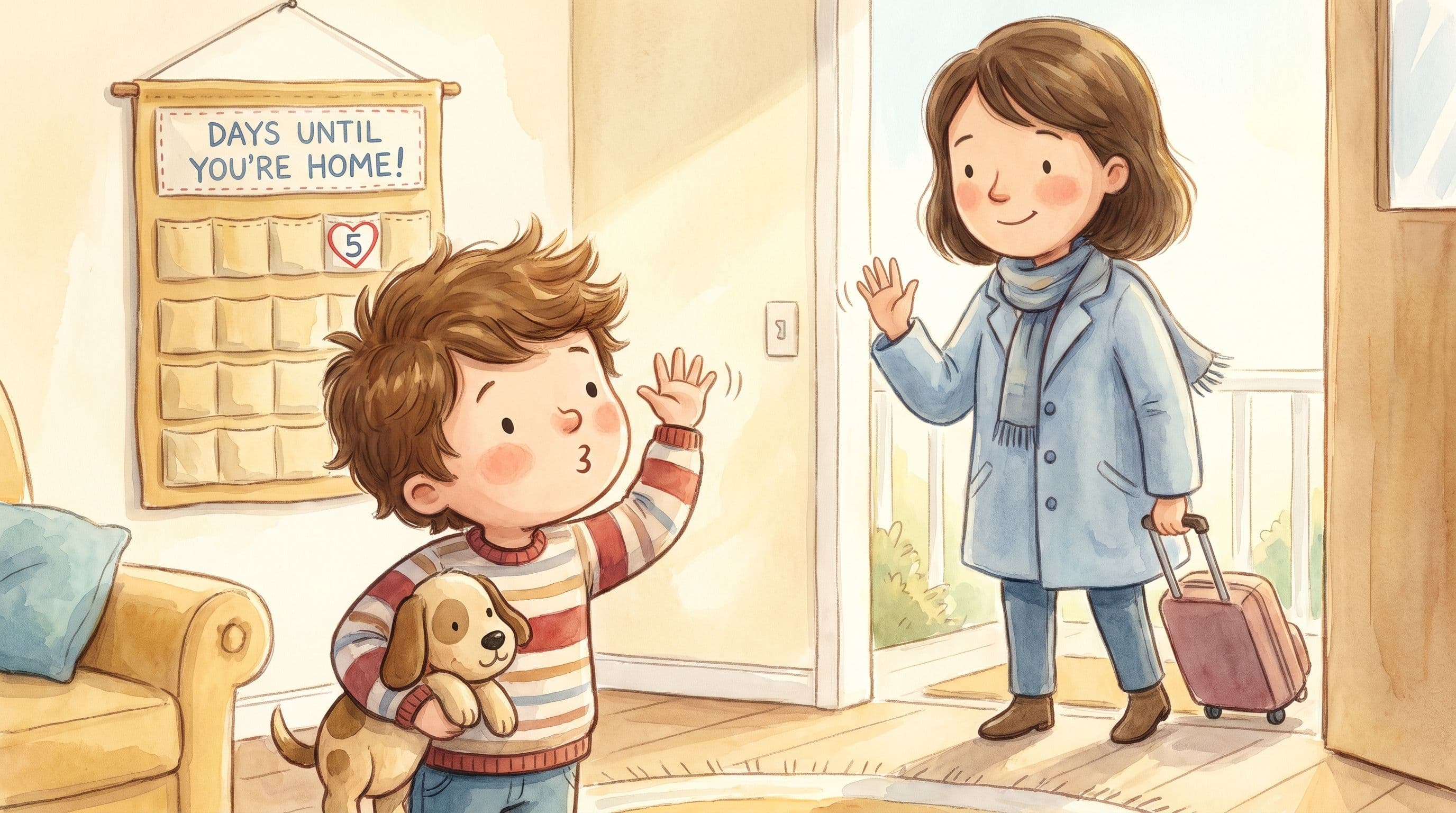
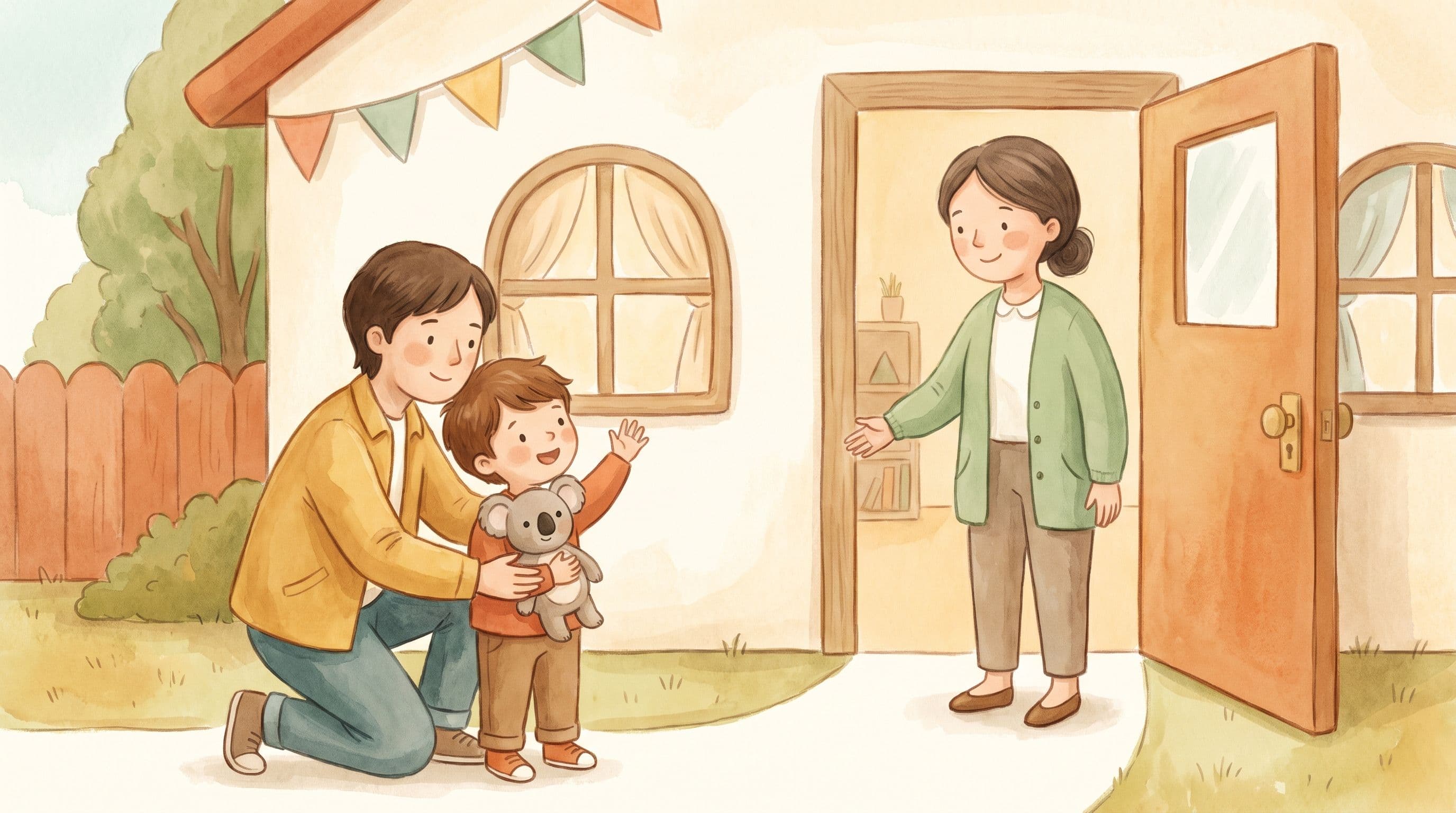
One evening his mom read him a new book with a boy on the cover who had Teddy's brown hair, giving his grown-up a special goodbye at daycare, and Teddy's own name across the top. In the story, that Teddy cried at drop-off too, until his stuffed koala Coco helped make a Goodbye Ritual: a special, same-every-day goodbye of a big hug, a secret handshake, and a wave from the window. Coco reminded him of the most important part, your grown-up always comes back, at the same time every day, right after snack and playtime. And Coco could ride in his cubby so a little bit of home was always with him. Story-Teddy did his ritual, waved from the window, and had a happy day, and his grown-up came back right on time.
4. He tries, and says a confident goodbye
Story-Teddy's Goodbye Ritual made drop-off so much easier. Real Teddy wanted his own ritual. He and his mom made one up: a big squeeze, their secret handshake, and a wave from the window, with Coco tucked in his cubby. The next morning, Teddy still felt a little sad, but he did his ritual, waved, and then went to play. His grown-up came back right after snack, just like the book said. Drop-off got easier every day.
5. He comes back to the book
Teddy asked for the book at bedtime, and the Goodbye Ritual became their special thing. The tears got smaller and the goodbyes got braver, because Teddy had learned that drop-off always ends the same way: with his grown-up coming back for him.
How should you use a story like this at home?
- Create a short, consistent goodbye ritual and use it every day.
- Keep goodbyes warm but brief, since lingering usually makes it harder.
- Send a small comfort from home, and reassure them about pickup time.
- Trust that the tears usually stop soon after you leave, and check with caregivers if you're unsure.
Is it normal for a child to cry at drop-off?
Yes, separation anxiety is normal and a sign of healthy attachment, and the tears usually stop shortly after you leave. The American Academy of Pediatrics advises giving your child full attention and affection at the goodbye, then keeping it short and sweet with a consistent ritual — perhaps a favorite comfort object — because doing the same goodbye the same way each day helps a child build trust that you'll return (How to Ease Your Child's Separation Anxiety).
Keep reading: drop-off jitters and first-day jitters are the same brave goodbye — see how this approach helps a child on their first day of school.