Story ideas
How do you help a child cope when parents are separating?
How to help a young child through a separation with the messages that matter most, it's not their fault and both parents love them, plus a gentle example story.
The short answer
Repeat the messages that matter most, often and plainly: this is not your fault, both of your parents love you and always will, and the grown-ups will take care of you. Welcome every feeling without rushing your child to feel okay, keep routines and comfort objects steady, and never put your child in the middle. A gentle story where a character just like them hears and feels these truths can offer real comfort.
Key takeaways
- Young children often carry worries they can't put into words during a separation.
- The questions that matter most: Is this my fault? Will both parents still love me?
- Repeat the core truths plainly: not your fault, still loved, still cared for.
- A gentle story can hold big feelings and reinforce the reassurance a child needs.
How do you help a child cope when parents are separating?
Say the most important things simply, and repeat them often: this is not your fault, both of your parents love you and always will, and the grown-ups will take care of you. When parents separate, a young child's world can feel like it's shifting under their feet, and they often carry worries they can't name — Is this my fault? Will I still be loved? Where will I live?
Direct conversations about a separation can feel too big for a small child. That doesn't mean the reassurance can't reach them; it often needs a gentler doorway.
Why does a story work when big feelings are hard to talk about?
A story gives the feelings a safe, gentle container. When a child watches a hero move through the same change and stay loved and secure, they absorb the reassurance in a way that lands deeper than a talk alone. Give the hero your child's name and face and the comfort becomes personal. For a family going through a separation, it can also help to involve a family counselor or child therapist.
What does a gentle separation story look like?
The names and characters are invented for this example. In a real personalized book, the hero is your own child.
1. A hero with something big to understand
Ella's mom and dad told her that they were going to live in different homes. They would both still be her parents, and they would both still love her, but things were going to change. Ella wasn't sure what to think or feel.
2. A worry she can name
Deep down, Ella wondered if she had done something to cause it. She worried that if her parents stopped loving each other, maybe love could just run out. And she didn't know what her days would look like now. The not-knowing sat heavy in her chest.
3. A hero who looks just like her
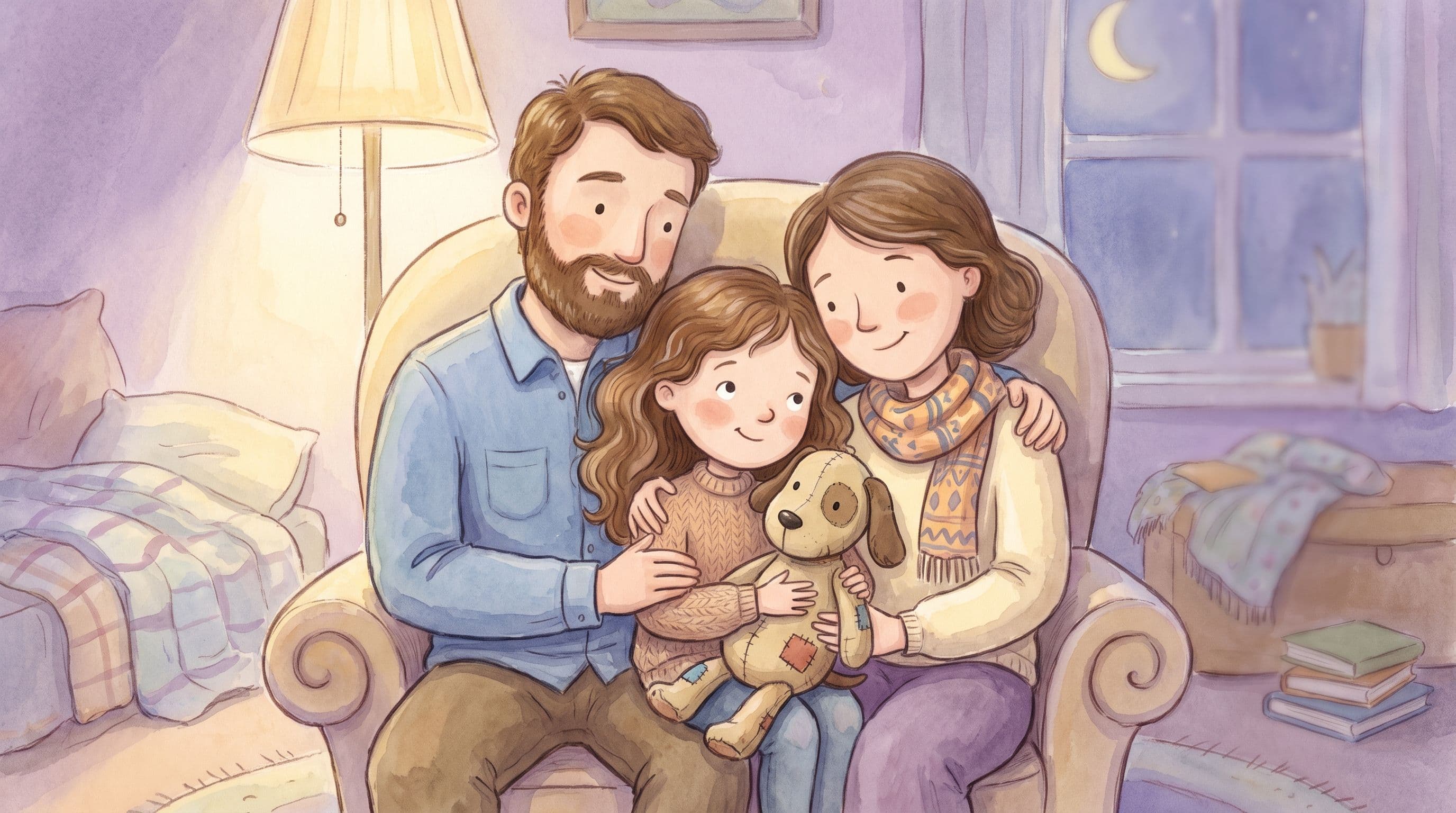
One evening, snuggled up, her mom read her a new book with a girl on the cover who had Ella's wavy hair, held close by two loving parents, and Ella's own name across the top. In the story, that Ella's parents were living apart too, and the book gave her the truths she most needed to hear. It's not your fault, not even a little. Grown-up love changing is never because of anything you did. Both of your parents love you completely, and that love will never run out. And the grown-ups will always take care of you. Her stuffed dog Scout stayed right by her side.
4. She feels safer
As she heard the story, the heavy feeling in Ella's chest got lighter. Real Ella listened, holding her own stuffed dog, and let the words sink in. "It's not my fault?" she asked. "Not even a little," her mom said, and held her close. Ella still felt sad sometimes, and that was okay. But she knew now, deep down, that she was safe and loved by both her parents, no matter which home she was in.
5. She comes back to the book
Ella asked for the book on the hard days and the ordinary ones, because it reminded her of the things that stayed the same even when so much was changing. She kept Scout close. The change was still real, and her feelings were still allowed, but underneath them was something solid: she was loved, she was safe, and none of it was her fault.
How should you use a story like this at home?
- Repeat the core messages often: it's not your fault, both parents love you, the grown-ups will take care of you.
- Welcome every feeling, and don't rush your child to feel okay.
- Keep routines and comfort objects steady where you can.
- Consider involving a family counselor or child therapist, who can support your child through the change.
Should you use a book to talk about the separation?
A gentle, personalized story can open the door to feelings that are hard to talk about directly and reinforce the reassurance your child needs. It lines up with the American Academy of Pediatrics' guidance: make sure your child knows the divorce is not their fault and that they are loved, keep routines as steady as possible, never put a child in the middle of adult conflict, and keep both parents positively involved — and many families find a child therapist or family counselor helpful during this time (How to Support Children after Their Parents Separate or Divorce).
Keep reading: a separation is one of several big family changes — see how this approach helps a child becoming a big sibling.