Story ideas
How do you help a child settle into living in two houses?
How to help a child settle into two homes by giving each one its own comforts, keeping a traveling anchor, and redefining home as wherever their people love them.
The short answer
Give each home its own comforts, routines, and a few of your child's own belongings, keep a special comfort item that travels back and forth, and remind them that home is wherever their people love them, which means they have two. Keep transitions calm and predictable, keep rules consistent across homes, and never make your child a messenger. A story where a character just like them feels at home in both places makes the back-and-forth feel secure.
Key takeaways
- The back-and-forth can leave a child feeling in-between, like they never quite land anywhere.
- Two houses become two homes with structure, comforts, and reassurance.
- Give each home its own space, keep a traveling anchor, and redefine home as where their people love them.
- A story where your child feels at home in both places makes the switching feel secure.
How do you help a child settle into living in two houses?
Give each home its own comforts and routines, keep a special item that travels with your child, and remind them that home is wherever their people love them. When a child is living in two houses, the back-and-forth can feel unsettling at first — two bedrooms, two sets of routines, and the tricky in-between of packing up and switching. With a little structure and reassurance, two houses can become two homes, both full of love and both truly theirs.
Moving between homes can leave a child feeling like a visitor in both places. Redefining home changes that.
Why does a story work when the switching feels hard?
A story reframes the in-between. When a child watches a hero settle happily into both homes and carry their sense of belonging with them, two houses stop competing and start feeling like two places that are both theirs. Give the hero your child's name and face and the belonging becomes theirs.
What does a good two-homes story look like?
The names and characters are invented for this example. In a real personalized book, the hero is your own child.
1. A hero with something big to learn
Henry lived in two houses now, one with each parent. Both homes had a bed for him, his own toys, and people who loved him. But the switching back and forth felt strange, and Henry wasn't sure how to feel settled in either place.
2. A worry he can name
What if he forgot something important at the other house? Which one was really home? The packing up and moving between made Henry feel a little like a visitor in both places, never quite landing anywhere.
3. A hero who looks just like him
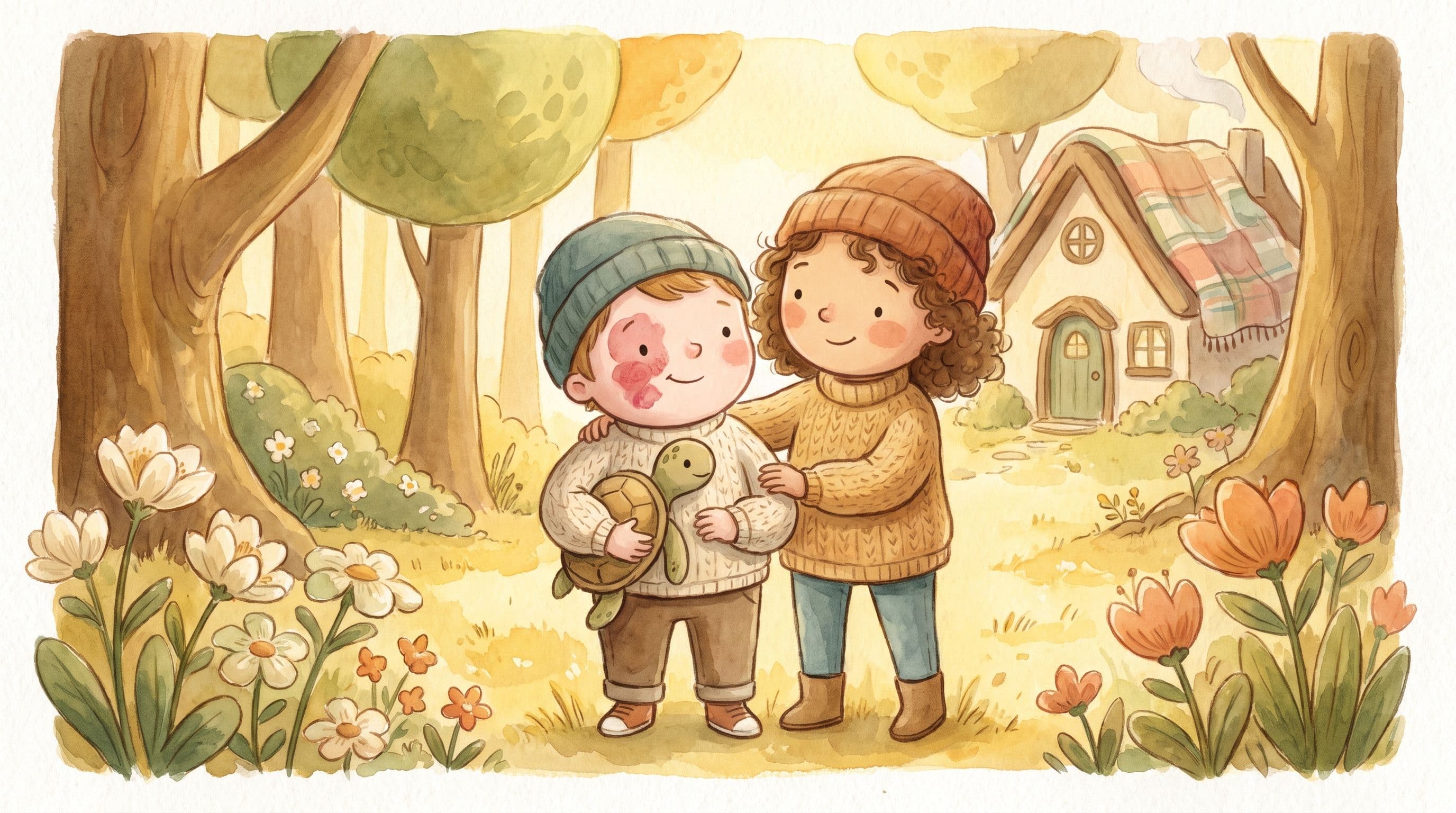
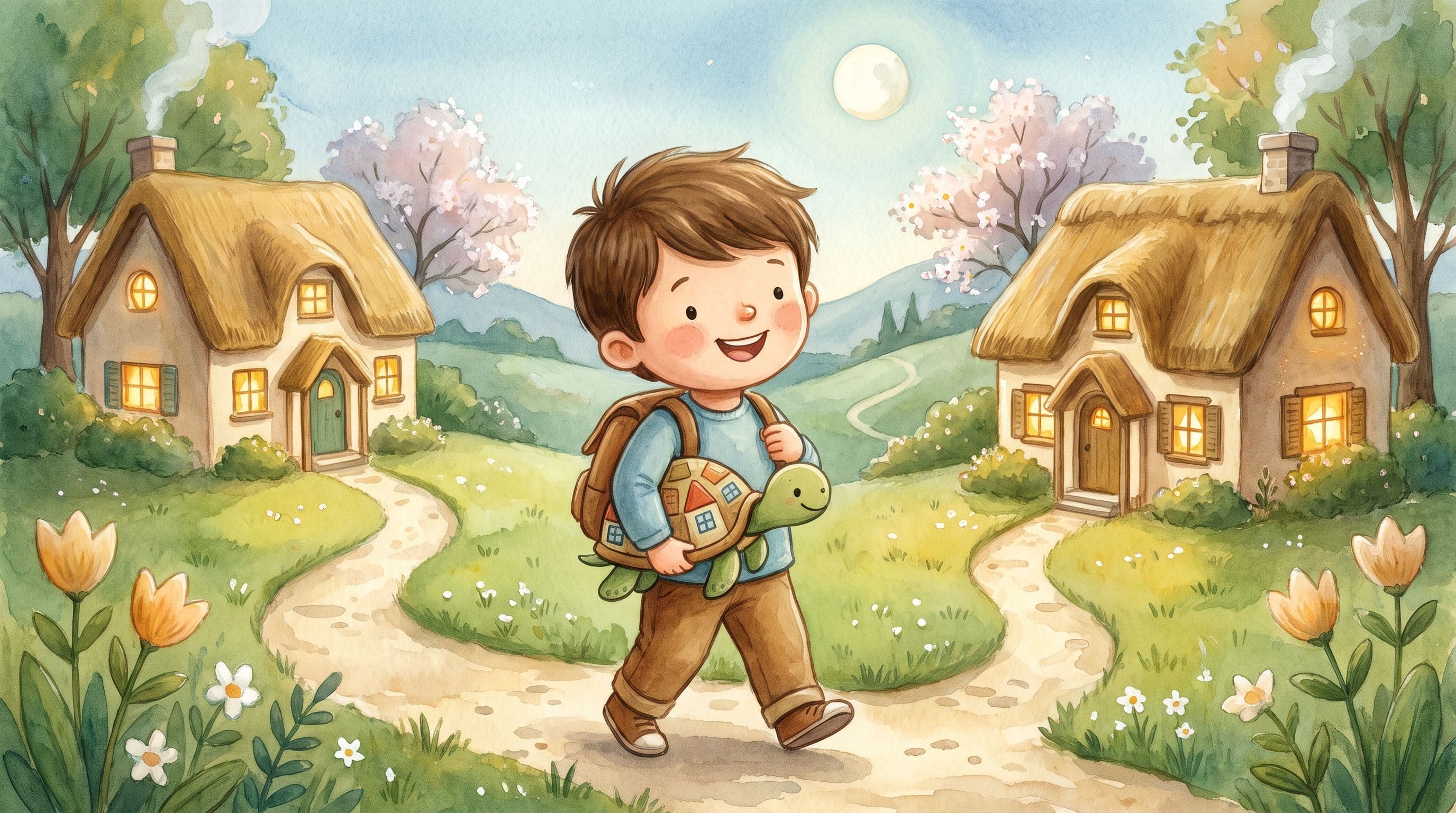
One evening his mom read him a new book with a boy on the cover who had Henry's brown hair, a backpack, and Henry's own name across the top. In the story, that Henry lived in two houses too, and his stuffed turtle Shelby had the perfect wisdom: a turtle carries its home on its back wherever it goes, so it's always home. Story-Henry learned that home isn't only a building. Home is wherever his people love him, which meant he had two of them. Shelby helped him make each house cozy and his own, and traveled back and forth right alongside him so something familiar was always there.
4. He tries, and feels settled
Story-Henry set up both rooms just how he liked, kept Shelby with him for the trips between, and started to feel truly at home in both places. Real Henry wanted that too. He picked special things for each room, kept his own turtle in his backpack for the switches, and made a little checklist so he wouldn't forget things. "This is home, and so is that one," he decided. Two homes, both his, both full of love.
5. He comes back to the book
Henry asked for the book at both houses, and Shelby went everywhere with him. The switching got easier, because Henry had learned the most reassuring thing of all: home travels with him, and he had two places where he truly belonged.
How should you use a story like this at home?
- Give each home its own comforts, routines, and a few of your child's own things.
- Keep a special item that travels back and forth, plus a simple packing checklist.
- Speak about both homes warmly, and avoid making your child a messenger between them.
- Keep transitions calm and predictable, with goodbyes that are loving and brief.
How can you make both homes feel like home?
Let your child have their own space and belongings in each home, keep routines and rules consistent, and speak warmly about both places. The American Academy of Pediatrics emphasizes that children do best when parents agree on consistent rules across both households and keep routines steady, and it suggests keeping duplicates of favorite bedtime toys, books, or comfort items at both homes so nothing essential gets left behind (Divorce and Separation: How to Help Your Child Adjust).
Keep reading: two homes often begins with a big family change — see how this approach helps a child whose parents are separating.