Story ideas
How do you help a child start at a new school mid-year?
How to help a child start at a new school mid-year with one simple goal, find a friendly face, a couple of easy things to say, and the reminder that everyone was new once.
The short answer
Give your child one small, doable goal, find a single friendly face, and a couple of easy opening lines like "Can I sit here?", rather than the giant task of making friends. Ask the teacher to pair them with a buddy, remind them that everyone was new once and feeling new is temporary, and check in about how it's going. A story where a character just like them makes a first friend makes the first day feel possible.
Key takeaways
- Walking into a room where everyone already knows each other is a particular kind of hard.
- It can feel like showing up to a party that started without you.
- Shrink the task to one friendly face, give easy words, and normalize being new.
- A story where your child starts fresh and makes a friend makes the first day feel possible.
How do you help a child start at a new school mid-year?
Give them one simple goal, find a single friendly face, and a couple of easy things to say, plus the reminder that being new is temporary and everyone has felt it. If your child is starting at a new school in the middle of the year, they face walking into a room where everyone already knows each other, the routines are set, and friendships have formed. With a simple plan and a little reassurance, a child can walk in brave.
Walking into an established group is intimidating, and "just be friendly" doesn't give a child a way in. A story hands them a plan.
Why does a story work when everyone already has friends?
A story shrinks the giant task of joining a whole class to something small and doable. When a child watches a hero find one kind classmate, ask a simple question, and get through the first day, being new stops feeling impossible. Give the hero your child's name and face and the bravery becomes theirs.
What does a good new-school story look like?
The names and characters are invented for this example. In a real personalized book, the hero is your own child.
1. A hero with something big to face
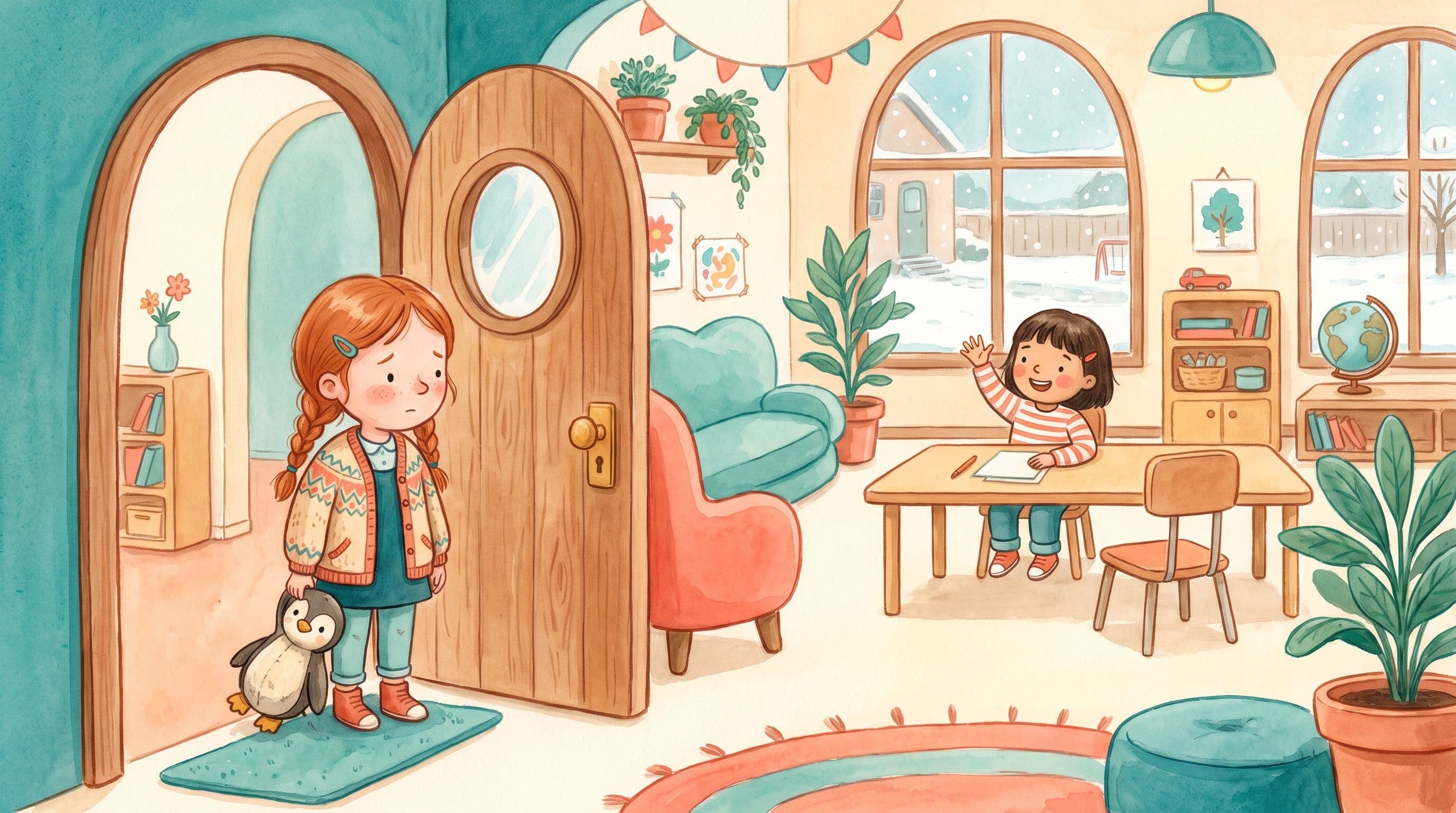
Freya was starting a new school partway through the year. Everyone else already had their friends, their seats, and their inside jokes. Freya was the only new one, and that felt like a lot.
2. A worry she can name
Would anyone talk to her? Where would she sit at lunch? What if she felt invisible? Walking into a room full of kids who already knew each other made Freya's stomach twist.
3. A hero who looks just like her
The night before, her mom read her a new book with a girl on the cover who had Freya's red hair, standing at a classroom door, and Freya's own name across the top. In the story, that Freya was the new kid too, and her stuffed penguin Waddle gave her the New Kid Plan. You don't have to make all the friends at once. You just need to find one friendly face, someone who smiles or waves, and start with them. A couple of easy questions help: "Can I sit here?" and "What are we doing next?" And here's the secret, Waddle said: every single kid in that room was new once, and they remember how it feels.
4. She tries, and makes a friend
Story-Freya found one friendly classmate, asked her easy questions, and by lunch she had someone to sit with. Real Freya wanted to try the New Kid Plan. She spotted a girl who smiled at her, took a breath, and asked, "Can I sit here?" The girl said yes and showed her where everything was. By the end of the day, Freya had a friend and knew where the bathroom, the cubbies, and the lunch line were. Being new wasn't so scary after all.
5. She comes back to the book
Freya asked for the book that first week, and Waddle's New Kid Plan became her go-to. Soon she wasn't the new kid anymore, just Freya, with a spot at the lunch table and friends of her own, because she'd started with one friendly face.
How should you use a story like this at home?
- Give your child one small, doable goal for the first day rather than "make friends."
- Practice a couple of easy opening lines together.
- Ask the teacher to pair your child with a buddy for the first days.
- Remind them that feeling new is temporary, and check in about how it's going.
What helps a child worried about being the new kid?
Normalizing the feeling, giving a small concrete plan, and arranging a buddy all help, and most kids find their footing within a few weeks. The American Academy of Pediatrics suggests rehearsing the new situation ahead of time, reminding your child that teachers make an extra effort to help students feel comfortable, and asking what specifically they're worried about so you can problem-solve it together — and staying in touch with the teacher as they settle in (Back-to-School Tips for Families).
Keep reading: whether it's day one or day one-hundred, walking into school is big — see how this approach helps a child on their first day of school.