Story ideas
How do you help a child make their first friend?
How to help a child make their first friend with a few simple, friendly openers and the reassurance that most kids want a friend too, with a full example story.
The short answer
Give your child a few friendly openers, a smile, a "want to play?", or joining a game with "Can I play too?", plus the reassurance that most kids are hoping for a friend too. Practice a couple of openers together, set up low-pressure playdates, and celebrate every brave attempt whether or not it clicks. A story where a character just like them makes a first friend makes saying hello feel possible.
Key takeaways
- That first hello can feel enormous, not knowing if the other kid will want to play.
- Walking up to say hi is genuinely brave.
- Give a few friendly openers and the reassurance that most kids want a friend too.
- A story where your child makes a first friend makes saying hello feel possible.
How do you help a child make their first friend?
Give them a few friendly openers, a smile, a "want to play?", or joining a game already happening, plus the reassurance that most kids are hoping for a friend too. If your child is working up the courage to make their first friend, that first hello can feel enormous. Whether they're shy, new, or just unsure how to start, a few simple, friendly moves can turn a nerve-wracking moment into the start of something wonderful.
"Just go make friends" gives a nervous child nowhere to start. A story hands them a script and a happy ending.
Why does a story work when saying hello feels scary?
A story shrinks the giant leap of the first hello into a small, friendly, doable move. When a child watches a hero smile, offer to share, and get a friend in return, saying hello stops feeling impossible. Give the hero your child's name and face and the courage becomes theirs.
What does a good making-a-friend story look like?
The names and characters are invented for this example. In a real personalized book, the hero is your own child.
1. A hero with something big to try
Finn wanted a friend. At the playground and at school, he saw kids playing together and wished he had someone of his own to play with. But walking up to say hello felt way too scary, so he mostly played alone.
2. A worry he can name
What if the other kid said no? What if they didn't want to play with him? The fear of that made Finn hang back, watching from the edges, wishing someone would come to him instead.
3. A hero who looks just like him
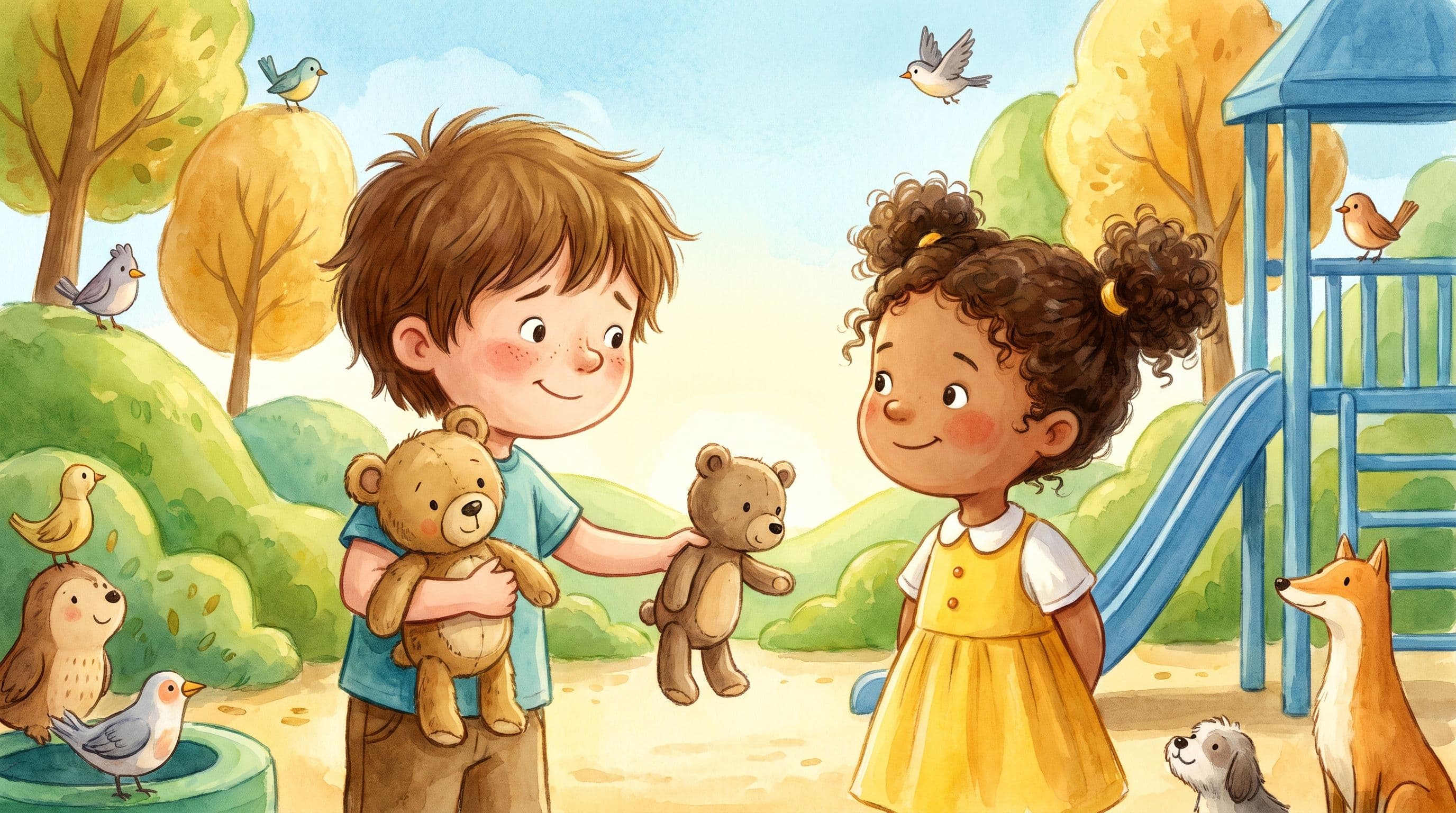
One evening his dad read him a new book with a boy on the cover who had Finn's brown hair, sharing a toy with a new friend, and Finn's own name across the top. In the story, that Finn wanted a friend too, and his stuffed bear Barnaby taught him the Friendly Three. Give a smile. Say a simple hello, like "Hi, want to play?" Or join a game that's already going with a friendly "Can I play too?" Barnaby's secret was the best part: most other kids are hoping for a friend just as much as you are, so a friendly hello is almost always welcome. Story-Finn tried a smile and a "want to play?" and just like that, he had a friend.
4. He tries, and makes a friend
Story-Finn used the Friendly Three and turned a lonely afternoon into a shared one. Real Finn wanted to try. At the playground, he saw a boy playing near the slide. Finn took a breath, walked over, smiled, and asked, "Want to play?" The boy grinned and said yes. They raced down the slide together over and over. Finn had made a friend, and it hadn't been so scary after all.
5. He comes back to the book
Finn asked for the book again and again, and Barnaby's Friendly Three became his go-to. He made more friends, because he'd learned the wonderful secret: a smile and a simple hello are almost always welcome, and most kids are hoping for a friend just like he was.
How should you use a story like this at home?
- Practice a couple of friendly openers together.
- Set up low-pressure playdates or small-group activities.
- Reassure your child that most kids want a friend too.
- Celebrate every brave attempt, whether or not it clicks that time.
What helps a child who wants friends but is too nervous to try?
Practicing simple approaches, starting with one-on-one playdates, and celebrating brave attempts all help, and small successes build confidence over time. The American Academy of Pediatrics notes that unstructured play and inviting a friend over for a shared, low-pressure activity give children the chance to practice the give-and-take of friendship, and that helping kids communicate clearly and kindly builds the social skills that strong friendships are made of (What Parents Can Do to Support Friendships).
Keep reading: making a friend often starts at the lunch table — see how this approach helps a child who's eating lunch alone.