Story ideas
How do you help a nervous child raise their hand in class?
How to help a nervous child raise their hand by starting small with one sure answer, taking a calming breath, and feeling how good it is to be heard, with an example story.
The short answer
Start small: encourage your child to wait for a question they know for absolute sure, take a slow breath, and raise their hand just for that one, then feel the good feeling of being heard. Practice speaking up at home in low-pressure ways like sharing at dinner, ask the teacher to gently invite their participation, and celebrate every attempt. A story where a character just like them speaks up and shines makes that first hand-raise feel possible.
Key takeaways
- A nervous child may spend class quietly holding answers they're afraid to share.
- Speaking up in front of a group is genuinely hard.
- Start small with one sure answer, use a calming breath, and feel the win of being heard.
- A story where your child speaks up and shines makes that first hand-raise feel possible.
How do you help a nervous child raise their hand in class?
Start small: share one thing they know for sure, take a deep breath, and feel the good feeling of being heard. If your child is too nervous to raise their hand, they may spend class quietly holding answers and ideas they're afraid to share out loud. Speaking up in front of a group is genuinely hard, and helping a child take that first small step opens up their whole experience of school.
A quiet child won't raise their hand just because you tell them to. A story lets them feel the win first.
Why does a story work when a child holds back?
A story lets a child feel the win before they risk it. When they watch a hero take a breath, raise their hand, share something, and feel proud instead of embarrassed, the wall between knowing and saying gets a lot lower. Give the hero your child's name and face and the courage becomes theirs.
What does a good raising-your-hand story look like?
The names and characters are invented for this example. In a real personalized book, the hero is your own child.
1. A hero with something big to learn
Poppy had wonderful ideas and knew lots of answers, but she almost never raised her hand. Speaking up in front of the whole class felt too big, so she kept her thoughts to herself, wishing she were brave enough to share them.
2. A worry she can name
What if her voice came out wobbly? What if everyone looked at her? The idea of all those eyes turning her way made Poppy's heart race, so she stayed quiet, even when she really wanted to answer.
3. A hero who looks just like her
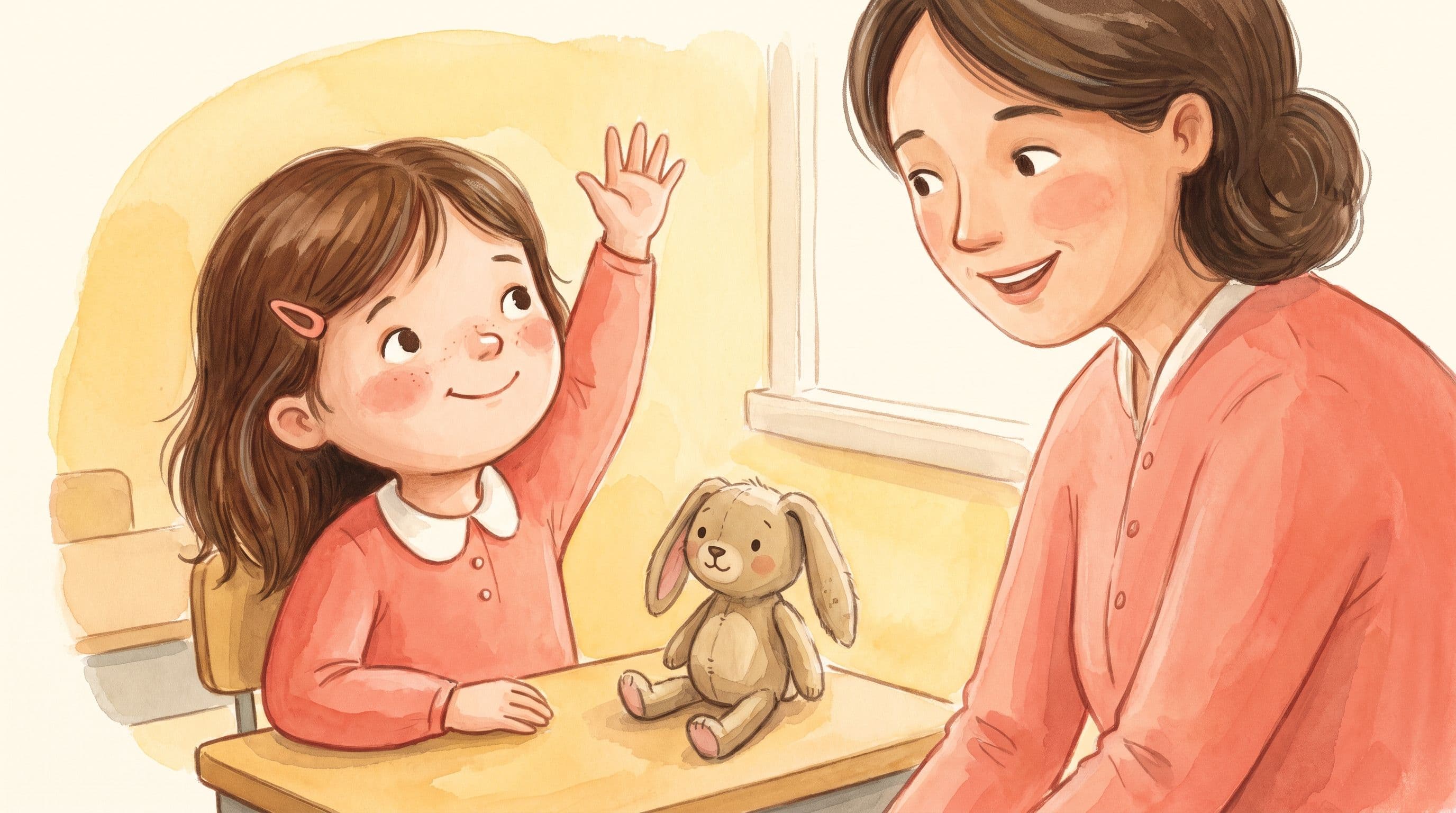
One evening her mom read her a new book with a girl on the cover who had Poppy's brown hair, hand raised high, and Poppy's own name across the top. In the story, that Poppy was too nervous to raise her hand too, until her stuffed rabbit Hop gave her the Start Small plan. You don't have to answer the hardest question. Just wait for one you know for absolute sure, take a slow breath, and raise your hand for that one. Hop promised the nervous flutter would fade the second she was heard. Story-Poppy tried it, raised her hand for a question she knew cold, and shared her answer, and it felt wonderful.
4. She tries, and is proud of herself
Story-Poppy raised her hand once, felt the good feeling, and did it again, getting braver each time. Real Poppy wanted that feeling too. She waited for a question she was sure of, took a slow breath, and raised her hand. The teacher called on her, she shared her answer, and it came out just fine. A warm proud feeling bloomed in her chest. She'd found her voice, and she used it again the very next day.
5. She comes back to the book
Poppy asked for the book again and again, and Hop's Start Small plan became her secret. She raised her hand more and more, because she'd discovered that being heard felt far better than staying quiet, and her good ideas deserved to be shared.
How should you use a story like this at home?
- Encourage starting with questions your child knows for sure.
- Practice speaking up at home in low-pressure ways, like sharing at dinner.
- Ask the teacher to gently invite your child's participation.
- Celebrate every attempt to speak up, not just the answer.
What helps a child who knows the answers but won't participate?
Lowering the stakes with a small first step, practicing at home, and partnering with the teacher to invite participation gently all help build confidence over time. The American Academy of Pediatrics notes that praising effort and good tries — being specific — helps a child feel capable, and that shy or sensitive children often need extra time to warm up and gentle encouragement to be more assertive rather than pressure (Building Blocks for Healthy Self Esteem in Kids).
Keep reading: raising your hand gets easier once being wrong stops being scary — see how this approach helps a child afraid of getting an answer wrong in class.