Story ideas
How do you help a child feel confident about their first glasses?
How to help a child feel proud of their first pair of glasses by framing them as a superpower and preparing for the first day, with a full example story.
The short answer
Frame the glasses as a superpower that makes the whole world clearer and sharper, let your child help choose the frames, and prepare a short, confident answer for any first-day questions. Focus on the amazing things they'll now be able to see, and follow your eye doctor's guidance on wear time and adjustment. A story where a character just like them loves their new glasses turns nervousness into pride.
Key takeaways
- The worry is usually about looks, comments, or the strange feel — not the vision.
- The wonderful part gets lost: your child is about to see the world clearly.
- Frame glasses as a superpower, and prep a proud one-liner for the first day.
- A story where your child loves their glasses turns nervousness into pride.
How do you help a child feel confident about their first glasses?
Frame the glasses as a superpower and prepare your child so the first day holds no surprises. A child getting glasses often worries about how they'll look, whether kids will say something, or whether the glasses will feel strange. Those worries are real, and they can overshadow the wonderful part: your child is about to see the world clearly, maybe for the first time.
Telling a nervous child their glasses "look great" is kind, but it doesn't address the worry underneath. Reframing the whole thing does.
Why does a story work when "they look great" doesn't?
A story reframes glasses from something to wear into something that gives a superpower. When a child watches a hero put on glasses and gasp at how sharp and bright everything suddenly is, the nervousness gives way to excitement. Give the hero your child's name and face and the pride becomes theirs.
What does a good new-glasses story look like?
The names and characters are invented for this example. In a real personalized book, the hero is your own child.
1. A hero with something big to learn
Hazel was getting her very first pair of glasses. The eye doctor said they'd help her see the board at school and the leaves on the trees. Hazel wasn't so sure. She kept picturing all the things that could go wrong on the first day she wore them.
2. A worry she can name
Would she look different? Would someone say something? Would the glasses feel weird sliding down her nose? The worries were loud enough that Hazel almost forgot the whole point of the glasses in the first place.
3. A hero who looks just like her
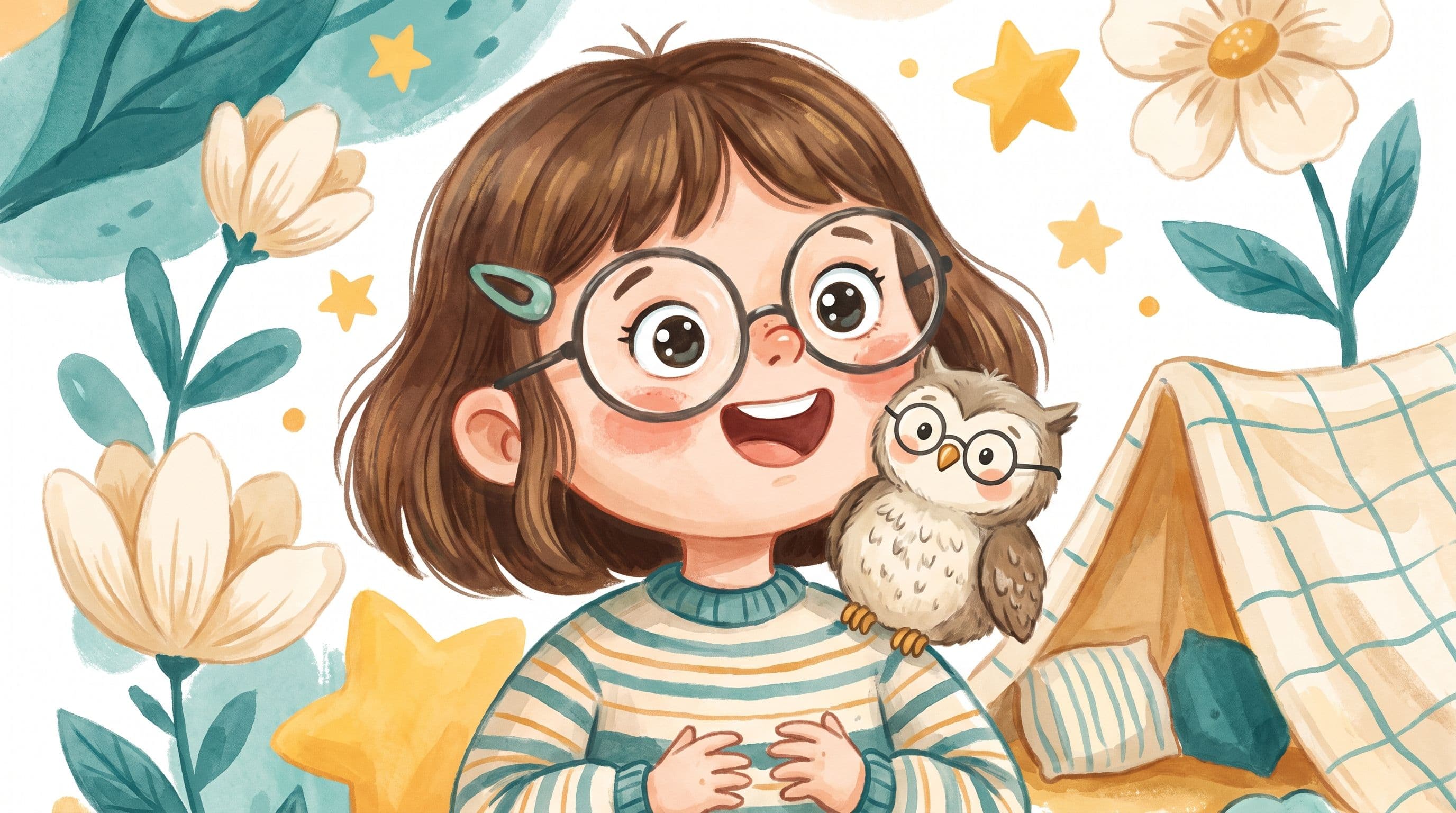
The night before glasses day, Mom read her a new book with a girl on the cover who had Hazel's brown hair, new round glasses, and Hazel's own name across the top. In the story, that Hazel was nervous too, until her wise stuffed owl, who wore tiny glasses of his own, told her the secret. Glasses are Super Sight. The moment story-Hazel put them on, the fuzzy world snapped into focus. The owl helped her practice a first-day plan too, a simple, proud answer if anyone asked: "These are my glasses. They give me super sight."
4. She tries, and feels proud
Story-Hazel saw the world in crisp, beautiful detail and couldn't stop smiling. Real Hazel wanted her super sight. When she slipped on her new glasses, she gasped. She could see individual leaves on the tree, the tiny words on her cereal box, her mom's eyelashes. "I can see everything!" On the first day of school she wore them proudly, and when a friend noticed, she said her line: "They give me super sight." The friend thought that was pretty cool.
5. She won't stop asking for the book
Hazel asked for the book again and again and treated her glasses like the superpower they were. She showed a nervous cousin who needed glasses too. The worries faded, because now glasses weren't something she had to wear. They were the thing that let her see the whole beautiful world.
How should you use a story like this at home?
- Let your child help choose the frames so the glasses feel like theirs.
- Emphasize the amazing things they'll now be able to see.
- Practice a short, confident answer for the first-day question.
- Follow your eye doctor's guidance on wear time and adjustment as their eyes get used to them.
What if my child won't wear their glasses?
Focus on the payoff of clear vision, keep the first days positive, and let your child feel some ownership; if discomfort or resistance continues, your eye doctor can troubleshoot the fit. It also helps to name why the glasses matter: the American Academy of Pediatrics explains that a nearsighted child needs glasses to see distant things clearly, like the board at school, and that following the eye doctor's plan supports their developing vision (Myopia (Nearsightedness) in Children & Teens).
Keep reading: glasses day and shot day are both big doctor firsts — see how this approach helps a child nervous about getting a shot at the doctor.