Story ideas
How do you help a child who is scared of getting a shot?
How to help a child scared of getting a shot at the doctor, with honesty about the quick pinch and a simple plan for the moment, plus a full example story.
The short answer
Be honest that it's one quick pinch, then give your child a job for the moment, like squeezing a hand, taking a big breath, and looking away or giving a little cough right as it happens. Bring a comfort object, plan something fun for after, and ask your care team about ways to make shots easier. A story where a character just like them uses a brave plan makes the real shot far less scary.
Key takeaways
- The shot is quick; the anticipation is not, and imagination fills the wait with worse.
- Honesty builds trust — promising "it won't hurt" tends to make the next visit harder.
- Give your child a job for the moment: squeeze, breathe, look away or cough.
- A story where your child uses a brave plan shrinks the shot to a quick moment.
How do you help a child who is scared of getting a shot?
Be honest that it's a quick pinch, then hand your child a concrete plan for the few seconds that actually sting. Shots are fast, but the anticipation is not, and a child's imagination fills that waiting time with something far worse than the real pinch. What helps most is truth plus a plan.
Springing a shot on a child, or promising it won't hurt at all, tends to break trust and make the next visit worse. Telling the truth in a way a child can handle, and giving them something to do, works far better.
Why does a story work when a surprise doesn't?
A story tells the truth gently and hands over a plan. When a child watches a hero use a simple trick and get through the pinch, the shot shrinks from a monster to a quick moment they know how to survive. Give the hero your child's name and face and the bravery becomes theirs.
What does a good shot-day story look like?
The names and characters are invented for this example. In a real personalized book, the hero is your own child.
1. A hero with something big to learn
Theo had a checkup coming up, and this one included a shot. From the moment he heard the word, his worry switched on and would not switch off. The shot was days away, but in Theo's mind it was already enormous.
2. A worry he can name
He kept imagining the needle, bigger and scarier each time. Not knowing exactly how much it would hurt or how long it would last made the waiting the worst part. By the time the appointment came, Theo was ready to bolt.
3. A hero who looks just like him
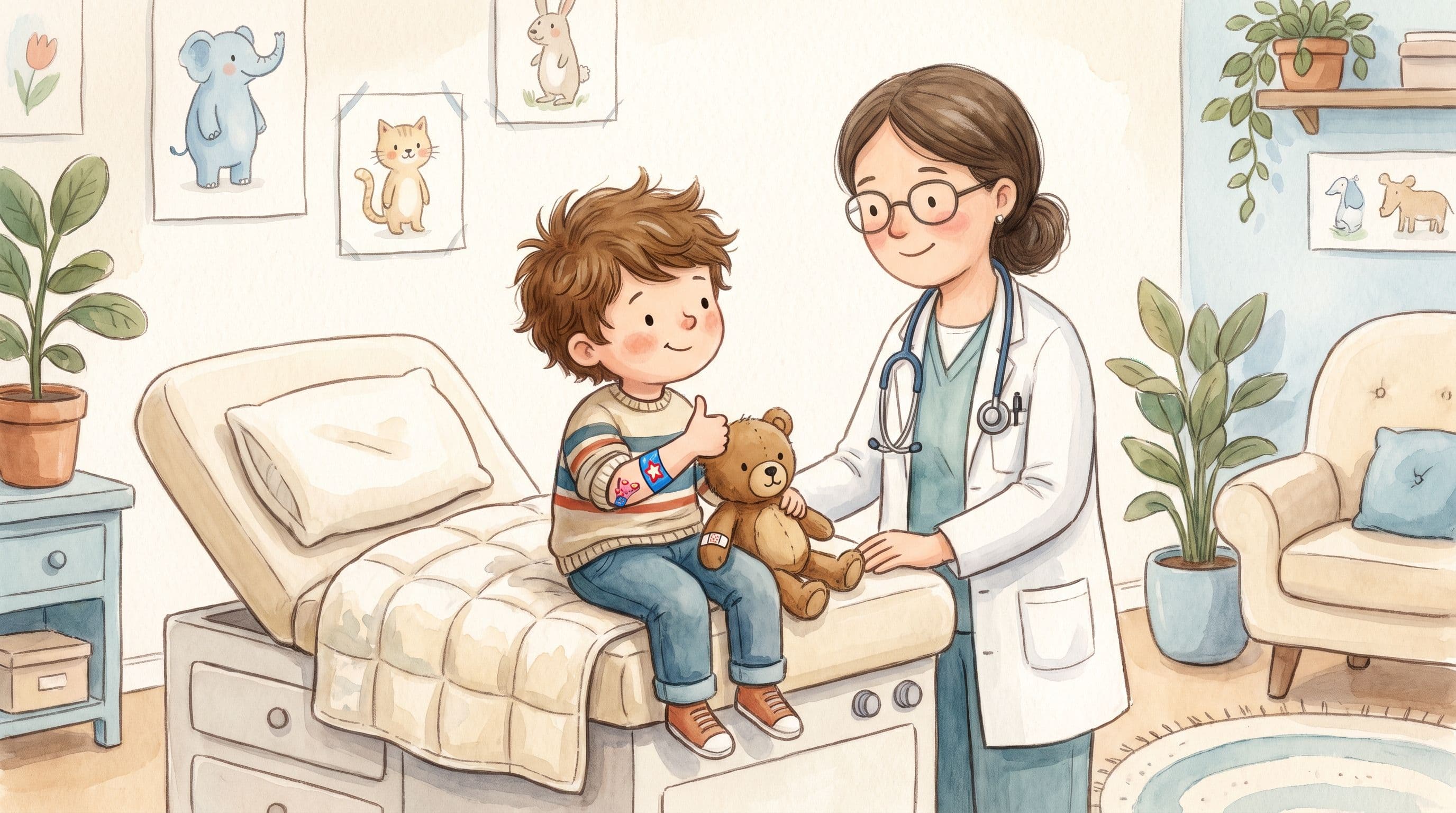
The night before, Dad read Theo a new book with a boy on the cover who had Theo's brown hair, a little bandage on his arm, and Theo's own name across the top. In the story, that Theo was scared too, until his stuffed bear Buttons taught him the Brave Plan. A shot is one quick pinch, about as long as it takes to say "one, two, three." When it's time, squeeze a grown-up's hand, take a big breath, and look away or give a little cough right at the pinch. Then it's done, and you get a bandage and a high five.
4. He tries, and feels proud
Story-Theo used the Brave Plan, and the pinch was over almost before it started. Real Theo wanted his own. At the appointment he held Dad's hand, took a big breath, looked at the poster on the wall, and gave a little cough right as it happened. "That was it?" The pinch was quick, just like the book said. He got his bandage and gave the nurse a high five, proud as could be.
5. He won't stop asking for the book
Theo asked for the book before every checkup and used his Brave Plan each time. He taught it to a nervous friend before a flu shot. The dread faded, because a shot was no longer a mystery monster. It was one quick pinch he had a plan for.
How should you use a story like this at home?
- Be honest that it's a quick pinch. Avoid promising it won't hurt at all.
- Give your child a specific job for the moment: a hand to squeeze, a breath, a cough.
- Bring a comfort object and plan a small reward or fun thing afterward.
- Ask your care team about comfort options, since many offices have ways to make shots easier.
How do you help a child not be scared of shots?
Prepare them honestly and give them a plan. The American Academy of Pediatrics suggests using neutral words like "pinch" or "pressure," making a plan together ahead of time so your child feels in control, and using distraction and slow breathing during the shot; some offices also offer comfort tools like a vibration device to dull the sensation (Taking Fear and Pain Out of Needles—for Your Child and You).
Keep reading: a shot and a first pair of glasses are both big doctor days — see how this approach helps a child getting glasses for the first time.