Story ideas
How do you help a child feel confident about new hearing aids?
How to help a child feel proud of new hearing aids by framing them as a superpower that unlocks a world of sound and prepping a confident line, with a story.
The short answer
Frame the hearing aids as a superpower that unlocks all the sounds of the world, let your child pick a fun color or style, and prepare a simple, confident answer for anyone who asks. Celebrate the new sounds they can hear, and follow your audiologist's guidance on wear time and adjusting. A story where a character just like them loves their hearing aids turns worry into pride.
Key takeaways
- The feelings are mixed: excitement to hear clearly, plus worry about how the aids look or feel.
- Hearing aids open up a whole world of sound.
- Frame them as a superpower, and prepare a proud, simple line for questions.
- A story where your child loves their hearing aids turns worry into pride.
How do you help a child feel confident about new hearing aids?
Frame the hearing aids as a superpower that unlocks the sounds of the world, and prepare your child for the questions so nothing catches them off guard. A child getting hearing aids often feels a mix: excitement about hearing more clearly, plus worry about how the aids will look or feel, or whether other kids will notice. Those feelings are normal — and with a little preparation, a child can walk into that new world of sound feeling proud.
Telling a child their hearing aids "look fine" doesn't address the wonder or the worry underneath. Reframing does both.
Why does a story work when reassurance alone doesn't?
A story captures the wonder and answers the worry. When a child watches a hero switch on their hearing aids and delight in all the sounds they'd been missing, hearing aids become an exciting tool rather than something to hide. Give the hero your child's name and face and the pride becomes theirs.
What does a good hearing-aids story look like?
The names and characters are invented for this example. In a real personalized book, the hero is your own child.
1. A hero with something big to learn
Aiden was getting hearing aids to help him hear more clearly. Part of him was excited to catch all the sounds he'd been missing. Another part wondered what the hearing aids would feel like and whether kids at school would say something.
2. A worry he can name
Would they look different? Would they feel strange in his ears? What would he say if someone asked about them? The questions were loud enough that Aiden almost forgot the exciting part: he was about to hear the whole world better.
3. A hero who looks just like him
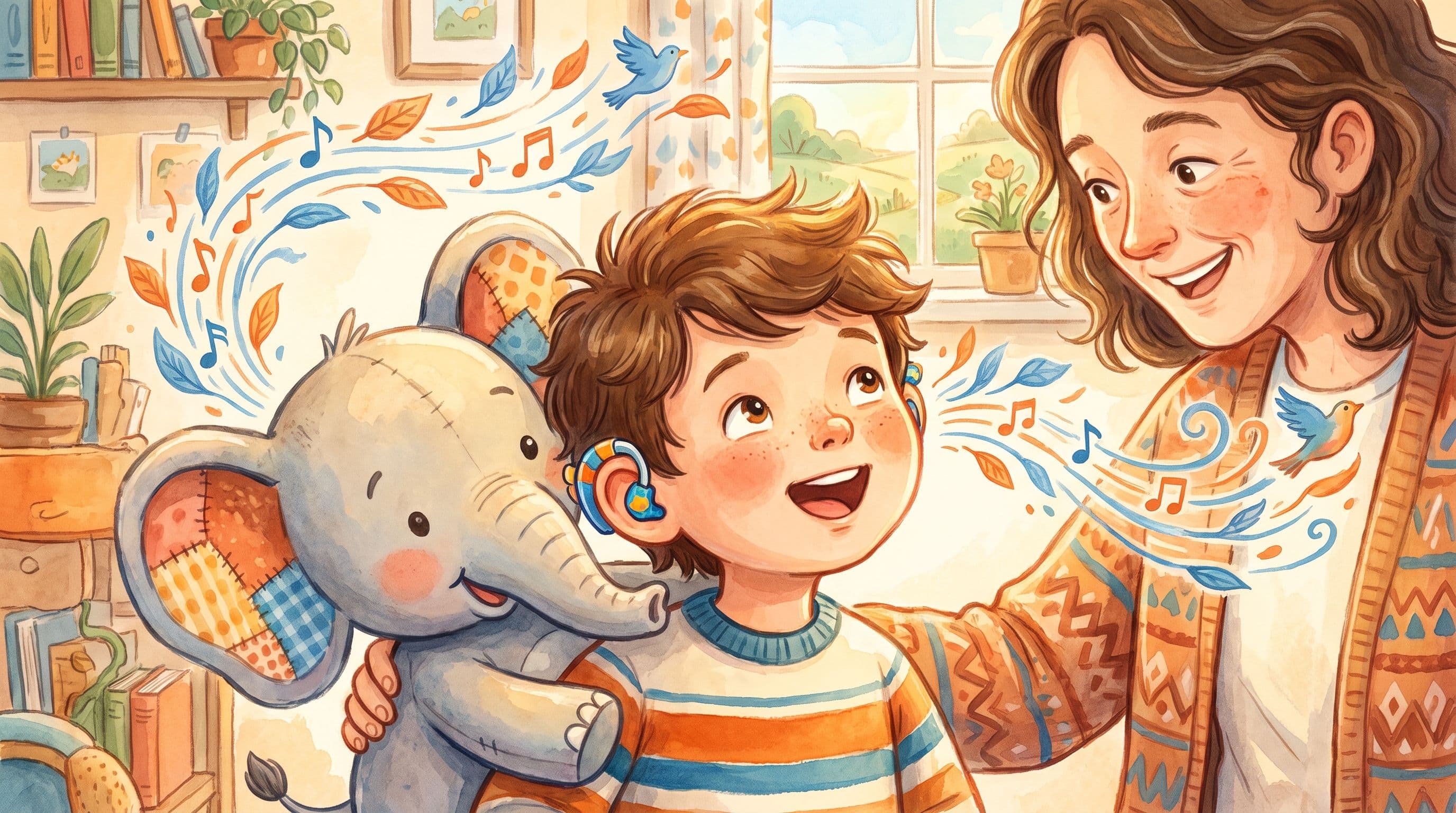
The night before, his mom read him a new book with a boy on the cover who had Aiden's brown hair, colorful hearing aids, and Aiden's own name across the top. In the story, that Aiden got hearing aids too, and his stuffed elephant Echo, who had the biggest, best ears around, called them a Sound Superpower. The moment story-Aiden switched them on, the world filled up with sounds he'd been missing: birds outside, his own giggle, his mom's voice clear and warm. Echo helped him practice a proud line for anyone who asked: "These are my hearing aids. They help me hear. Pretty cool, right?"
4. He tries, and feels proud
Story-Aiden switched on his Sound Superpower and grinned at all the sounds. Real Aiden wanted his superpower too. When his hearing aids went in and turned on, his eyes went wide. He could hear the clock ticking, the leaves rustling, his baby sister's laugh. "I can hear everything!" He picked a fun color, and when a friend at school noticed, he said his line: "They help me hear. Pretty cool, right?" His friend agreed it was very cool.
5. He won't stop asking for the book
Aiden asked for the book again and again and treated his hearing aids like the superpower they were. He explained them proudly to anyone curious. The worry faded, because his hearing aids weren't something to hide. They were the thing that let him hear the whole wonderful, noisy world.
How should you use a story like this at home?
- Let your child choose a color or style so the hearing aids feel like theirs.
- Celebrate the new sounds they can hear.
- Practice a short, confident answer for curious classmates.
- Follow your audiologist's guidance on wear time and adjusting to the new sounds.
What if my child won't wear their hearing aids?
Focus on the exciting sounds they unlock, keep the early days positive, and give them ownership over the look; if resistance or discomfort continues, your audiologist can help with fit and adjustment. Consistency matters, too: the American Academy of Pediatrics notes that a hearing aid only helps while it's being worn, and that early, steady access to sound has a very positive impact on a child's language development, with the medical team supporting communication at home and school (Hearing Loss in Children).
Keep reading: hearing aids and glasses are both wonderful sense-helpers — see how this approach helps a child getting glasses for the first time.