Story ideas
How do you help a child who is being left out at recess?
How to help a child left out at recess with concrete ways to join a game, the reminder that one no isn't about them, and the power to start their own game, with a story.
The short answer
Give your child concrete ways to join in, asking "Can I play?", offering to help, or starting their own game, and remind them one no is about that game, not about them. Practice the ways in together, loop in the teacher or recess staff who can help with inclusion, and build friendships outside school so their world feels bigger. A story where a character just like them finds their way in makes recess feel possible again.
Key takeaways
- Watching others play while feeling there's no way in can be quietly painful.
- Being left out hurts, and it can chip at a child's confidence.
- Give concrete ways to join in, and remind them one no isn't about them.
- A story where your child finds their way in makes recess feel possible again.
How do you help a child who is being left out at recess?
Give them ways to join in, asking "Can I play?", offering to help, or starting their own game, and remind them that the right friends will welcome them. If your child is being left out at recess, those minutes can be quietly painful. Helping them with concrete ways to join a game, find kids who welcome them, and know their worth isn't decided by one group, can turn recess back into a good part of the day.
A left-out child can start to believe the problem is them. A story shows a different path.
Why does a story work when a child feels shut out?
A story shows a child that being left out by one game doesn't mean being left out for good. When they watch a hero try a few ways in, get turned down once, and then find a group that welcomes them, they learn there are ways to find their people. Give the hero your child's name and face and the resilience becomes theirs.
What does a good left-out story look like?
The names and characters are invented for this example. In a real personalized book, the hero is your own child.
1. A hero with something hard
At recess, Talia often ended up on the edge of the playground, watching the other kids play together. She wanted to join in, but the games seemed closed and she didn't know how to get in. Recess had become the loneliest part of her day.
2. A worry she can name
Once, she'd asked to join a game and a kid had said no, and after that she was afraid to try again. Standing on the outside, watching everyone else have fun, made Talia feel small and unwanted.
3. A hero who looks just like her
One evening her mom read her a new book with a girl on the cover who had Talia's brown hair, being waved into a game, and Talia's own name across the top. In the story, that Talia felt left out too, until her stuffed fox Ollie gave her the Ways In. You can ask "Can I play?", you can offer to help with the game, or, best of all, you can start your own fun game, and other kids will come join you. Ollie also shared an important truth: if one group says no, that's about that game, not about you, and the right friends will be happy to have you. Story-Talia started a hopscotch game, and soon other kids came to play.
4. She tries, and finds her people
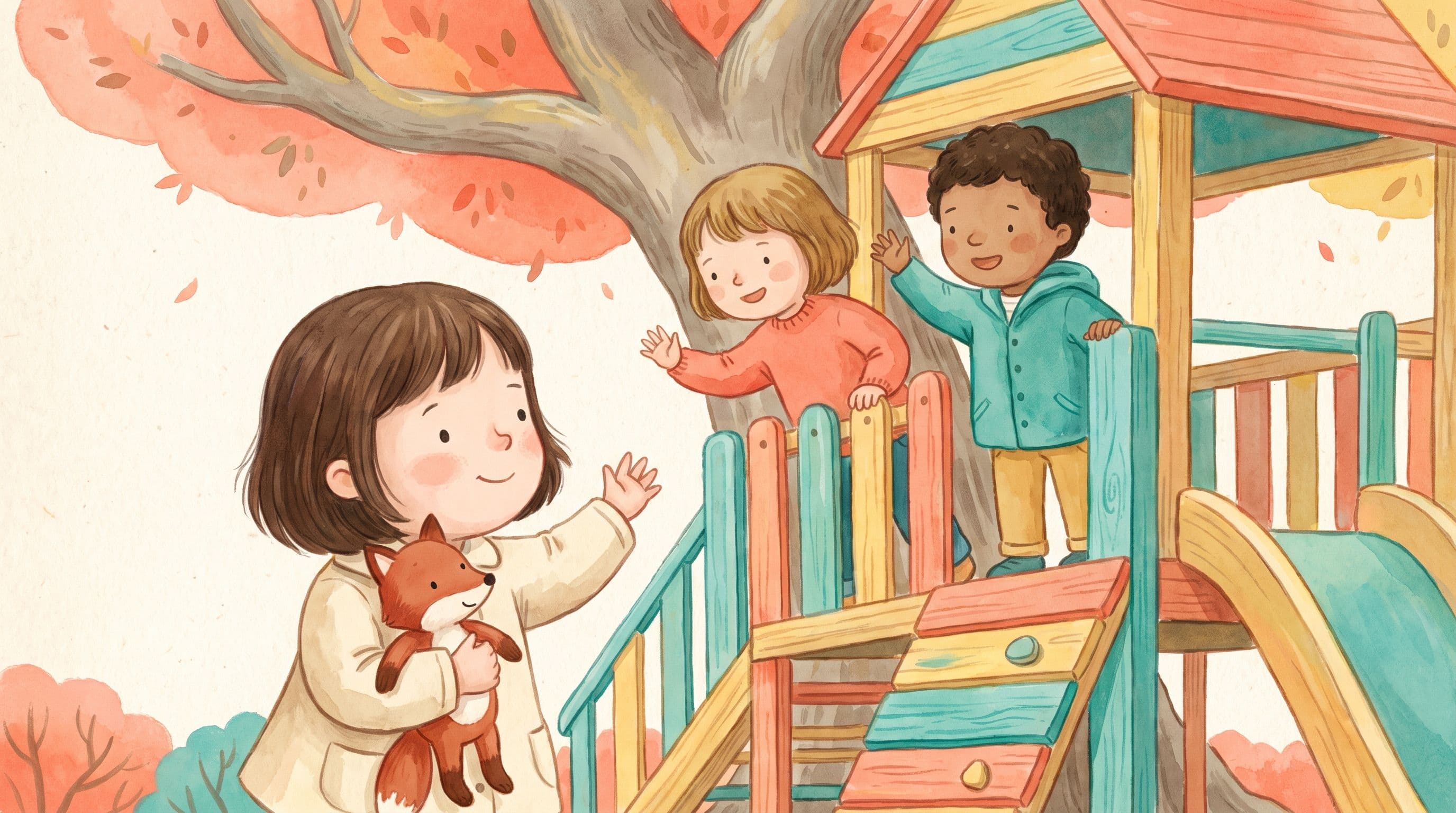
Story-Talia used the Ways In, and even when one game didn't work out, she found kids who welcomed her. Real Talia wanted to try. Instead of waiting on the edge, she started her own game of hopscotch and called out, "Who wants to play?" A couple of kids wandered over, then a couple more. Soon there was a whole group, and Talia was right in the middle of it, laughing. She'd found her way in by making a way in.
5. She comes back to the book
Talia asked for the book whenever recess felt hard, and Ollie's Ways In became her toolkit. Recess turned back into fun, because Talia had learned that she could create her own way in, and that the right friends would always be glad she did.
How should you use a story like this at home?
- Teach specific ways to join in, and practice them together.
- Remind your child that one rejection is about the moment, not their worth.
- Loop in the teacher or recess staff, who can help facilitate inclusion.
- Support friendships outside school too, so their world feels bigger than one playground.
When should you involve the school about a child being excluded?
If exclusion is persistent, targeted, or hurting your child, it's worth talking with the teacher or counselor, who can help support inclusion and check that it isn't crossing into bullying. The American Academy of Pediatrics suggests coaching specific social approaches, role-playing what to say, helping kids join clubs and group activities built around shared interests, and looping in the school when peer struggles persist (Problems With Peers: How to Help Your Child Navigate Social Challenges).
Keep reading: finding your way into a game starts with making one friend — see how this approach helps a child making a first friend.