Story ideas
How do you help a child who is eating lunch alone at school?
How to help a child eating lunch alone with small, brave moves, looking for another kid who's also alone and asking to sit, plus reassurance that it's temporary, with a story.
The short answer
Give your child small, brave moves: look for another kid who's also sitting alone, and use one simple line like "Can I sit here?" or "Want to sit together?", because that kid is often hoping someone will ask. Practice easy opening lines together, loop in the teacher or counselor, and reassure them that eating alone now is temporary. A story where a character just like them finds a lunch buddy makes those first steps feel possible.
Key takeaways
- Lunch can be the hardest, loneliest twenty minutes of a child's school day.
- The cafeteria is loud and social, and tables are already claimed.
- Give a specific brave move, easy words, and the reassurance that it's temporary.
- A story where your child finds a lunch buddy makes those first steps feel possible.
How do you help a child who is eating lunch alone at school?
Give them small, brave moves, looking for another kid who's also alone, asking to sit down, or inviting someone to join them, plus the reassurance that this is temporary. If your child is eating lunch alone, it can be the hardest part of their day — the cafeteria is loud, tables are claimed, and being on the outside feels awful. A child can learn small, doable ways to find their people.
The cafeteria can feel like a wall of established groups, and "just go sit with someone" is easier said than done. A story hands a child a specific move.
Why does a story work when the cafeteria feels impossible?
A story shrinks the impossible task into one brave, doable step. When a child watches a hero spot another lonely kid, sit down, and start a simple conversation, the whole thing feels possible. Give the hero your child's name and face and the courage becomes theirs.
What does a good lunch story look like?
The names and characters are invented for this example. In a real personalized book, the hero is your own child.
1. A hero with something hard
Elias ate lunch by himself. The cafeteria buzzed with kids laughing at full tables, and Elias sat at the end of one alone, wishing he had someone to sit with. Lunchtime had become the part of the day he dreaded most.
2. A worry he can name
The tables all seemed full of kids who already knew each other. Walking up to a group felt terrifying, so Elias stayed put and stared at his sandwich, feeling invisible in a room full of people.
3. A hero who looks just like him
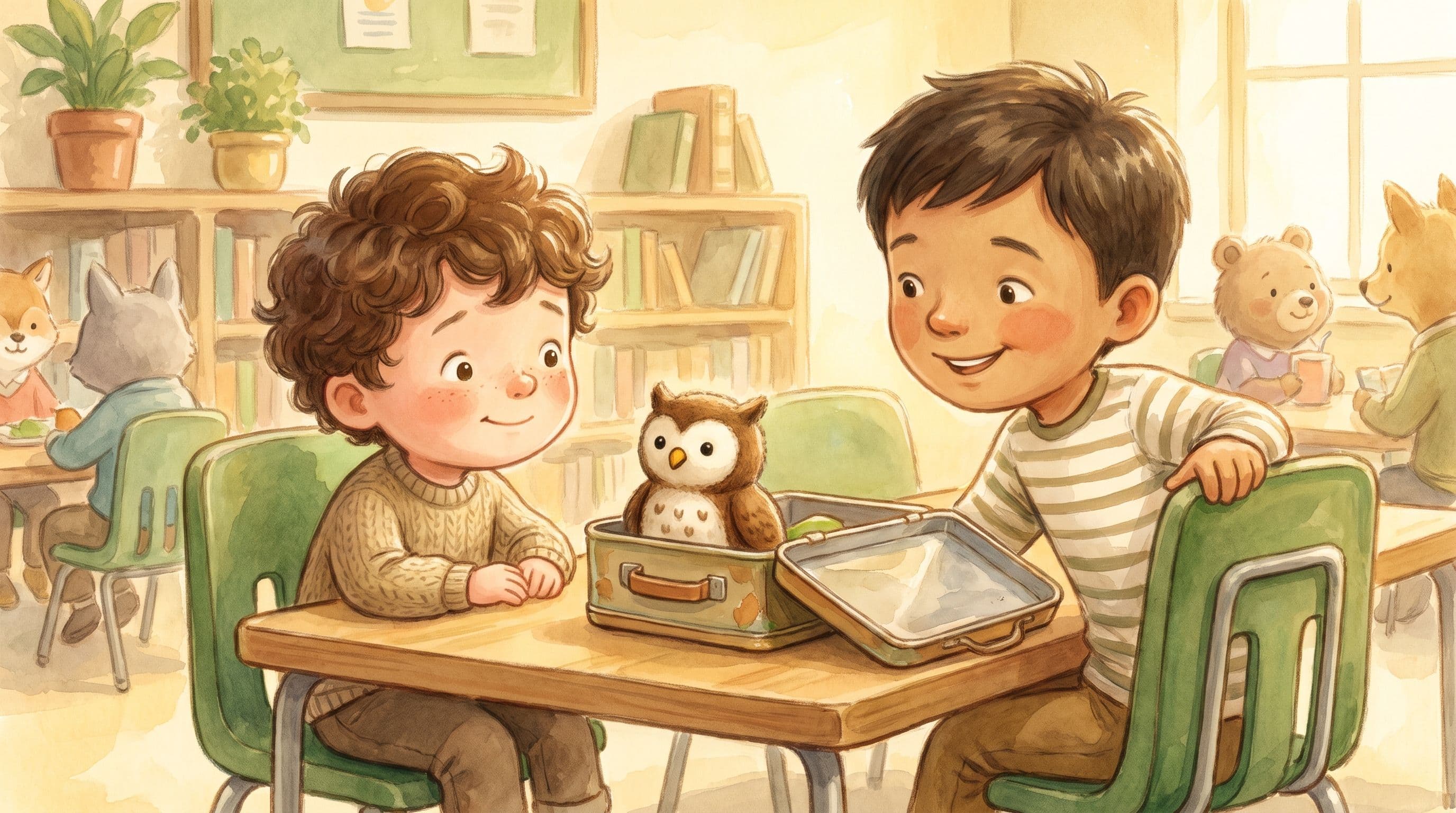
One evening his dad read him a new book with a boy on the cover who had Elias's curly hair, sitting at a lunch table with a new friend, and Elias's own name across the top. In the story, that Elias ate lunch alone too, until his stuffed owl Newton shared a wise trick. Look for another kid who's also sitting by themselves, someone who might be feeling exactly like you. Then use one small brave line: "Can I sit here?" or "Want to sit together?" Chances are, Newton said, that kid is hoping someone will ask. Story-Elias spotted a boy alone across the room, walked over, and asked to sit, and just like that, he had a lunch buddy.
4. He tries, and finds a friend
Story-Elias made the brave move and turned two lonely lunches into one shared one. Real Elias wanted to try. The next day he scanned the cafeteria and saw a girl sitting alone. He took a big breath, walked over, and asked, "Want to sit together?" She smiled and said yes, relieved. They talked about their favorite games the whole lunch. Elias wasn't alone anymore, and neither was she.
5. He comes back to the book
Elias asked for the book that week, and Newton's find-another-lonely-kid trick became his go-to. Lunch turned from the worst part of his day into a good one, because Elias had learned that the bravest, kindest move, asking someone to sit, often helps two lonely kids at once.
How should you use a story like this at home?
- Give your child a specific, doable move rather than "go make friends."
- Practice a couple of easy opening lines together.
- Loop in the teacher or counselor, who can help arrange lunch buddies or clubs.
- Reassure your child that eating alone now is temporary, and keep checking in.
What helps a child who says no one will sit with them?
Coaching specific approaches, arranging structured social opportunities through the school, and reassuring them it's temporary all help. The American Academy of Pediatrics suggests role-playing social scenarios so a child knows what to say, helping them join clubs or group activities built around shared interests, and looping in the school when peer struggles persist, since a counselor can offer support (Problems With Peers: How to Help Your Child Navigate Social Challenges).
Keep reading: finding a lunch buddy is a lot like being the new kid — see how this approach helps a child starting a new school mid-year.