Story ideas
How do you help a child who is terrified of making a mistake?
How to free a perfectionist child by celebrating mistakes as proof of learning, praising effort over outcome, and showing that trying imperfectly is braver and more fun.
The short answer
Celebrate mistakes as proof your child is learning, praise effort over outcome, and show them that trying imperfectly is braver and more fun than not trying at all. Share your own mistakes and what you learned, turn slip-ups into "happy accidents," and keep pressure low so they can take safe risks. A story where a character just like them makes a mistake and it turns out wonderful loosens perfectionism and sets them free to try.
Key takeaways
- Perfectionism can look like avoiding new things or giving up the second something's imperfect.
- Underneath is a fear that a mistake means they've failed, or aren't good enough.
- Celebrate mistakes as learning, praise effort, and make trying feel safe.
- A story where your child makes a mistake and it turns out wonderful sets them free.
How do you help a child who is terrified of making a mistake?
Celebrate mistakes as proof they're learning, praise effort over outcome, and show them that trying imperfectly is braver and more fun than not trying at all. If your child is terrified of making a mistake, perfectionism looks like caution, but underneath is a fear that a mistake means failure. Freeing a child from that fear, so they can try, explore, and learn, is one of the greatest gifts you can give.
A perfectionist child hears "it's okay to make mistakes" and doesn't believe it. A story lets them experience a mistake turning out fine.
Why does a story work when perfect feels required?
A story lets a child experience a mistake turning out fine. When they watch a hero mess up, feel that flash of worry, and discover the mistake led to something good or simply didn't matter, the grip of perfectionism loosens. Give the hero your child's name and face and the freedom becomes theirs.
What does a good happy-mistake story look like?
The names and characters are invented for this example. In a real personalized book, the hero is your own child.
1. A hero with something to learn
Vivi wanted everything to be perfect. She loved to draw and build, but the moment something didn't come out exactly right, she'd crumple it up or refuse to finish. She'd even avoid trying new things, in case she wasn't good at them right away.
2. A worry she can name
A mistake felt like proof she wasn't good enough, and that feeling was unbearable. So Vivi played it safe, stuck to what she knew, and missed out on a lot of fun because she was so afraid of messing up.
3. A hero who looks just like her
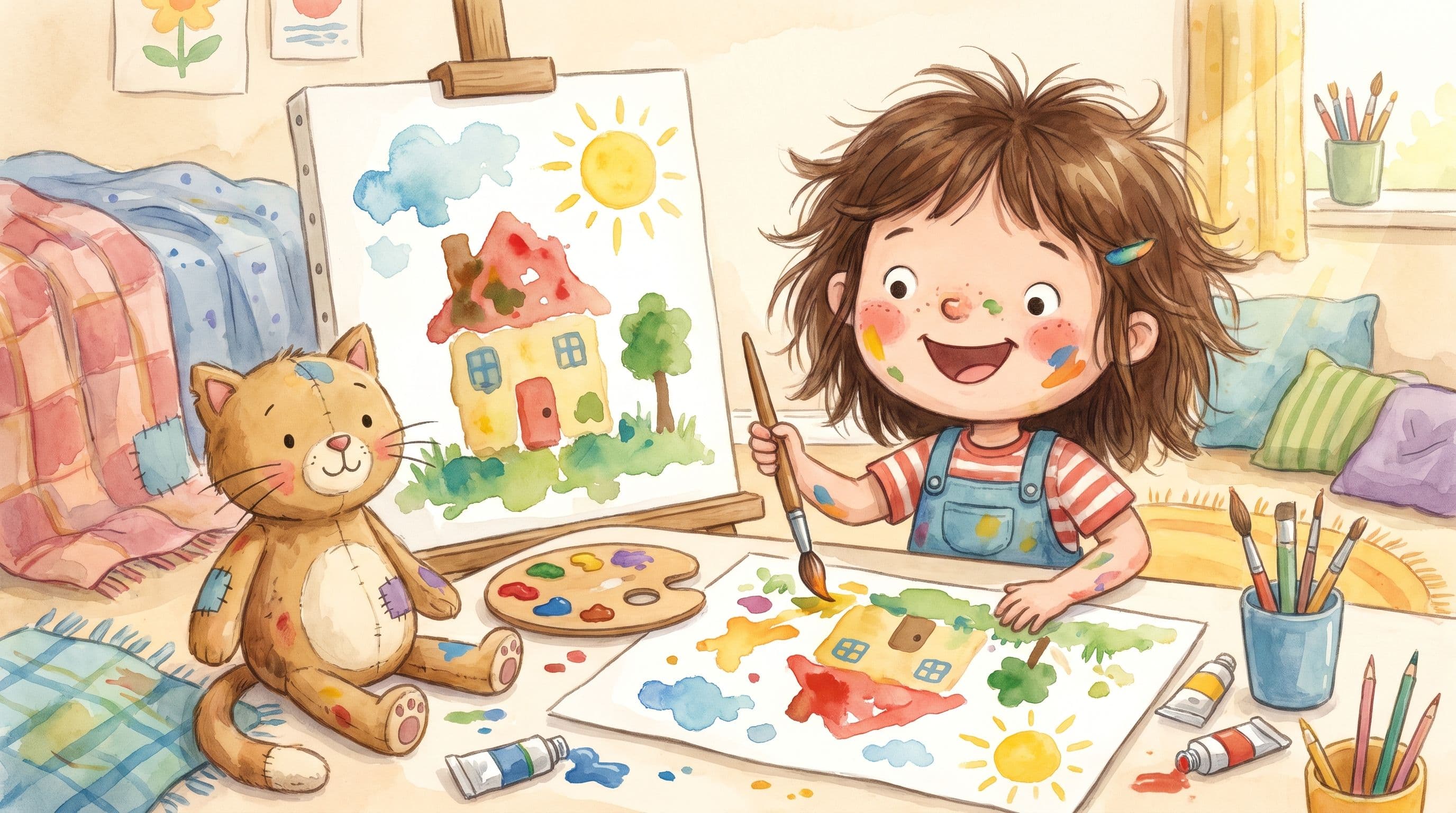
One evening her mom read her a new book with a girl on the cover who had Vivi's brown hair, happily painting a splotchy picture, and Vivi's own name across the top. In the story, that Vivi was scared of mistakes too, until her stuffed cat Mittens shared a secret. Mistakes aren't the opposite of good, they're part of how you get good. Every artist, inventor, and athlete makes tons of mistakes, that's how they learn. Mittens taught her the Happy Mistake game: when something comes out wrong, look for a way to turn it into something new. A stray line becomes a cat's tail. A wobbly tower becomes a silly monster. Story-Vivi spilled paint, turned it into a beautiful splotchy sky, and loved it more than her "perfect" pictures.
4. She tries, and feels free
Story-Vivi started making Happy Mistakes on purpose, and her art and her fun exploded. Real Vivi wanted to feel that free. She painted a picture, and when a blob went where she didn't mean it to, she remembered Mittens and turned it into a fluffy cloud. She grinned. It looked great. She built a wobbly tower and made it a monster's castle. Mistakes stopped being scary and started being interesting, and Vivi began trying all kinds of new things.
5. She comes back to the book
Vivi asked for the book again and again, and the Happy Mistake game became how she made things. The fear of getting it wrong faded, because Vivi had learned the freeing truth: mistakes are how you learn and often how you discover something even better than you planned.
How should you use a story like this at home?
- Praise effort, courage, and trying rather than only perfect results.
- Share your own mistakes and what you learned from them.
- Turn mistakes into "happy accidents" whenever you can.
- Keep pressure low and let your child take safe risks.
What helps a child who gives up when things aren't perfect?
Reframing mistakes as part of learning, praising the process, and making trying feel safe all help; if perfectionism is causing significant distress, a counselor can offer support. The American Academy of Pediatrics notes that children need to feel comfortable, not defeated, when they make mistakes, that setbacks are a normal part of learning, and that praising effort and good tries — being specific — helps overpower any sense of failure and renews a child's motivation (Building Blocks for Healthy Self Esteem in Kids).
Keep reading: fear of mistakes shows up loudest in the classroom — see how this approach helps a child scared of getting an answer wrong in class.