Story ideas
How do you help a child live confidently with a food allergy?
How to help a child with a food allergy feel safe and confident instead of scared or left out, by owning their safety rules, with a full example story.
The short answer
Teach the safety rules as something empowering your child gets to own: always ask what's in a food, only eat what a trusted grown-up says is safe, keep emergency medicine close, and tell an adult right away if their body feels funny. Practice a confident line for parties and lunch, and follow your allergist's specific plan. A story where a character just like them follows the rules calmly builds real ownership.
Key takeaways
- You're balancing two things: keeping your child safe, and keeping them from feeling scared or left out.
- A list of rules can feel like a list of things that make a child different.
- Reframe those rules as a superpower: the child becomes the expert on their own body.
- A story where your child owns the rules builds calm, real ownership.
How do you help a child live confidently with a food allergy?
Teach the safety rules as something empowering your child gets to own, so they take the allergy seriously without living in fear. A serious food allergy comes with real rules and often an emergency medicine like an epinephrine auto-injector. The goal is a child who knows the rules well enough to feel in charge of them.
A list of allergy rules can feel like a list of things that make a child different. Turn those same rules into a kind of superpower and the whole feeling shifts.
Why does a story work when rules alone don't?
A story turns rules into an identity: the child becomes the expert on their own body. When a child watches a hero check a label, say a confident "no thank you" to an unknown food, and know exactly what to do, the allergy becomes something they manage rather than something that scares them. Give the hero your child's name and face and the confidence becomes theirs.
What does a good food-allergy story look like?
The names and characters are invented for this example. In a real personalized book, the hero is your own child, and the specifics can match your allergy plan.
1. A hero with something big to learn
Priya has a food allergy, which means some foods that are fine for other kids are not safe for her, and her family carries her emergency medicine everywhere. Priya knew her allergy was important, but at parties and lunch tables it sometimes made her feel like the odd one out.
2. A worry she can name
What if she accidentally ate the wrong thing? What if a friend offered her a snack and she didn't know if it was safe? Feeling unsure at snack time made Priya anxious, and being the only one who couldn't eat certain foods sometimes made her feel different.
3. A hero who looks just like her
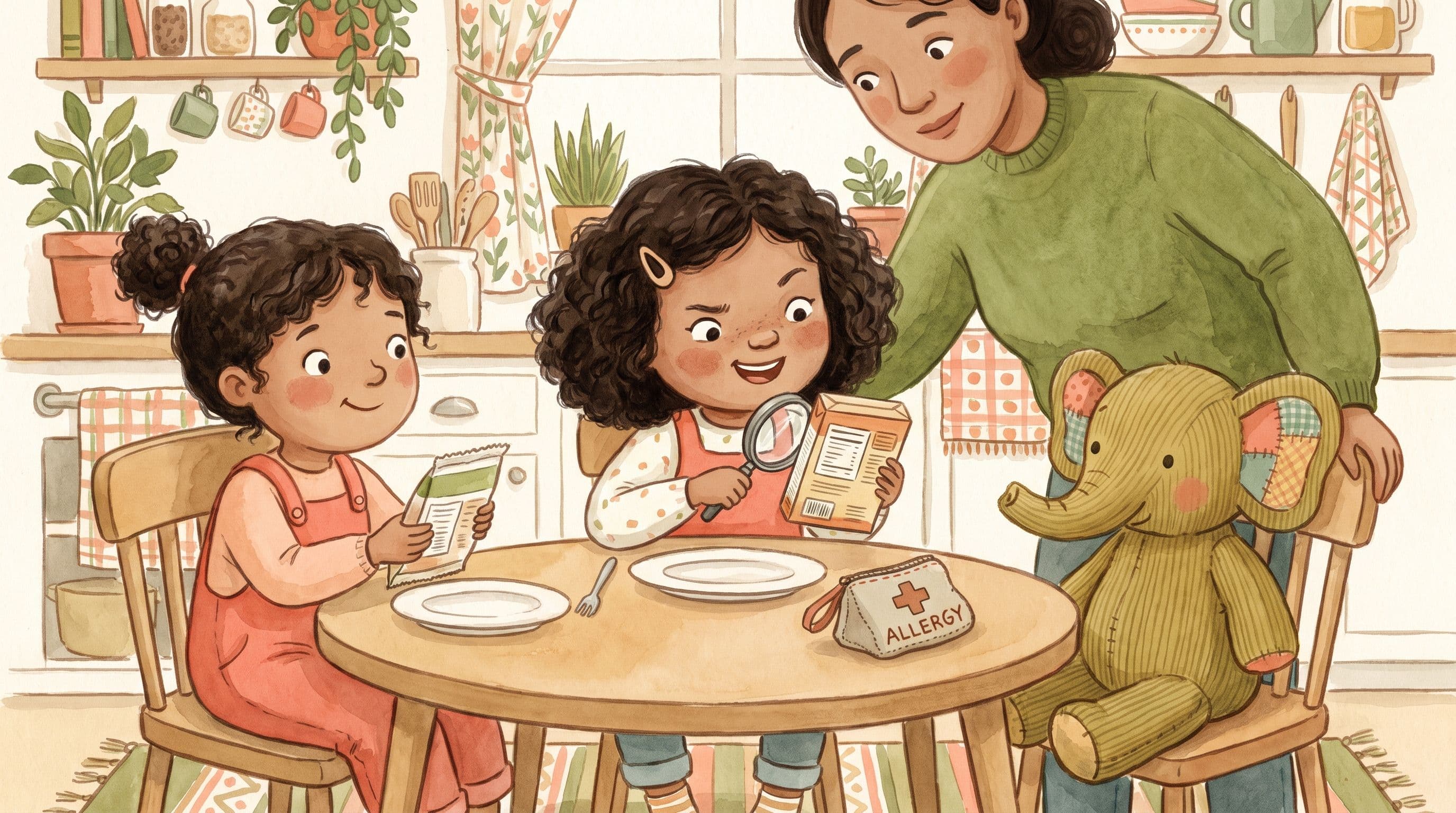
One evening her dad read her a new book with a girl on the cover who had Priya's dark hair, a bright confident smile, and Priya's own name across the top. In the story, that Priya had a food allergy too, and her stuffed elephant Pippa helped her see her safety rules as her superpower. The rules were simple and strong: always ask what's in a food, only eat what a trusted grown-up says is safe, keep your emergency medicine close, and tell a grown-up right away if your body feels funny. Knowing the rules didn't make Priya less. It made her the expert on keeping herself safe.
4. She tries, and feels proud
Story-Priya used her rules at a birthday party and felt calm and in charge. Real Priya wanted to own her rules too. At the next party, when someone offered a cupcake, she smiled and said, "I need to check with my grown-up first, I have an allergy." She checked, found a safe treat her mom had brought, and enjoyed the party. She felt proud, not left out.
5. She won't stop asking for the book
Priya asked for the book often and taught her friends why she asks about ingredients. Her friends learned to look out for her too. The allergy stopped feeling scary or embarrassing, because Priya had turned her safety rules into something she owned with confidence.
How should you use a story like this at home?
- Frame the rules as empowering, not as limits, and praise your child for following them.
- Practice a confident line for parties and lunch tables.
- Teach the rules alongside your allergist's specific plan for your child.
- Make sure caregivers, schools, and friends' parents know the plan and how to help.
How do you explain an EpiPen or emergency medicine to a child?
Describe it in simple terms as a helper that keeps them safe, and follow your medical team's guidance on how and when it's used and who is trained to use it. On the practical side, the American Academy of Pediatrics recommends a written allergy and anaphylaxis emergency plan, keeping epinephrine readily available (children at risk should have at least two doses on hand), and a team approach among parents, the pediatrician, and the school (Managing Food Allergies at School: Information for Families). Always follow your allergist's specific plan.
Keep reading: a food allergy is one of several things a kid learns to manage — see how this approach helps a child using an inhaler for asthma.