Story ideas
How do you help a child use their asthma inhaler calmly?
How to help a child use their asthma inhaler calmly by practicing the routine on good days and framing it as a friendly helper, with a full example story.
The short answer
Practice the calm, slow-breathing inhaler routine when your child is feeling well, so it's automatic when they need it, and frame the inhaler as a friendly helper rather than a scary device. Use a simple, playful breathing cue like smell the flower and blow out the candle, and follow your child's asthma action plan exactly. A story where a character just like them uses their inhaler calmly makes the routine feel easy.
Key takeaways
- The device can feel strange during a flare-up, when breathing is already hard.
- A flare is the worst time to learn a new skill, because everyone is tense.
- Practice the calm, slow-breathing routine on good days so it's ready for hard ones.
- A story where your child uses the inhaler calmly makes the routine feel easy.
How do you help a child use their asthma inhaler calmly?
Practice the routine when your child is feeling well, so it's automatic when they actually need it, and frame the inhaler as a friendly helper. The device can feel strange and even scary at first, especially during a flare-up when breathing is already uncomfortable. Using it well takes calm and a bit of practice: hold the spacer right, breathe slowly, count the breaths.
A flare-up is the worst time to learn a new skill, because everyone is tense. Building the routine on calm days is what makes it dependable on hard ones.
Why does a story work when a flare-up is stressful?
A story lets a child rehearse the routine in advance, when they're calm. When a child watches a hero use the spacer and breathe slowly with a simple rhythm, the inhaler becomes a familiar friend instead of a scary device to figure out in a hard moment. Give the hero your child's name and face and the calm becomes theirs.
What does a good inhaler story look like?
The names and characters are invented for this example. In a real personalized book, the hero is your own child, and the steps can match your asthma plan.
1. A hero with something big to learn
Diego has asthma, which means sometimes his airways get tight and breathing gets hard, and he uses an inhaler to help. The inhaler works well, but Diego didn't love using it, especially when he was already having a hard time breathing.
2. A worry he can name
During a flare-up, everything felt rushed and scary, and the inhaler felt like one more strange thing happening fast. Not knowing the steps well made those moments more stressful for Diego, right when he needed to be calm.
3. A hero who looks just like him
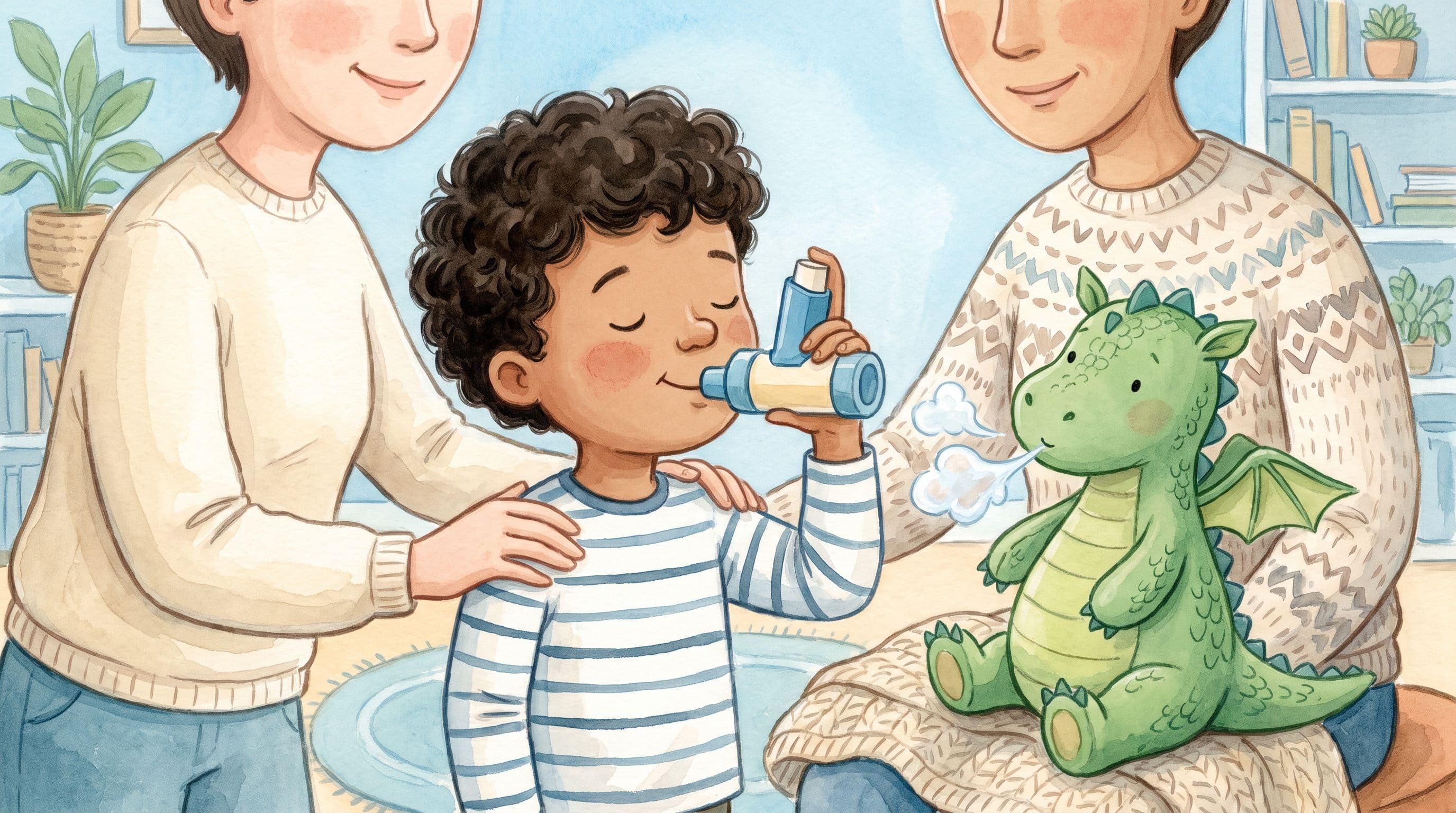
One evening his mom read him a new book with a boy on the cover who had Diego's dark hair, a calm face, and Diego's own name across the top. In the story, that Diego used an inhaler too, and his stuffed dragon Puff, an expert at slow breathing, taught him the routine to practice when he felt fine: hold the spacer snug, breathe out gently, then take one slow, steady breath in, like sipping air through a straw, and hold it for a slow count. Puff made it a game: smell the flower, blow out the candle, slow and steady.
4. He tries, and feels proud
Story-Diego practiced with Puff until the routine felt easy, so when a flare-up came, he knew exactly what to do and stayed calm. Real Diego wanted to practice too. On a good day, he ran through the steps with his own inhaler and spacer, slow breath in, gentle hold, nice and steady. It felt easy, almost fun. The next time his chest got tight, he remembered Puff's slow, steady breath, and using his inhaler felt familiar instead of frightening.
5. He won't stop asking for the book
Diego asked for the book and practiced his slow breathing regularly, so the routine stayed sharp. He showed a friend with asthma the smell-the-flower, blow-the-candle trick. The inhaler stopped being scary, because Diego had made it a calm, familiar part of taking care of himself.
How should you use a story like this at home?
- Practice the inhaler routine when your child is feeling well, not only during flare-ups.
- Use a simple, playful breathing cue so it's easy to remember under stress.
- Follow your child's asthma action plan exactly, including which inhaler to use and when.
- Make sure caregivers and school staff know the plan and how to help during a flare.
What if my child fights using the inhaler?
Making it a familiar, low-stress routine during good times, plus a bit of playfulness, often reduces resistance; if it continues, your care team can help troubleshoot. Good technique matters too: the American Academy of Pediatrics recommends using a spacer with the inhaler and a simple sequence — shake, one puff into the spacer, then a slow deep breath in and hold — and always following your child's written asthma action plan (Asthma Devices for Kids: How to Use Inhalers & Nebulizers Effectively).
Keep reading: asthma is one of several things kids learn to manage day to day — see how this approach helps a child living with a food allergy.