Story ideas
How do you help an autistic child understand their autism positively?
How to help an autistic child understand their autism as how their brain works, not what's wrong with it, framed honestly and warmly around real strengths, with a story.
The short answer
Frame autism honestly and warmly: brains come in different kinds, and your child's works in a wonderful, particular way with real strengths and some things they find tricky, a difference, not a defect. Celebrate their specific strengths and interests, acknowledge what they find hard without framing it as failure, and lean on autistic voices and affirming professionals. A personalized, affirming story where a character just like them likes their own brain helps a child feel proud of who they are.
Key takeaways
- Autism isn't a flaw to be fixed; it's a different, valid way of experiencing the world.
- It comes with real strengths alongside real challenges.
- A child who grows up understanding and liking their own brain carries lasting confidence.
- A warm, affirming story where your child likes their brain is a beautiful way to plant that.
How do you help an autistic child understand their autism positively?
Frame it honestly and warmly: brains come in different kinds, yours works in a wonderful, particular way with strengths and things you find tricky, and that's a difference, not a defect. Helping an autistic child understand their autism as how their brain works, not what's wrong with it, is one of the most powerful gifts you can give. When a child grows up understanding and liking their own brain, they carry a confidence that lasts a lifetime.
Children absorb the story they're told about themselves. If autism is framed as broken, a child internalizes shame; if it's framed as valid and valuable, they internalize pride.
Why does an affirming story work?
A story lets a child see themselves reflected warmly, their strengths celebrated and their challenges understood, which builds genuine self-acceptance. Give the hero the child's name and face and the pride becomes deeply personal.
What does a good autism-affirming story look like?
The names and characters are invented for this example, and every autistic child is wonderfully unique. In a real personalized book, the hero is your own child, and the story can reflect their particular strengths and experiences, ideally shaped with input from people who know autism well.
1. A hero who wonders about himself
Asher noticed he was different from some other kids in certain ways. He loved deeply focusing on the things he was passionate about, he noticed details others missed, and some things, like loud rooms or sudden changes, were harder for him. He wondered what that all meant.
2. A feeling he can name
Sometimes being different felt confusing, or made Asher wonder if something was wrong with him. He didn't yet have a way to understand his own wonderful, particular brain.
3. A hero who looks just like him
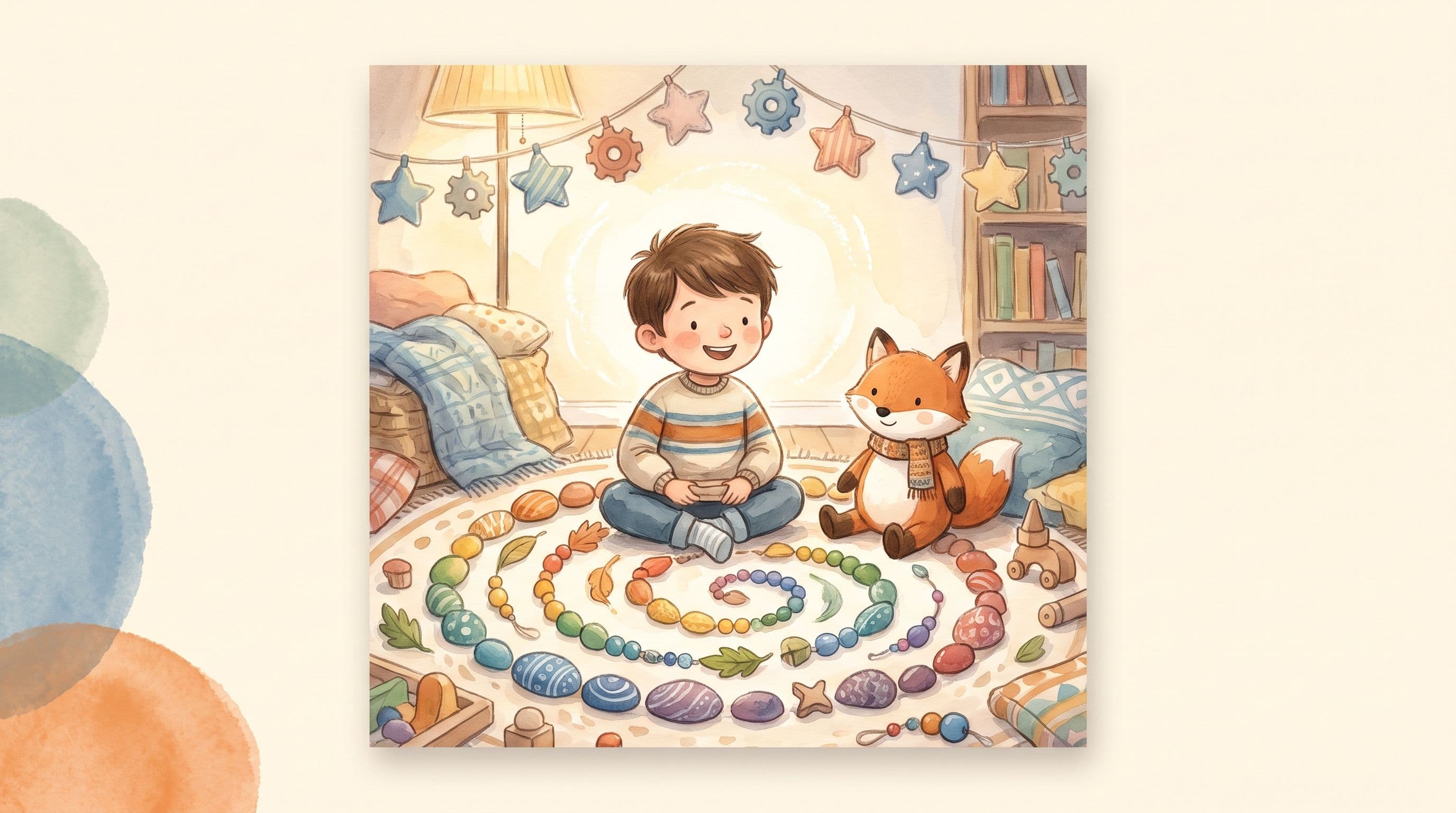
One evening his family read him a new book with a boy on the cover who had Asher's brown hair, joyfully absorbed in something he loved, and Asher's own name across the top. In the story, that Asher learned about his brain from his gentle stuffed fox Kit. Brains come in lots of different kinds, Kit explained, and Asher's brain is autistic, which means it works in its own amazing way. It gives him superpowers like deep focus, a great memory for the things he loves, honesty, and noticing beautiful details others walk right past. It also means some things feel extra-big, like loud noises or changes, and that's okay, everyone finds different things easy and hard. Being autistic isn't something wrong with Asher, Kit said. It's part of what makes him wonderfully, uniquely him.
4. He understands, and feels proud
As he heard the story, something clicked for Asher, and he felt lighter and prouder. Real Asher listened, holding his own stuffed fox. "So my brain isn't broken, it just works its own way?" "Exactly," his grown-up said. "And it's a wonderful way." Asher thought about his deep focus, his great memory, all the details he noticed, and he felt proud of his amazing brain. The things he found tricky were just part of the package, and that was okay.
5. He comes back to the book
Asher asked for the book again and again, because it helped him understand and like himself. He grew up knowing that autistic is a good and true word for how his brain works, and that difference is something to be proud of, not ashamed of.
How should you use a story like this at home?
- Talk about autism openly, honestly, and positively, using the words your family and child are comfortable with.
- Celebrate your child's specific strengths and interests.
- Acknowledge the things they find hard without framing them as failures.
- Seek out autistic voices and creators, and lean on professionals who use affirming, strengths-based approaches.
Should you tell a child they're autistic?
Many autistic people and professionals support telling children early, in age-appropriate, affirming ways, because understanding themselves builds self-acceptance. The American Academy of Pediatrics describes autism as a complex neurodevelopmental difference in how children communicate, play, and experience the world, and emphasizes that many autistic children do well throughout life, especially with support, services, and a strong sense of connection to their community (Understanding Autism: Information for Families).
Keep reading: understanding your brain and understanding your senses go together — see how this approach helps a child with too much noise and sensory overload.