Story ideas
How do you help a child learn to ride a bike?
How to help a child learn to ride a bike by normalizing the wobbles and falls, breaking it into steps, balance first then pedaling, and cheering their persistence.
The short answer
Normalize the wobbles and falls as part of learning, break it into steps, balance and gliding with feet up first, then add pedaling, and cue "eyes up ahead." Practice somewhere free of traffic on a softer surface like grass, make sure they wear a properly fitted helmet, and cheer their persistence toward that first solo glide. A story where a character just like them pushes past the wobbles and rides makes the whole thing feel possible.
Key takeaways
- Learning to ride a bike is a huge milestone, and a wobbly, sometimes scary one.
- There's the fear of falling, the frustration of losing balance, and the leap when training wheels come off.
- Normalize the wobbles, break it into steps, and cheer persistence.
- A story where your child pushes past the wobbles and rides makes it feel possible.
How do you help a child learn to ride a bike?
Normalize the wobbles and falls as part of learning, break it into steps (balance first, then pedaling), and cheer their persistence toward that first solo glide. Learning to ride usually takes persistence and a few tumbles. Helping your child push past the wobbles and feel the magic of that first solo glide gives them a triumph they'll never forget.
A child discouraged by falling can decide they'll never get it. A story shows persistence paying off.
Why does a story work when the wobbles are scary?
A story shows persistence paying off. When a child watches a hero wobble, fall, get back up, and finally glide, they learn that the tumbles are part of the process and that the triumph is worth the try. Give the hero your child's name and face and the courage becomes theirs.
What does a good learning-to-ride story look like?
The names and characters are invented for this example. In a real personalized book, the hero is your own child.
1. A hero with something big to learn
Georgia was learning to ride her bike without training wheels. She wanted to zoom around like the big kids, but every time she tried, the bike wobbled and she had to put her feet down, and once or twice she tipped right over.
2. A worry she can name
The wobbling was scary, and falling a couple of times made Georgia want to give up. She started to think maybe she just couldn't do it, and the two-wheeler felt impossible.
3. A hero who looks just like her
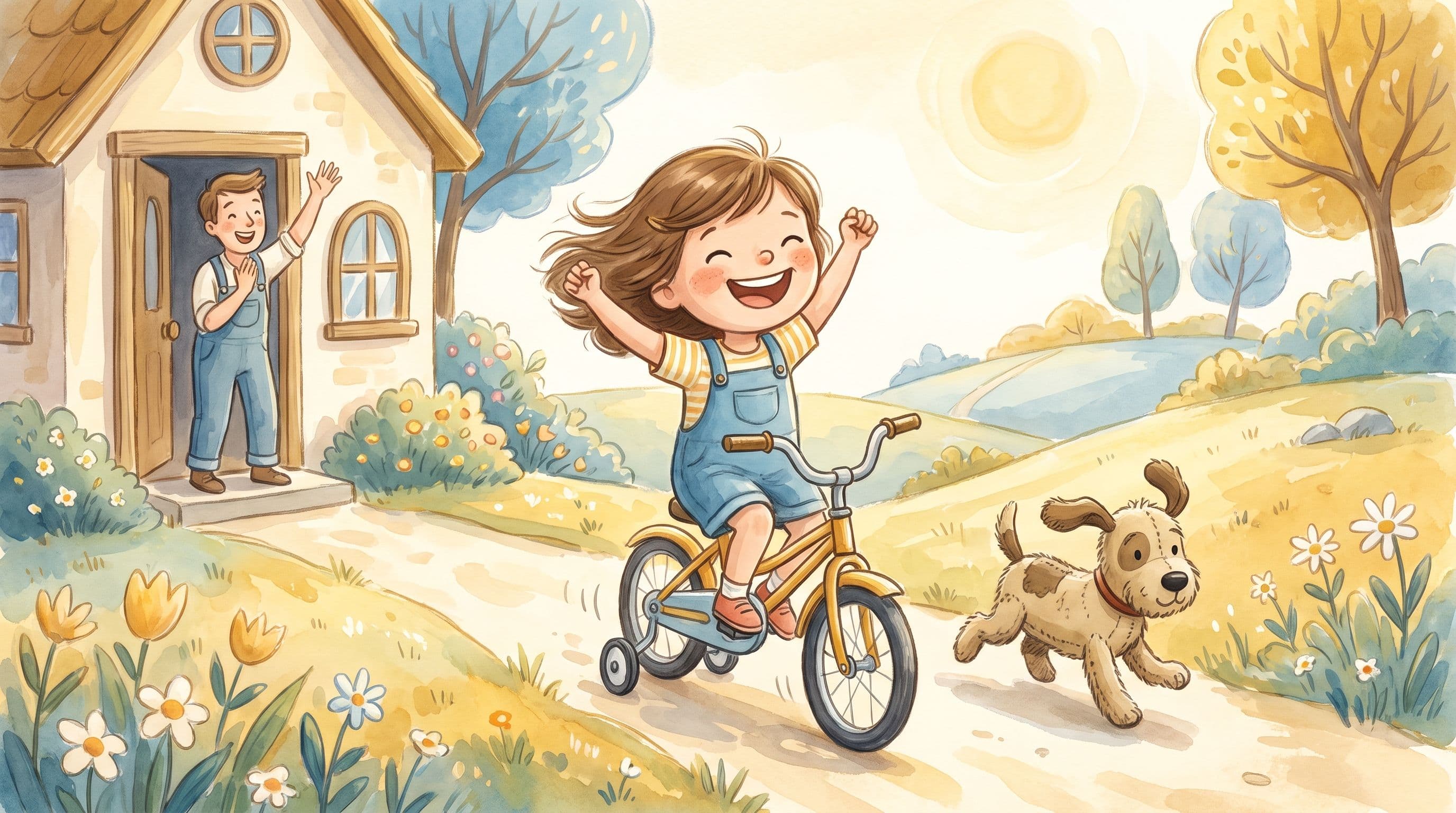
One evening her dad read her a new book with a girl on the cover who had Georgia's smile, riding a bike with the wind in her hair, and Georgia's own name across the top. In the story, that Georgia was learning to ride too, and her spirited stuffed dog Wheels shared the secret. Every single bike rider fell and wobbled while they were learning, that's just part of it, Wheels said. The trick is to break it down: first practice balancing and gliding with your feet up, then add the pedaling, and keep your eyes up ahead, not down. And keep going after each wobble, because the ride is just past them. Story-Georgia balanced, glided, pedaled, wobbled, fell, got back up, and then, suddenly, she was riding.
4. She tries, and rides
Story-Georgia pushed past the wobbles and had her first real ride. Real Georgia wanted that feeling. She practiced gliding with her feet up to find her balance, then added the pedals, eyes up ahead. She wobbled. She fell once and got back up. And then, all at once, the wobble smoothed into a glide, and she was riding, really riding, wind in her hair, her dad cheering behind her. "I'm doing it! I'm riding my bike!" It was the best feeling in the world.
5. She comes back to the book
Georgia asked for the book again and again, and Wheels's steps stuck with her. She rode everywhere after that, because she'd learned that the wobbles and falls were just the road to the ride, and pushing past them was worth every triumphant glide.
How should you use a story like this at home?
- Normalize wobbling and falling as part of learning.
- Try balance first, gliding with feet up, before adding pedaling.
- Cue "eyes up ahead" to help with balance.
- Celebrate persistence and every small bit of progress.
What helps a child who is scared of falling?
A properly fitted helmet, starting on grass or a gentle slope, and focusing on balance first all reduce the fear, along with reassurance that falling is a normal part of learning. The American Academy of Pediatrics advises choosing a bike sized so your child can touch both feet to the ground, practicing somewhere free of traffic and hazards on a softer surface like grass, and always wearing a correctly fitted helmet, which greatly reduces the risk of head injury (Biking).
Keep reading: pushing past the wobbles is the same courage as any big-kid milestone — see how this approach helps a child losing their first tooth.