Story ideas
How do you make losing the first tooth exciting instead of scary?
How to make losing the first tooth exciting by framing it as a big-kid milestone, explaining gently that a wiggly tooth barely hurts, and adding a fun family tradition.
The short answer
Frame it as a big-kid milestone worth celebrating, explain gently that a wiggly tooth is normal and doesn't really hurt, just a tiny pop, and add a fun family tradition like the tooth fairy or a keepsake box. Let your child wiggle the tooth themselves and go at their own pace. A story where a character just like them loses their first tooth and celebrates turns a swirl of nerves into a joyful rite of passage.
Key takeaways
- Losing the first tooth is a classic milestone that can bring excitement, pride, and a little worry.
- The wiggle, the wobble, and what happens when it comes out can all feel unfamiliar.
- Frame it as a big-kid milestone, explain a wiggly tooth barely hurts, and add a fun tradition.
- A story where your child loses their tooth and celebrates makes it a joyful moment.
How do you make losing the first tooth exciting instead of scary?
Frame it as a big-kid milestone worth celebrating, explain gently that a wiggly tooth is normal and doesn't really hurt, and add a fun family tradition like the tooth fairy. Losing the first tooth is a rite of passage, and a story is a lovely way to celebrate it, ease any nerves, and make your child feel like the growing-up big kid they're becoming.
A first loose tooth is exciting but unfamiliar, and a little uncertainty can creep in. A story turns it into a celebration.
Why does a story work for this milestone?
A story turns unfamiliar into a celebration. When a child watches a hero wiggle, lose, and celebrate their first tooth, any nerves melt into pride, and the moment becomes the joyful rite of passage it's meant to be. Give the hero your child's name and face and the excitement becomes theirs.
What does a good first-tooth story look like?
The names and characters are invented for this example. In a real personalized book, the hero is your own child, and the story can include your family's own tooth traditions.
1. A hero with a wiggly tooth
Beckett discovered that one of his bottom teeth was wiggly. It was his very first loose tooth, and he wasn't sure whether to be excited or a little nervous about the strange wobbly feeling.
2. A worry he can name
Would it hurt when it came out? What was he supposed to do with a wiggly tooth? The newness of it made Beckett feel a bit uncertain, even though everyone kept saying it was exciting.
3. A hero who looks just like him
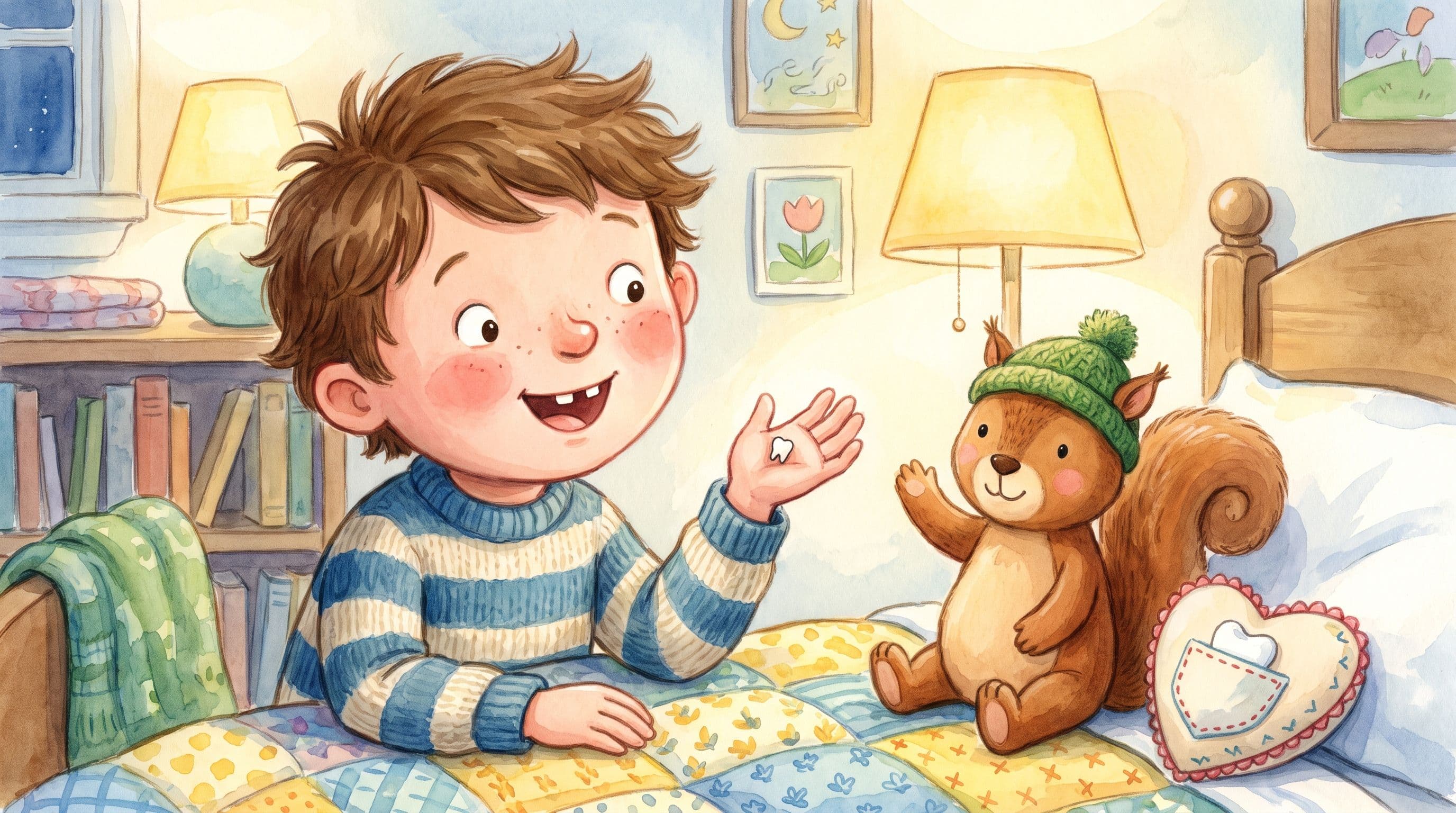
One evening his mom read him a new book with a boy on the cover who had Beckett's gap-toothed grin, proudly holding a tiny tooth, and Beckett's own name across the top. In the story, that Beckett had a wiggly tooth too, and his stuffed squirrel Acorn explained the whole exciting thing. Losing your baby teeth is a big-kid milestone that happens to everyone, Acorn said. A wiggly tooth is totally normal, and when it finally comes out it barely hurts at all, just a tiny pop. And then comes the fun: a special spot under the pillow, and a visit from the tooth fairy. Story-Beckett wiggled his tooth, and when it popped out, he grinned his new gap-toothed grin and celebrated.
4. He celebrates the big moment
Story-Beckett turned his loose tooth into a happy celebration. Real Beckett felt ready and excited. He wiggled his tooth a little each day, and when it finally came out with a tiny pop, it didn't hurt at all. He held his very first lost tooth in his palm, so proud, and grinned his brand-new gap-toothed grin in the mirror. That night he tucked it under his pillow for the tooth fairy. "I'm a big kid now," he said, beaming.
5. He comes back to the book
Beckett asked for the book every time another tooth got wiggly, and it made each one a celebration. Losing teeth stopped being uncertain and became one of the exciting parts of growing up, a milestone he was proud to reach.
How should you use a story like this at home?
- Celebrate the wiggly tooth as an exciting milestone.
- Explain gently that losing teeth is normal and barely hurts.
- Add a fun family tradition, like the tooth fairy or a keepsake box.
- Let your child wiggle the tooth themselves and go at their own pace.
When do kids lose their first tooth?
Most children lose their first tooth around ages 5 to 7, though there's a wide normal range. The American Academy of Pediatrics notes that by about age 6 or 7, children begin losing their baby teeth as permanent teeth come in, that a loose tooth often works its way out on its own, and that your dentist can reassure you about timing or help if a very loose tooth needs a gentle nudge (When Children Begin to Lose their Baby Teeth).
Keep reading: a lost tooth is one of childhood's great milestones — see how this approach helps a child learning to ride a bike.