Meaningful gifts
What should you write in a personalized storybook for a grandparent?
Use these focused story prompts to create a personal grandparent book about shared routines, family history, new beginnings, or everyday adventures.
The short answer
Write about the relationship, not a list of compliments. Choose one shared ritual, family story, skill, journey, or new role and let the grandparent and child experience it together. The best premise gives both people something to do and ends with a clear expression of what their bond means.
Key takeaways
- Center one shared experience instead of describing the grandparent in general.
- Let family history appear through an object, place, recipe, song, or story.
- Give the child and grandparent active roles.
- End with a line that names the bond in the language your family uses.
Which grandparent story ideas feel genuinely personal?
The best premise comes from something this grandparent actually does, remembers, or hopes to share. Start with one of these shapes and replace every generic detail with your family’s version.
- The recipe adventure: A missing ingredient turns a familiar recipe into a small quest.
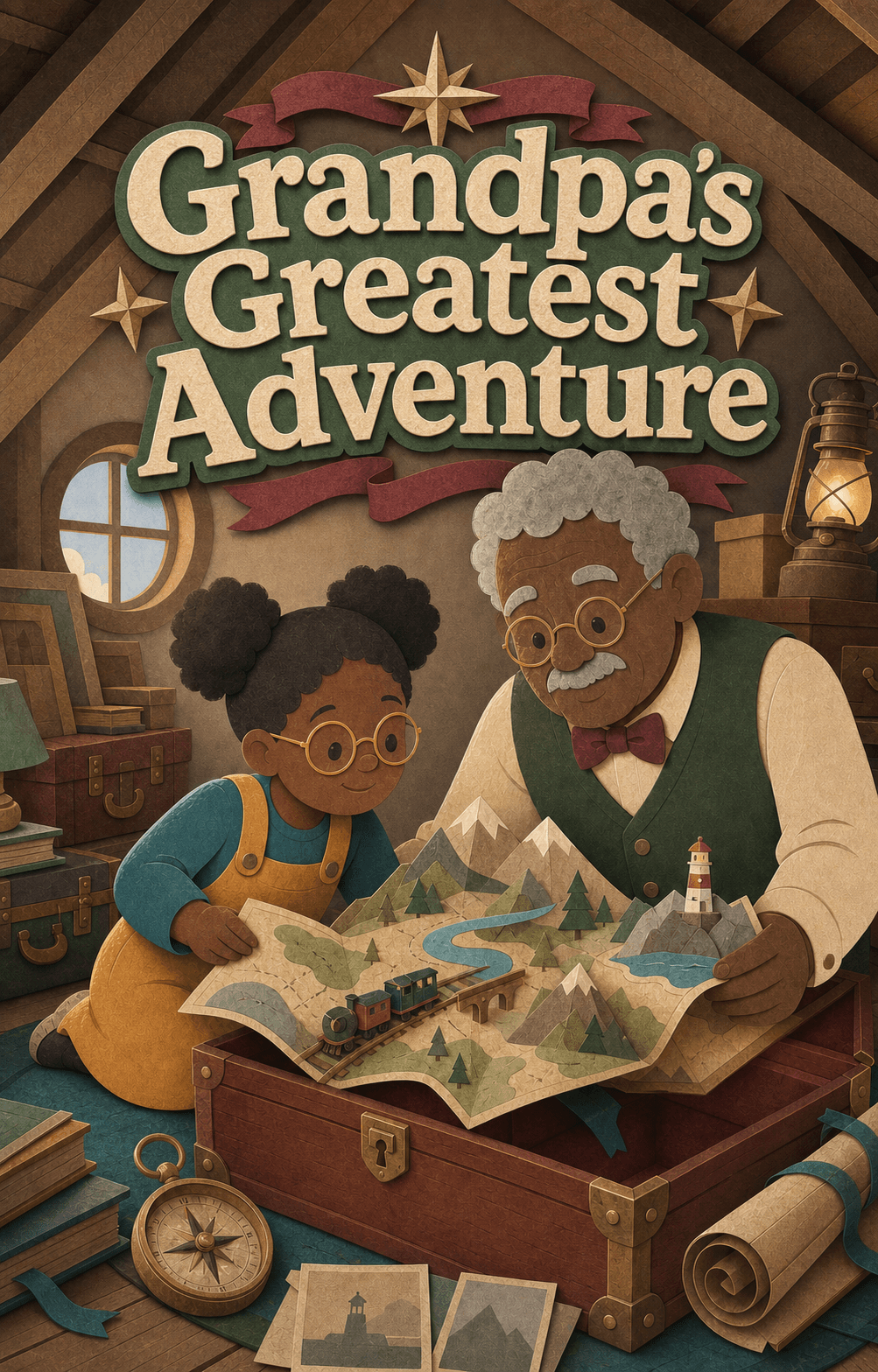
- The map of memories: A child and grandparent follow a map through places from the grandparent’s childhood.
- The first day together: A new grandparent imagines the ordinary days they hope to share with a baby.
- The secret skill: Gardening, sewing, fishing, fixing, painting, or storytelling helps solve a gentle problem.
- The tradition keeper: The pair prepares for a holiday or family ritual and learns why each detail matters.
- The everyday expedition: A walk to the mailbox, a bus ride, or a visit to the market becomes an adventure through the child’s eyes.
How do you include family history without writing a biography?
Choose one object or place as the doorway. A recipe card can reveal who taught Grandma to cook. An old train ticket can begin a story about Grandpa’s first journey. A porch swing can hold several generations without requiring a timeline of every event.
Keep the history inside action and conversation. Instead of pausing for a paragraph of facts, let the child ask why the object matters. The answer can move the characters toward the next scene.
How should a grandparent and child share the hero role?
Choose the primary hero based on the emotional purpose. If the book celebrates a new grandparent, the grandparent may be the hero learning that love can begin before the first shared adventure. If the book helps a child feel brave, the child may lead while the grandparent becomes the steady guide.
Both characters should still act. A grandparent who only smiles in the background will not feel essential to the story.
What should the final page say?
The ending should resolve the adventure and state the relationship plainly. Use the words your family would actually say.
Possible structures include:
- “Wherever we explore, I will always be your Grandma.”
- “The recipe was sweet, but making it together was the best part.”
- “Grandpa’s stories became Maya’s stories too.”
- “There would be many firsts, and they would meet every one together.”
Avoid a conclusion that could belong to any family. One echoed image or phrase from the opening can make the ending feel complete.
The Child Welfare Information Gateway describes both strengths and challenges in kinship care. Families take many forms, so use the relationship names and roles the people themselves recognize rather than assuming a single grandparent experience.