Meaningful gifts
What makes a personalized storybook a meaningful gift?
A personalized storybook feels meaningful when its details reflect a real relationship, a recognizable moment, and something the recipient wants to remember.
The short answer
A personalized storybook becomes meaningful when the personalization changes the story rather than simply adding a name. The recipient should recognize the people, relationships, places, language, and small details inside it. A focused emotional idea—welcome, courage, gratitude, belonging, or remembrance—gives those details a reason to be there.
Key takeaways
- Personalize the relationship and the events, not only the name.
- Choose one emotional purpose for the gift.
- Include a few unmistakable details the recipient will recognize.
- A digital version can be the finished gift; printing can remain an optional keepsake.
What kind of personalization matters most?
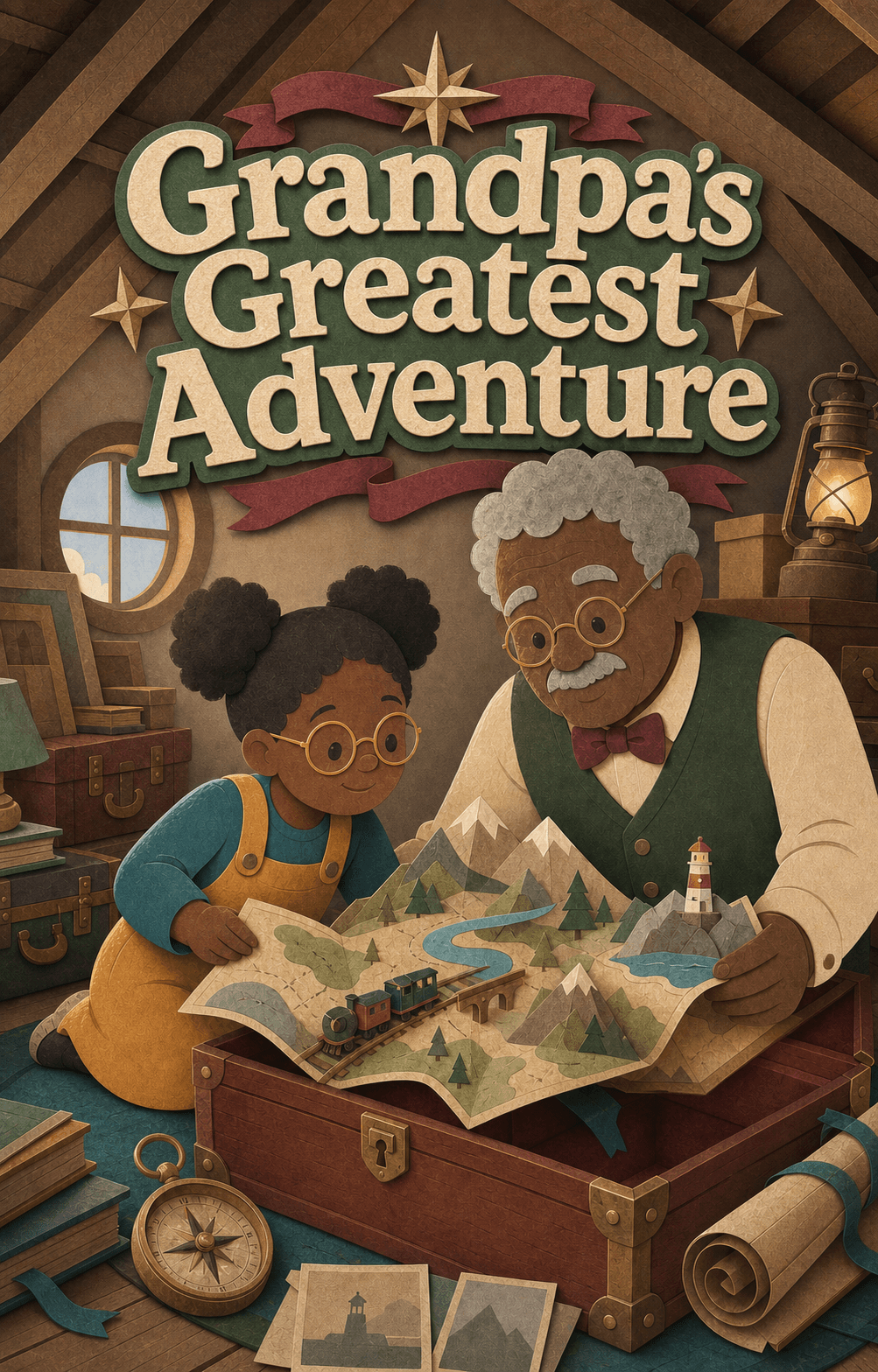
The most meaningful personalization affects what the characters do, feel, and say. A child’s name on an otherwise generic adventure is pleasant; a story about the way that child and Grandpa build blanket forts together belongs specifically to them.
Use details that reveal the relationship:
- The nickname one person actually uses.
- A repeated ritual, such as Saturday pancakes.
- A place that carries a shared memory.
- A small habit that is affectionate rather than embarrassing.
- A challenge or quality the recipient is proud of.
The details do not need to fill every sentence. Two or three accurate details can anchor an imaginative story.
Which occasions work well for a personal storybook?
Personal books work best when the occasion already contains a relationship or transition. Examples include a new baby, a first birthday, becoming a grandparent, moving to a new home, starting school, an adoption anniversary, a wedding, or remembering a family member.
Everyday occasions can be equally strong. A “just because” story about gardening with Grandma may feel more personal than a formal milestone because it protects a familiar piece of life.
| Occasion | Strong emotional idea |
|---|---|
| New sibling | “There is room for both of us.” |
| Grandparent gift | “Our ordinary days become adventures.” |
| Starting school | “Bravery can begin with one small step.” |
| Family move | “Home travels with the people we love.” |
| Memorial story | “The things they taught us stay with us.” |
How do you keep the gift from feeling generic?
Decide what the book is trying to say before choosing its plot. “You are loved by this family” will create a different book from “You can try hard things,” even if both use the same photographs.
Avoid stuffing the story with names, dates, and biographical facts. A personal story is not a résumé. Give the reader a scene to enter and a feeling to carry out.
Look at the Storybook Studio examples for the difference between a title, a cast, and a narrative premise. The visual style may change, but the person and the emotional center should remain legible.
Should the gift be digital or printed?
Choose the format based on how the recipient will use it. A digital book can be shared quickly and read on different devices. A printed copy offers a physical object for a shelf, a bedtime routine, or a gift table.
There is no need to decide before the story exists. Storybook Studio separates completion of the digital story from the optional printed keepsake, allowing the creator to read and refine the finished work first.
The American Academy of Pediatrics emphasizes shared play and interaction as part of early development in its Power of Play resources. A personal book can support that interaction when adults pause, ask questions, and connect the scenes to family life.