Story ideas
What age should a child be before the family gets a pet?
How to prepare a child for a new pet, the right age to start, and a full example story about learning gentle hands and real responsibility.
The short answer
There's no single right age, but pediatric guidance suggests waiting until a child is older than four, since younger kids struggle to read an animal's warning signs and can accidentally provoke a bite. What matters more than a birthday is whether a child can follow gentle-hands rules and handle small responsibilities like refilling a water bowl. A personalized story where a character learns those same rules alongside a new pet makes the lesson stick before the pet comes home.
Key takeaways
- Readiness matters more than a birthday, but most pediatric guidance points to past age four.
- A new pet needs the child to learn gentle hands, not just the other way around.
- Close supervision every time is the rule, not a phase you graduate out of.
- A story where a character practices those same rules turns preparation into excitement.
What age should a child be before the family gets a pet?
Most pediatric guidance suggests it's safest to wait until a child is older than four, since younger children often can't yet read an animal's warning signs and may unintentionally provoke a bite (How old should our children be before we adopt a pet?). Past that age, it comes down to temperament more than the calendar — some six-year-olds are calm and careful around animals, and some much older kids still need close supervision.
The real question isn't "is my child old enough," it's "has my child practiced the rules yet."
How do you keep a child safe around a new pet?
Supervise every interaction, no exceptions, even with a pet you trust completely. Teach gentle hands before the pet ever arrives — soft, slow touches, no grabbing ears or tails, no surprising an animal that's sleeping or eating. Give your child one small, real job, like refilling the water bowl, so the relationship includes responsibility from day one, not just play.
Most bites happen not from aggression but from a startled or overwhelmed animal, so the rules that protect your child are the same ones that help the pet feel safe.
What does a good new-pet story look like?
The names and characters are invented for this example. In a real personalized book, the hero is your own child.
1. A hero with something big to learn
Ellie had been asking for a puppy since her last birthday. When her parents finally said yes, she ran circles around the kitchen table. She already had names picked out. She had not thought once about what the puppy might need from her.
2. A worry she can name
The first afternoon, the new puppy, a wobbly-legged pup named Biscuit, flinched every time Ellie ran toward him. He hid behind the couch. "He doesn't like me," Ellie said, her excitement sinking into something that felt like the opposite.
3. A hero who looks just like her
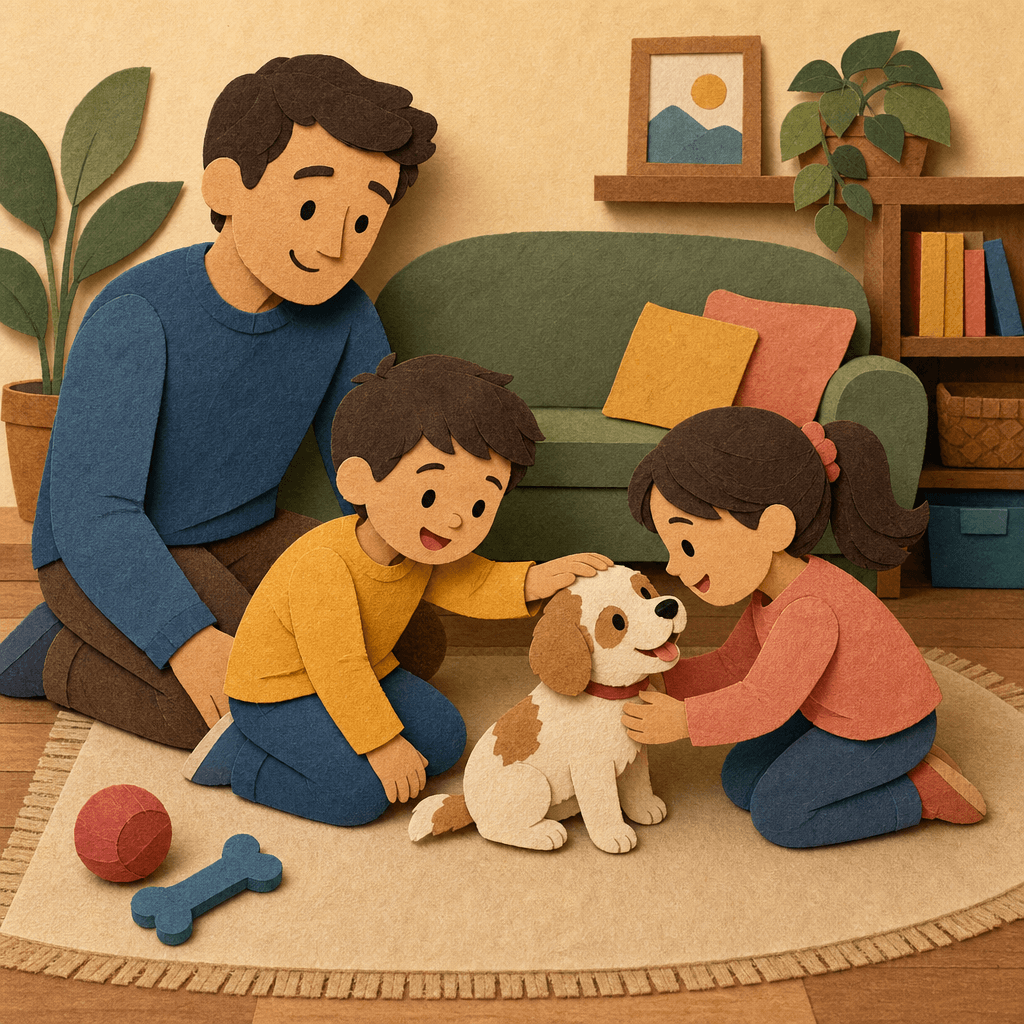
That night, her mom read her a story about a girl with Ellie's same freckles and Ellie's own name, whose new puppy was scared too — until that Ellie learned "gentle hands": slow steps, a quiet voice, and a still hand held out low for the puppy to come to on his own.
4. She tries, and feels proud
Real Ellie practiced on her stuffed rabbit first, whispering "gentle hands, gentle hands." The next morning she sat on the floor, went still, and held out one open palm. Biscuit sniffed it, then crept closer, then rested his whole wobbly self against her leg. Ellie didn't move for a long time. She didn't want to break it.
5. She won't stop asking for the book
Ellie asked for her water-bowl job every single morning and told anyone who'd listen exactly how gentle hands worked. Biscuit stopped hiding behind the couch. He started meeting her at the door instead.
How should you use a story like this at home?
- Practice gentle hands on a stuffed animal a few times before the real pet arrives.
- Give your child one small, consistent job so responsibility starts on day one.
- Stay within arm's reach for every interaction at first, regardless of how calm the pet seems.
- Watch the pet's body language together, so your child learns to notice when to back off.
Does a personalized story really help a child get ready?
It gives the rules somewhere to live besides a lecture. A child who hears gentle hands as an instruction often forgets it the moment the excitement hits. A child who watches a character just like them earn a scared puppy's trust by using those same gentle hands tends to remember it, because now it's not a rule — it's how the story's hero, and therefore how they, get the ending they want.