Story ideas
How do you help a child adjust to gaining stepsiblings?
How to help a child blend with stepsiblings by respecting their space, letting friendships form at their own speed, and building small shared traditions that make a team.
The short answer
Respect each child's own space and belongings, especially early on, and let friendships form at their own speed rather than forcing instant closeness. Build small shared traditions that make the whole group feel like a team, keep one-on-one time with your own child, and expect some friction as normal. A story where a character just like them finds common ground with stepsiblings makes a bigger family feel like an adventure with new teammates.
Key takeaways
- A blended family means sharing space, sharing attention, and figuring out how to fit together.
- Excitement and friction can show up at the same time.
- Respect each child's space, let friendships form slowly, and build small shared traditions.
- A story where your child finds common ground with stepsiblings makes the bigger family feel good.
How do you help a child adjust to gaining stepsiblings?
Respect each child's own space and things, let friendships form at their own speed, and build small shared traditions that make everyone a team. When a child is gaining stepsiblings, a blended family brings big adjustments — sharing space, sharing a parent's attention, and figuring out how to fit together with kids who have their own habits and histories. Kids do best when no one is forced to be instant best friends and the family finds small ways to become a team.
Kids thrown together in a new family don't automatically click, and pushing for instant harmony often backfires. A gradual coming-together works better.
Why does a story work when blending is bumpy?
A story models a realistic, gradual coming-together. When a child watches a hero keep their own space, find one thing to share, and slowly build a team with stepsiblings, the blend feels less like a threat and more like an adventure with new teammates. Give the hero your child's name and face and the belonging becomes theirs.
What does a good stepsiblings story look like?
The names and characters are invented for this example. In a real personalized book, the hero is your own child.
1. A hero with something to get used to
Marcus's family was blending with another, which meant new stepsiblings. Suddenly there were more kids in the house, more people sharing the space, and a lot to figure out about how everyone fit together.
2. A worry he can name
Would he have to share his room and his things? Would his parent have enough attention left for him? What if he and the new kids didn't get along? The changes felt big, and Marcus wasn't sure where he fit.
3. A hero who looks just like him
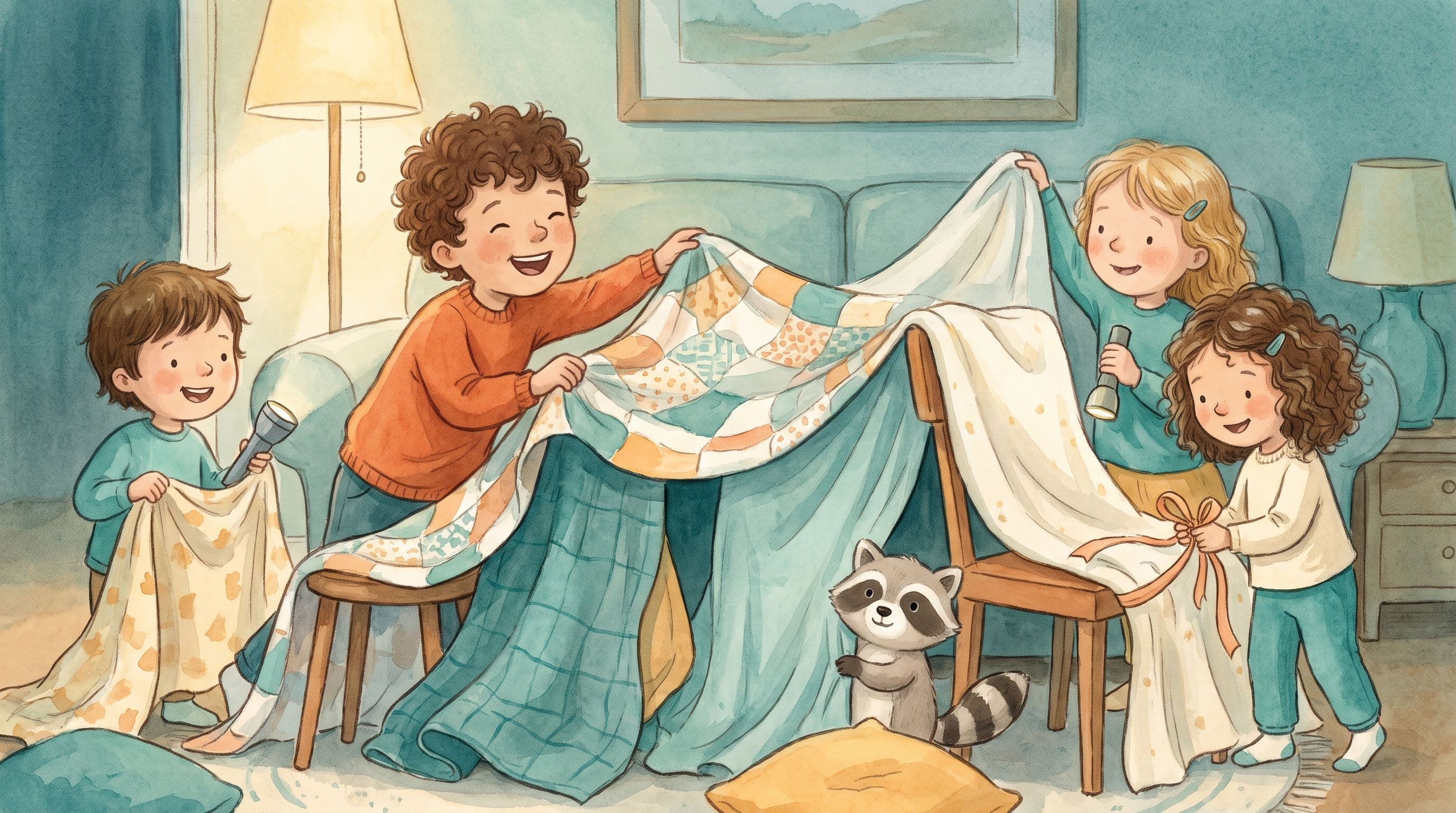
One evening his dad read him a new book with a boy on the cover who had Marcus's curly hair, building a fort with a bunch of kids, and Marcus's own name across the top. In the story, that Marcus was gaining stepsiblings too, and his stuffed raccoon Bandit helped him see it as building a team. His own space and special things would be respected, and no one had to be instant best friends. But if they found one thing to do together, they could slowly become teammates. Story-Marcus discovered the new kids loved forts as much as he did, and a giant blanket fort became the thing that brought everyone together.
4. He tries, and finds his place
Story-Marcus kept his own space, took his time, and found common ground with his stepsiblings over fort-building. Real Marcus wanted to build a team too. He kept his special things safe, and instead of forcing friendship, he invited the new kids to build the biggest blanket fort ever. It worked. They laughed, argued a little, fixed it, and by the end they were a crew. "We make a good team," Marcus admitted, surprised and pleased.
5. He comes back to the book
Marcus asked for the book as the family settled in, and fort-building became their thing. The bumps didn't vanish, but the blend got easier, because Marcus had learned that a bigger family could mean a bigger team, with room for him right in the middle of it.
How should you use a story like this at home?
- Protect each child's own space and belongings, especially early on.
- Don't force instant closeness. Let friendships form at their own speed.
- Build small shared traditions that make the whole group a team.
- Keep one-on-one time with your own child, and consider family support if tensions run high.
Is it normal for stepsiblings not to get along at first?
Yes — blending takes time and some friction is normal. Respecting individual space, avoiding forced closeness, and creating shared positive experiences all help. The American Academy of Pediatrics describes becoming a stepfamily as a period of working out who you are, what you'll share, and each person's role in the new household — a process that takes time, conscious effort from everyone, and occasionally some outside help, after which families settle into routines much like any other (Becoming a Stepfamily).
Keep reading: stepsiblings usually arrive alongside a new grown-up — see how this approach helps a child welcoming a new stepparent.