Story ideas
How do you help a child welcome a new stepparent?
How to help a child welcome a new stepparent by removing the pressure, easing loyalty worries, and building one shared thing, so a real bond can grow in its own time.
The short answer
Let the relationship grow slowly, with no pressure to instantly love a new grown-up, and reassure your child that a stepparent who loves them doesn't replace anyone. Help them find one small shared activity that becomes their own thing, welcome any loyalty guilt as normal, and give it time. A story where a character just like them warms up at their own pace makes the whole change feel easier and lets a genuine bond form.
Key takeaways
- A child can feel curiosity, hope, loyalty, and worry about being replaced, all at once.
- There's no rush and no single right way to feel.
- Remove the pressure, ease the loyalty worry, and build one shared thing.
- A story where your child warms up at their own pace makes a real bond easier.
How do you help a child welcome a new stepparent?
Let the relationship grow slowly, with no pressure, and reassure your child that a new grown-up who loves them doesn't replace anyone. When a new stepparent is joining the family, a child can feel a tangle of things: curiosity, hope, loyalty to their other parent, and worry about being pushed aside. A child who is allowed to warm up at their own pace usually builds a genuine bond in time.
A child may feel disloyal for liking a stepparent. Naming that a stepparent replaces no one lifts the guilt.
Why does a story work when feelings are complicated?
A story untangles the mixed feelings gently. When a child watches a hero take their time, keep their other relationships safe, and slowly find their own kind of friendship with a stepparent, the pressure lifts and real connection has room to grow. Give the hero your child's name and face and the ease becomes theirs.
What does a good new-stepparent story look like?
The names and characters are invented for this example. In a real personalized book, the hero is your own child.
1. A hero with something to get used to
A new grown-up was becoming part of Nina's family, a stepparent who was kind and wanted to get to know her. Nina wasn't sure how she felt. Part of her was curious, and part of her felt unsure and even a little guilty about liking someone new.
2. A worry she can name
Did liking her stepparent mean she loved her other parent less? Was this new grown-up going to change everything? The mixed-up feelings made Nina cautious, and she didn't know how fast she was supposed to warm up.
3. A hero who looks just like her
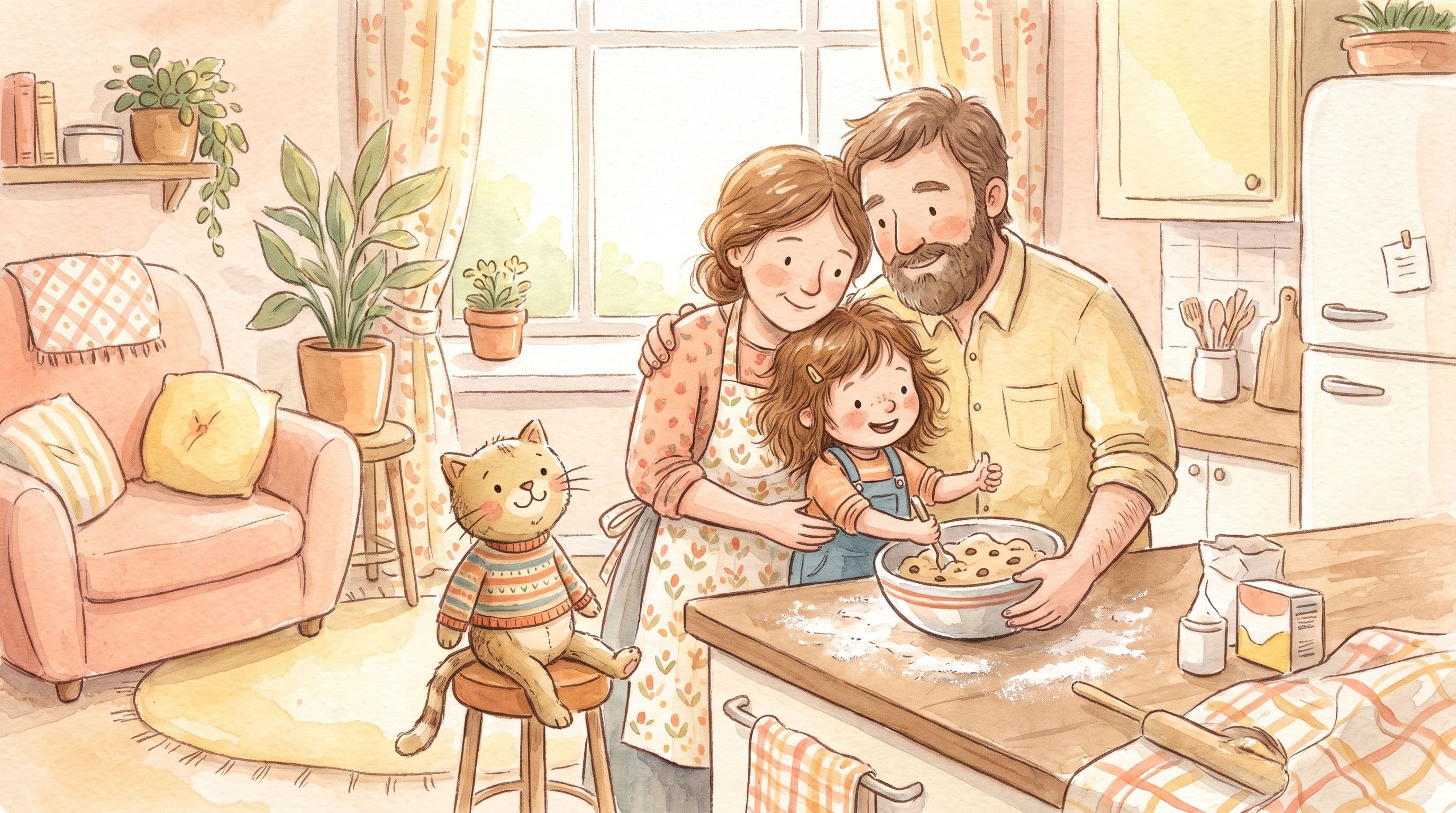
One evening her mom read her a new book with a girl on the cover who had Nina's brown hair, baking with a kind grown-up, and Nina's own name across the top. In the story, that Nina was getting a stepparent too, and her stuffed cat Marigold shared two comforting truths. First, there's no rush. You can take all the time you need, and warming up slowly is perfectly okay. Second, a new grown-up who loves you doesn't replace anyone. Love isn't a chair with only so many seats. It just means one more person who cares about you. Story-Nina and her stepparent found their own thing to share, and a real friendship grew, at Nina's pace.
4. She tries, and feels okay
Story-Nina took her time, kept loving everyone she already loved, and slowly built something warm with her stepparent. Real Nina felt relieved to hear there was no rush. She started with something small, baking cookies together, and found she actually had fun. She didn't have to love her stepparent all at once, and liking them didn't take anything away from anyone. "This can just be ours," she decided about their baking. Little by little, a real bond grew.
5. She comes back to the book
Nina asked for the book as the family blended, and it reminded her she could go at her own pace. The pressure faded, because Nina understood that a new grown-up in her corner meant more love, not less, and she got to build that friendship in her own time.
How should you use a story like this at home?
- Let the relationship grow at your child's pace, with no pressure to instantly love a new grown-up.
- Reassure them that liking a stepparent doesn't betray anyone.
- Help them find one shared activity that becomes their own thing.
- Give it time, and consider a family counselor if the blend feels bumpy.
Is it normal for a child to feel guilty for liking a stepparent?
Yes — loyalty feelings are common in blended families, and reassuring your child that loving a new grown-up takes nothing away from anyone helps ease the guilt. The American Academy of Pediatrics describes the new stepparent as, from the child's perspective, a "guest in the house" who needs to develop the relationship gradually and independently, and notes that becoming a stepfamily takes time and conscious effort from everyone, with outside help useful when needed (Becoming a Stepfamily).
Keep reading: a new stepparent often comes with new siblings too — see how this approach helps a child who's gaining stepsiblings.