Story ideas
How do you answer a child's questions about being adopted?
How to handle a child's questions about being adopted by answering honestly and warmly at their level, telling their story with love, and reassuring them they belong forever.
The short answer
Answer honestly and warmly at your child's level, tell their story with love, welcome all their questions and feelings, and reassure them again and again that they are fully and forever yours. Keep the topic open and ongoing rather than a one-time talk, and lean on adoption-competent resources or a counselor for the harder questions. A personalized story where a character just like them asks questions and receives loving answers helps a child feel safe and secure in their story.
Key takeaways
- Questions about being adopted are a tender, important stage of a child making sense of their story.
- They deserve honest, loving, age-appropriate answers.
- Reassure them adoption is one beautiful way families are made and that they belong completely.
- A gentle story can hold those questions and answer them with warmth.
How do you answer a child's questions about being adopted?
Answer honestly and warmly at their level, tell their story with love, and reassure them again and again that they are fully, forever yours and that all their feelings and questions are welcome. When your adopted child starts asking questions, where they came from, why, who came before, it's a sign of a child making sense of their own story. A gentle story can hold those questions and answer them with warmth.
Adoption questions can feel big for a child to ask and for a parent to answer perfectly in the moment. A story creates a safe, warm space for the conversation.
Why does a story work for adoption questions?
A story creates a safe, warm space for the conversation. When a child sees a hero like them ask questions and receive loving answers, they learn that curiosity about their story is welcome and that their belonging is unshakable. Give the hero your child's name and face and the security becomes theirs.
What does a good adoption-questions story look like?
The names and characters are invented for this example, and every adoption story is unique. In a real personalized book, the hero is your own child, and the story can be shaped with care to honor your family's own story.
1. A hero with questions
Lucia was adopted, and lately she'd been wondering about her story. Where did she come from? Why was she adopted? She had a lot of questions, and she wasn't always sure if it was okay to ask them.
2. A worry she can name
The questions felt big, and Lucia worried that asking them might be sad, or that she shouldn't be curious. So sometimes she kept the questions inside, even though she really wanted to understand her own story.
3. A hero who looks just like her
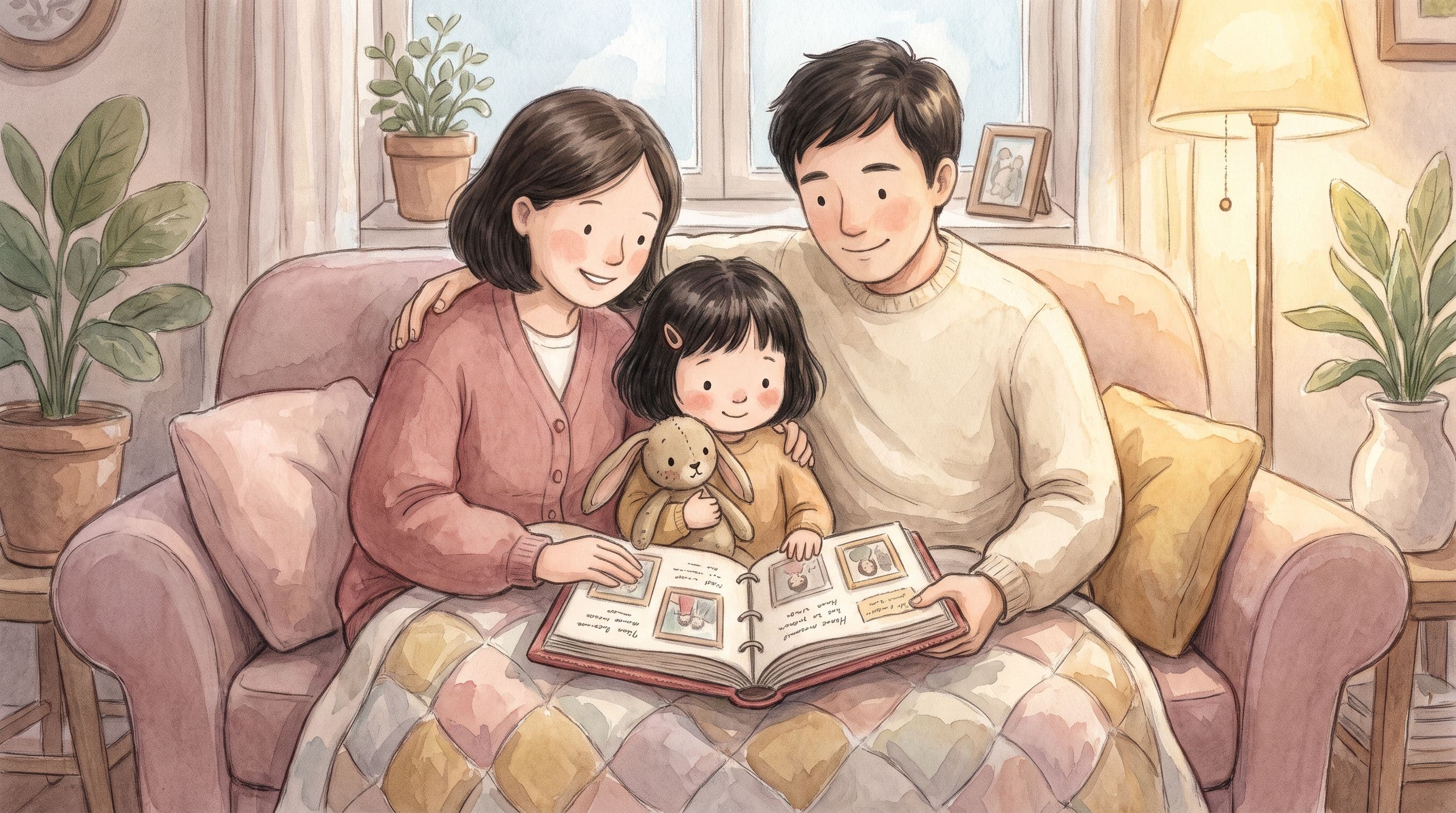
One evening her family read her a new book with a girl on the cover who had Lucia's dark hair, snuggled with her family and a photo album, and Lucia's own name across the top. In the story, that Lucia had questions about being adopted too, and her soft stuffed rabbit Petal reminded her: all your questions are welcome, always. Story-Lucia's family answered honestly and warmly, telling her story with love, in words she could understand. They reminded her that adoption is one of the beautiful ways families come together, that she is fully and forever theirs, and that being curious about her story is a good and natural thing. Every question was met with a hug.
4. She asks, and feels secure
As she heard the story, Lucia felt braver about her own questions. Real Lucia snuggled up with her family and her stuffed rabbit and asked what was on her mind. Her family answered honestly and gently, telling her story with love and reassuring her, over and over, that she belonged completely. "You can ask me anything, always," her grown-up said. Lucia felt safe, curious, and deeply, forever theirs.
5. She comes back to the book
Lucia asked for the book again and again, because it made her feel safe to wonder about her story and sure of her place in her family. She grew up understanding her adoption with love, knowing her questions were always welcome and her belonging was never in doubt.
How should you use a story like this at home?
- Welcome your child's adoption questions warmly, whenever they come.
- Answer honestly and age-appropriately, telling their story with love.
- Reassure them often of their permanent, complete belonging.
- Lean on adoption-competent resources or a counselor for the harder questions and feelings.
When will a child start asking about adoption?
Children often begin asking as they develop, sometimes in the preschool years and more deeply as they grow, and keeping the topic open and welcome from early on helps them feel safe to ask. The American Academy of Pediatrics advises that adoption should never be a secret, that you explain it simply, directly, and honestly, and that ongoing, open conversation over the years builds trust and strengthens your relationship as your child's questions naturally evolve (When to Tell Your Child About Adoption).
Keep reading: adoption questions and adoption day are part of the same loving story — see how this approach helps a family celebrating adoption day.