Story ideas
How do you help a child whose name is often mispronounced?
How to help a child whose name is often mispronounced by celebrating its meaning and giving them confidence to gently teach others how to say it, with a full example story.
The short answer
Celebrate your child's name, its meaning and story, and give them confidence to gently teach others how to say it, with a friendly line like "It's said like this, want to try?" Reassure them it's okay and kind to correct mispronunciations, and ask their teachers to learn and use their name correctly. A story that celebrates their name as a treasure from family and culture helps them wear it with pride instead of wishing it away.
Key takeaways
- A child whose name is mispronounced may cringe at roll call or wish for a more common name.
- A name often carries family, culture, and meaning.
- Help them love their name, teach others to say it, and see it as a treasure.
- A story that celebrates their name turns a daily frustration into a source of confidence.
How do you help a child whose name is often mispronounced?
Celebrate its meaning and story, and give them confidence to gently teach others how to say it, with a line like "It's said like this, want to try?" If nobody seems to pronounce your child's name right, constant mispronunciation can chip at their pride in it. Helping them love their name and teach others to say it turns a daily frustration into a source of confidence.
A child who hears their name butchered daily can start to feel their name is a burden. A story flips that.
Why does a story work?
A story flips a burden into a gift. When a child sees a hero like them proudly teach others their beautiful name and love its meaning, they learn that their name is worth saying right, and that it's okay to help people learn it. Give the hero your child's name and face and the pride becomes theirs.
What does a good name story look like?
The names and characters are invented for this example. In a real personalized book, the hero is your own child, and the story can celebrate their name's real meaning and story.
1. A hero with a name people struggle with
Saanvi loved her name, but almost no one at school said it right. Teachers paused at roll call, kids called her the wrong thing, and it happened so often that Saanvi started to feel funny about her own beautiful name.
2. A feeling she can name
Being called the wrong name all day made Saanvi feel unseen, and she sometimes wished she had a name everyone already knew how to say. She wasn't sure whether to correct people or just let it go.
3. A hero who looks just like her
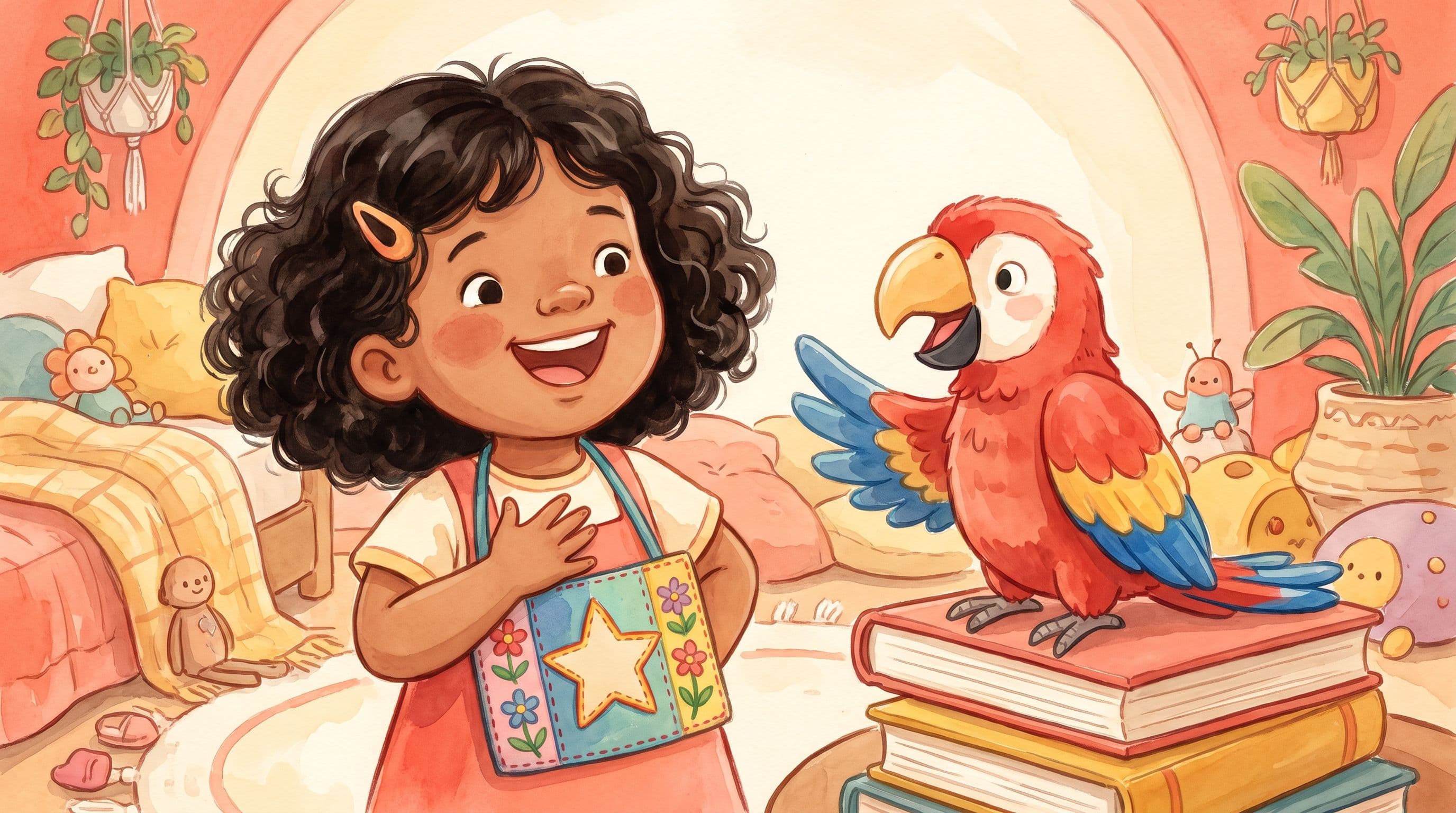
One evening her family read her a new book with a girl on the cover who had Saanvi's smile, proudly introducing herself, and Saanvi's own name across the top. In the story, that Saanvi's name got mispronounced too, and her cheerful stuffed parrot Echo helped her love it. Your name is a treasure, Echo said, it comes from your family and carries a beautiful meaning, and there's nothing wrong with a name being special. Echo taught her that it's kind and confident to help people learn it, with a friendly line: "It's said like this, want to try?" Most people are happy to learn, and your name is worth saying right. Story-Saanvi taught her teacher and her class to say her name, and hearing it said correctly felt wonderful.
4. She tries, and loves her name
Story-Saanvi taught others her name with pride. Real Saanvi wanted to do the same. When someone said her name wrong, she smiled and said, "It's said like this, want to try?" Her teacher practiced until she got it, and her classmates learned too. Hearing her name said right, her real, beautiful name, felt amazing. Saanvi stopped wishing for a different name and started loving her own.
5. She comes back to the book
Saanvi asked for the book again and again, and Echo's friendly line became her tool. Her name stopped being a source of frustration and became a source of pride, because Saanvi had learned that her name is a treasure worth teaching, and it's okay to help the world say it right.
How should you use a story like this at home?
- Talk about your child's name, its meaning, and its story with pride.
- Give them a friendly, confident line for teaching people to say it.
- Reassure them it's okay and kind to correct mispronunciations.
- Ask teachers to learn and use your child's name correctly.
Should a child correct people who say their name wrong?
Yes, gently and confidently, with a friendly line like "It's said like this, want to try?" — most people are glad to learn, and their name is worth saying right. The American Academy of Pediatrics encourages parents to teach cultural and racial pride actively and to help children value the heritage their name carries, building the self-worth that lets a child feel proud of who they are rather than wishing to blend in (Teaching Children Cultural and Racial Pride).
Keep reading: loving your name is part of loving everything that makes you you — see how this approach helps a child who's teased for something they can't change.