Story ideas
How do you help a child who is the only one who looks like them?
How to help a child who's the only one who looks like them by filling them with pride in their appearance, culture, and heritage, so their identity feels like a treasure.
The short answer
Fill your child with pride in who they are, celebrating their appearance, culture, and heritage, so their identity feels like a treasure rather than a difference to shrink from. Surround them with books, dolls, art, and role models who share their identity, connect them to family and cultural traditions, and take any exclusion or bias seriously. A personalized story that puts them at the center, proud and belonging, helps root confidence that lasts a lifetime.
Key takeaways
- Being the only kid who looks like them can feel like standing out uncomfortably, or feeling alone.
- Feeling like the only one can be lonely.
- Fill them with pride rooted in family and culture so their identity feels like a treasure.
- A story that puts them at the center, proud and belonging, roots lasting confidence.
How do you help a child who is the only one who looks like them?
Fill them with pride in who they are, celebrating their appearance, culture, and heritage, so their identity feels like a treasure, not a difference to shrink from. If your child is the only kid in class who looks like them, they may feel like they stand out uncomfortably, or wonder why no one else looks quite like them. Helping your child feel deeply proud of their identity gives them a foundation that lasts a lifetime.
A child rarely gets to be the hero who looks like them, and that absence sends a quiet message. A story flips it.
Why does a story work to build identity pride?
A story makes the child the hero who looks like them. When a child sees a hero who shares their features and heritage, celebrated and central and proud, they absorb the truth that they are beautiful, they belong, and their identity is something to treasure. Give the hero your child's name and face and the pride becomes unmistakably theirs.
What does a good identity-pride story look like?
The names and characters are invented for this example. In a real personalized book, the hero is your own child, and the story can celebrate their specific appearance, family, and culture.
1. A hero who notices he's the only one
Malik looked around his classroom and realized he was the only kid who looked like him. No one else had his skin, his hair, quite the way he did. It made him feel like he stood out, and sometimes he wished he could just blend in.
2. A feeling he can name
Being the only one felt a little lonely, and Malik wondered why no one else looked like him. He wasn't sure whether being different was a good thing or a hard thing.
3. A hero who looks just like him
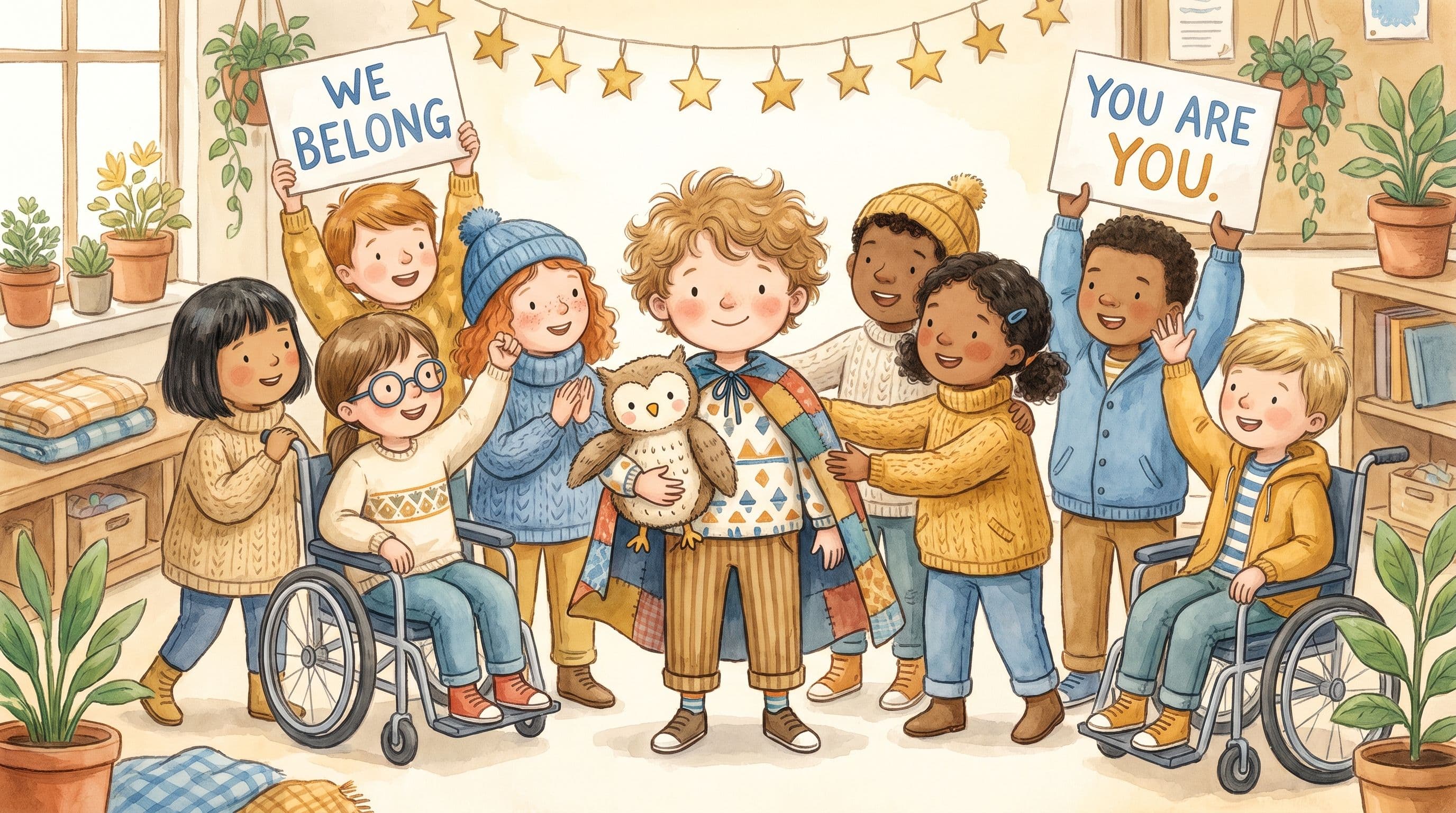
One evening his family read him a new book with a boy on the cover who had Malik's exact features, standing tall and proud, and Malik's own name across the top. In the story, that Malik was the only one who looked like him in his class too, and his gentle stuffed owl Sunny helped him see the truth. Your skin, your hair, your face, they're beautiful, and they come from your family and your people, who love you and came before you. Being the only one in a room doesn't mean you're less, it means you bring something special that no one else can. The world is more beautiful because everyone looks different. Sunny reminded him that his identity is a treasure, connected to a whole family and culture and history that are his to be proud of.
4. He understands, and stands tall
As he heard the story, Malik felt something warm and strong grow inside him. Real Malik listened, holding his own stuffed owl. He thought about his family, where his features came from, the beauty and history behind them, and he felt proud. Being the only one in his class stopped feeling lonely and started feeling special. He stood a little taller, comfortable and confident in his own skin.
5. He comes back to the book
Malik asked for the book again and again, because it made him feel proud of exactly who he is. He grew up rooted in his identity, knowing that his appearance and heritage are a treasure, and that being uniquely himself is something to celebrate, not hide.
How should you use a story like this at home?
- Celebrate your child's appearance, culture, and heritage openly and often.
- Fill their world with books, dolls, art, and role models who share their identity.
- Connect them to family, community, and cultural traditions that root their pride.
- Take any experiences of exclusion or bias seriously, and support them through it.
What do you say when a child wishes they looked like everyone else?
Reassure them their features are beautiful and come from a family and people who love them, celebrate their heritage, and provide representation. The American Academy of Pediatrics encourages parents to teach cultural and racial pride actively, surrounding children with a diverse world and positive reflections of their identity, and to keep open, ongoing conversations about who they are, which builds the self-worth that helps a child feel proud rather than wishing to blend in (Teaching Children Cultural and Racial Pride).
Keep reading: identity pride is the best armor against unkindness — see how this approach helps a child teased for something they can't change.